
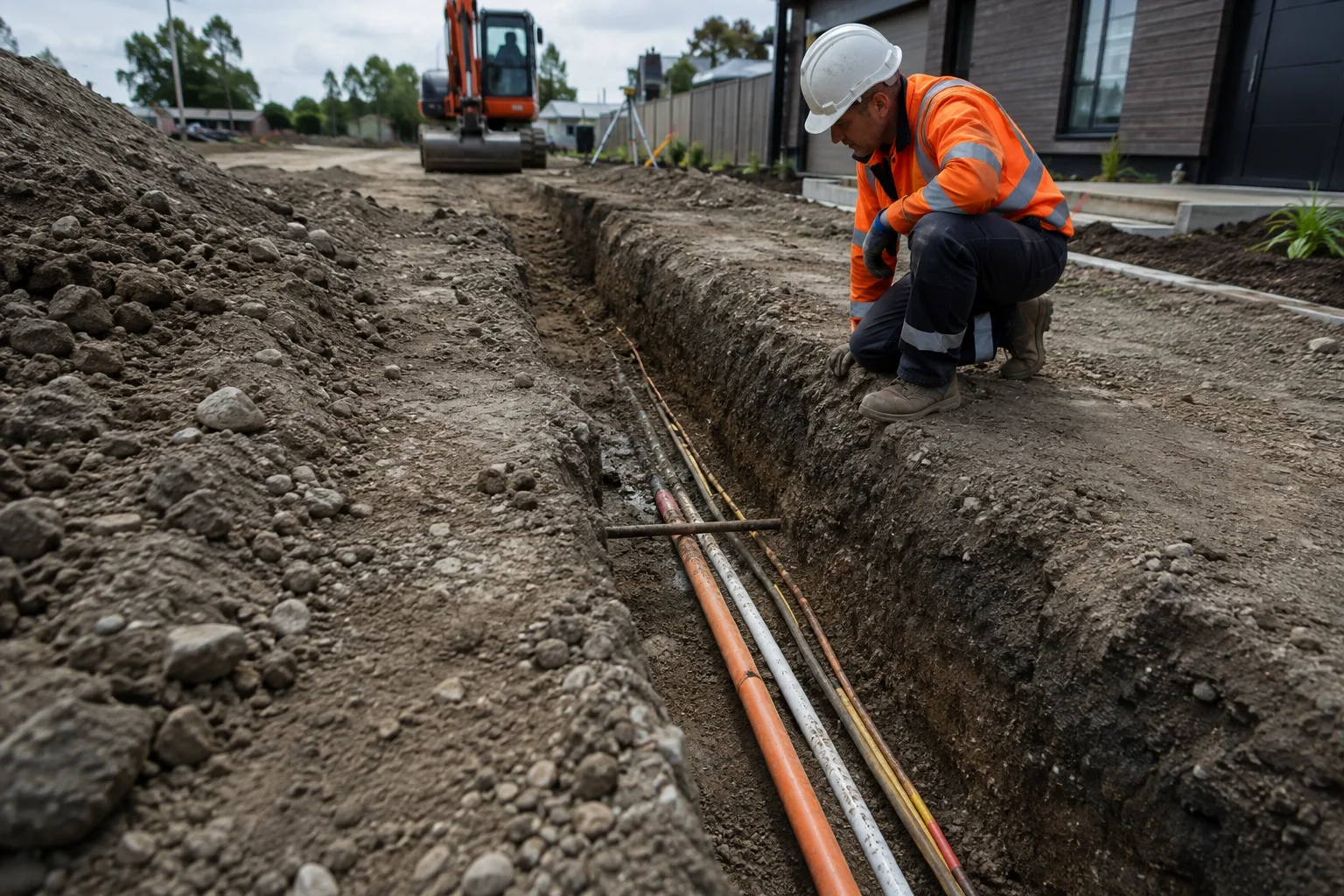
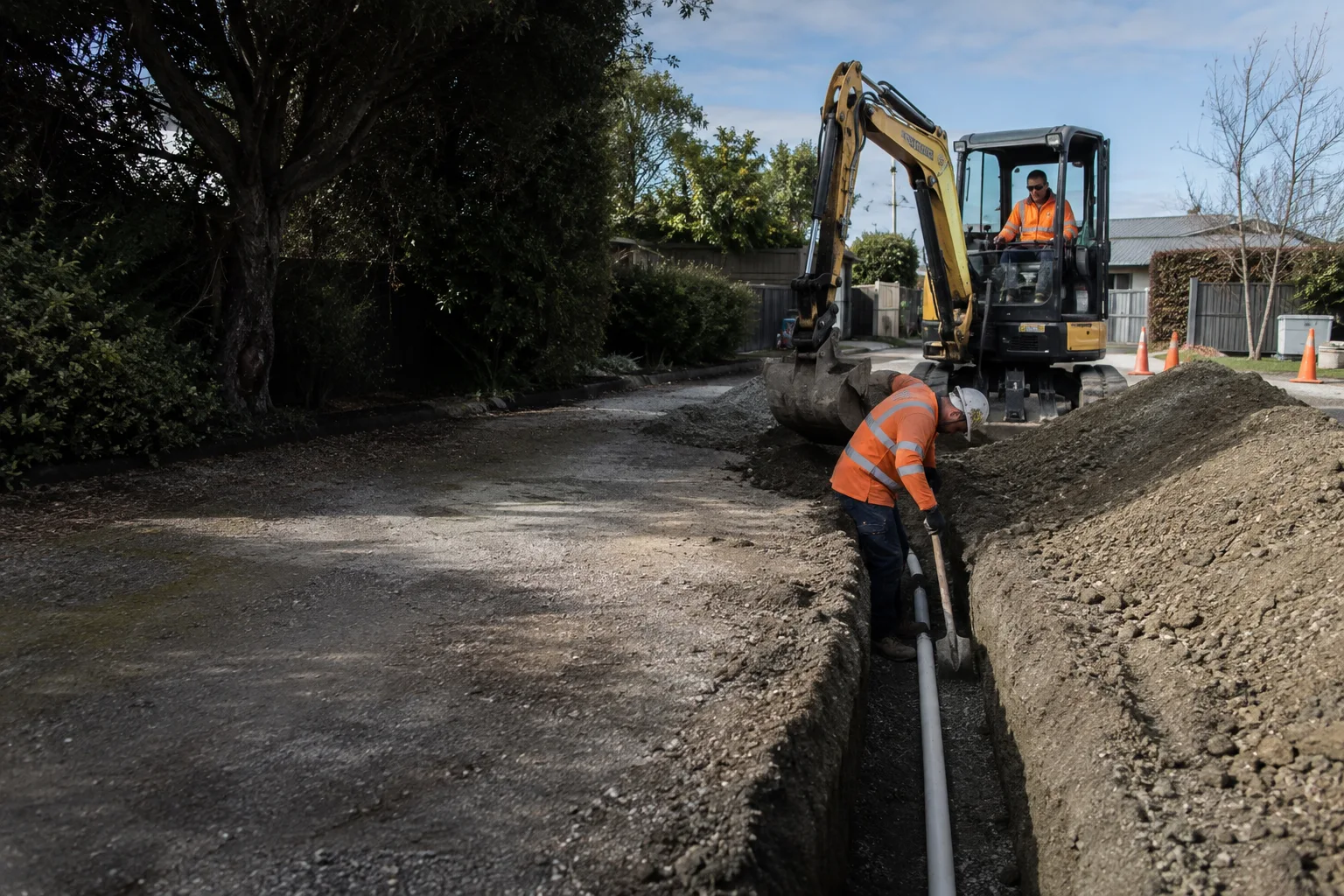
Trenching for Services (Power, Water, Gas, Telecoms)
Trenching dug to depth and clearance requirements for power, water, gas or telecommunications connections, coordinated with your network provider.
View serviceSafety & services
Underground services are easy to miss and expensive to damage, so here's what to check and who to involve before any trench goes in the ground.
03 661 7200Your site. A clear next step.
Christchurch Trenching and Underground Services: What to Know Before You Dig sets out what to check and who to involve before any trench goes in the ground, since underground services are easy to miss and expensive to damage.
Tell us what you want to achieve, where your site is and when you would like to start. Include any plans, access constraints or measurements that will help us understand the work.
Safety & services
Updated 2026-09-06
Every property in Christchurch, Selwyn, Waimakariri and Banks Peninsula has some combination of underground services running through or near it: power, gas, telecommunications, water and, in many areas, older services that predate current records. Striking any of these during excavation can range from an inconvenient outage to a genuine safety hazard, and gas or electrical strikes in particular carry real risk to anyone on site. Beyond the immediate danger, a struck service usually means an unplanned repair bill, a delayed project, and in some cases a call to the asset owner that nobody wanted to make.
None of this is unique to large sites either; a straightforward trench for a new drainage line or a fence post hole on an ordinary residential section can hit a service just as easily if nobody has checked first.
Safety & services
beforeUdig is the free national referral service that lets anyone planning excavation lodge an enquiry and receive location information from utility asset owners with infrastructure in the area, covering things like power, gas, telecommunications and, where registered, some water and wastewater assets. It is a straightforward process: submit the dig site details online, and the relevant asset owners respond with plans showing what they have in the vicinity. The key practical point is timing.
Lodging an enquiry needs to happen with enough lead time before work starts, since asset owners need time to respond, and starting excavation before those plans are in hand defeats the purpose of checking at all. For any trenching work, lodging a beforeUdig enquiry as an early step in project planning, rather than an afterthought once the digger is booked, is standard good practice.
WorkSafe NZ publishes guidance covering both general excavation safety and working safely near utilities, and both apply directly to trenching work. The core principle is treating known or possible services as a hazard to be actively managed, not assumed away. That means identifying what might be present before work starts, using safe digging methods such as hand-digging or potholing to expose and confirm a service's actual position before mechanical excavation gets close to it, and maintaining safe clearances around anything live until its exact location and depth are confirmed.
This guidance exists because service strikes remain a genuine and recurring cause of harm on excavation sites nationally, and following a documented safe system of work is what keeps a trenching job from turning a paperwork exercise into an incident.
Safety & services
It is worth being clear about the limits of the plans that come back through a beforeUdig enquiry. They show the indicative location of services based on the asset owner's records, which is genuinely useful information, but it is not a guarantee of exact position or depth on the ground. Services can have shifted slightly from where they were originally recorded, records can be incomplete or outdated, and private services, such as a property's own stormwater line, septic system pipework, or an old redundant connection from a previous building, often are not captured on utility company plans at all.
Treating a set of service plans as the final word, rather than as a starting point that still needs to be verified on site, is a common assumption that leads directly to unexpected strikes.
Because plans alone do not confirm exact position, engaging a competent locator to physically trace and mark services using detection equipment before mechanical digging begins is standard practice, particularly in older parts of Christchurch where services have accumulated over decades, or on any site where the beforeUdig response is incomplete or uncertain. A locator's job is to confirm where a service actually runs and how deep it sits, giving the excavation crew a verified position to work around rather than relying on an indicative plan. Building this step into the project timeline, alongside the beforeUdig lead time, means the information is in hand before the trench is dug, rather than being sorted out mid-excavation once something unexpected has already turned up.
Safety & services
Once work is underway, a few basic practices reduce risk considerably. Trenches of any real depth need appropriate support or safe battering to prevent collapse, since unsupported trench walls are a recognised cause of serious harm on excavation sites. Spoil from the trench should be kept back from the edge rather than piled right against it, both for trench stability and to keep the working area clear.
Near any known or suspected service, excavation slows down and shifts to careful, staged digging, often hand tools near the immediate vicinity of a confirmed line, rather than continuing at normal mechanical pace. These habits, applied consistently rather than only when something looks risky, are what keep a routine trenching job routine.
Christchurch Earthworks coordinates trenching work around the information available before digging starts, including beforeUdig responses, any locator reports, and site knowledge from the property owner about services they know exist. Our role is to excavate carefully to the required depth and alignment, working around confirmed service locations and following safe digging practices throughout. It is worth noting that final connection to a given service still sits with the relevant licensed trade: connecting into a drainage or stormwater system is a licensed drainlayer's job, just as electrical and gas connections belong to their own licensed trades.
Getting the sequence right, checks and locating first, careful excavation second, licensed connection work third, is what makes trenching projects run smoothly and safely from start to finish.
Keep these points in mind
Lodge a beforeUdig enquiry early, with enough lead time for utility asset owners to respond before excavation starts.
WorkSafe NZ guidance treats known and possible services as an active hazard requiring a documented safe system of work.
Service plans show indicative locations from utility records, not a guarantee of exact position, depth or completeness.
Private and older services, such as septic lines or redundant connections, often don't appear on utility company plans at all.
A competent locator physically confirms service position and depth before mechanical excavation gets close.
Excavating carefully is our role; connecting to drainage, power or gas services remains a licensed trade's responsibility.
Put the guide into practice
Trenching dug to depth and clearance requirements for power, water, gas or telecommunications connections, coordinated with your network provider.
View service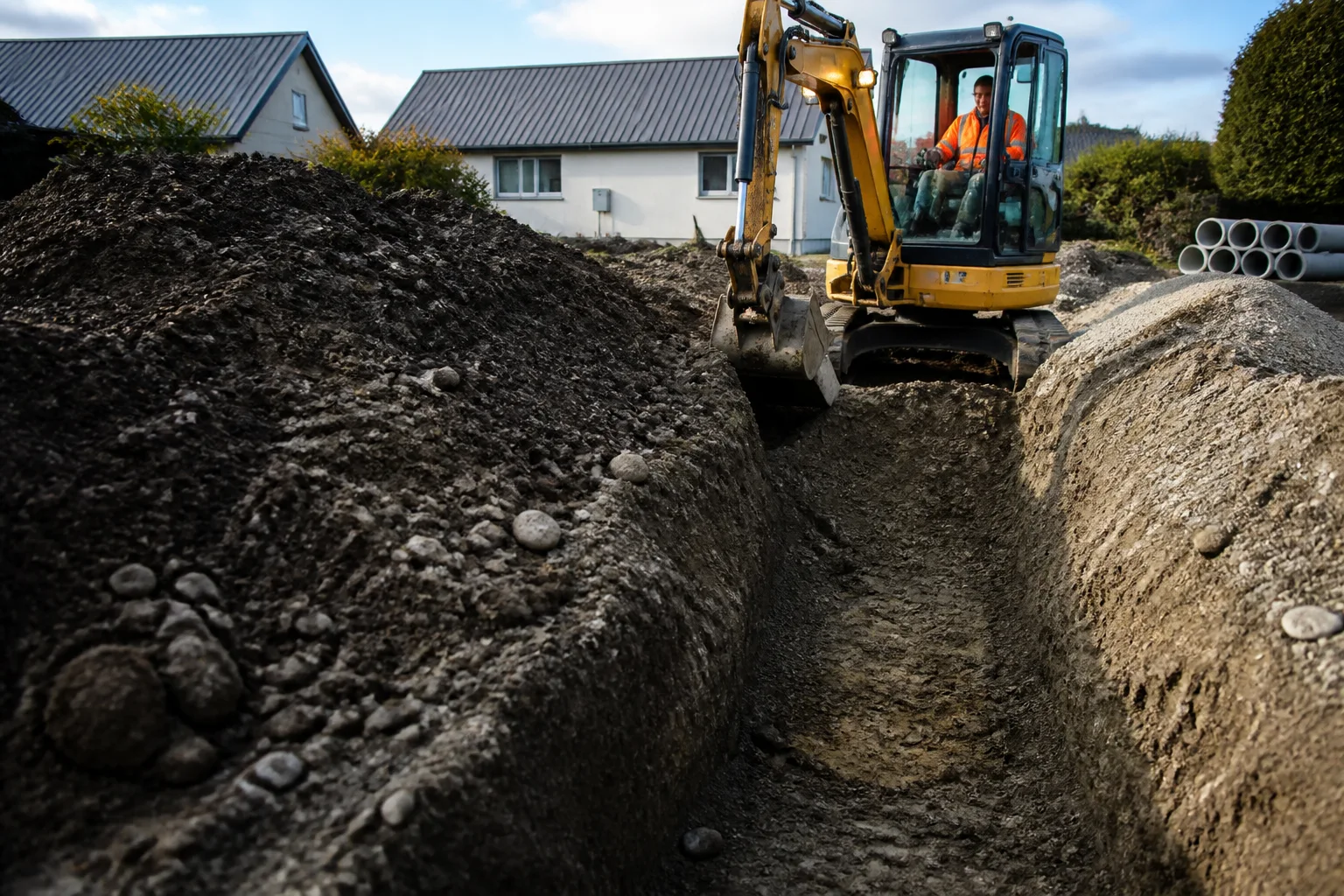
Excavation for wastewater and drainage runs, dug to the falls and depths your licensed drainlayer specifies before they lay and connect the pipework.
View service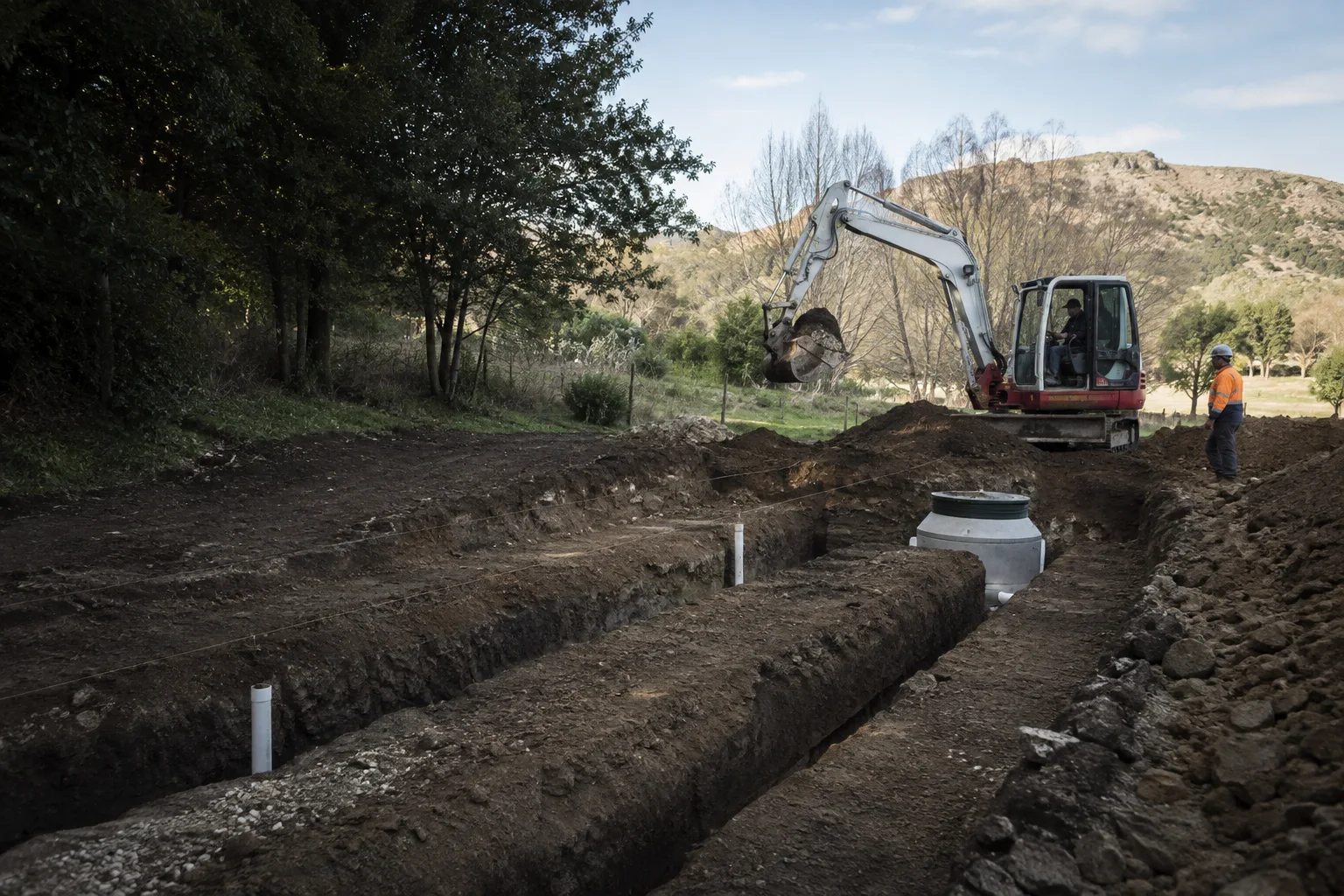
Excavation for septic tanks and effluent disposal fields, dug to the depths, clearances and layout set by your suitably qualified designer.
View service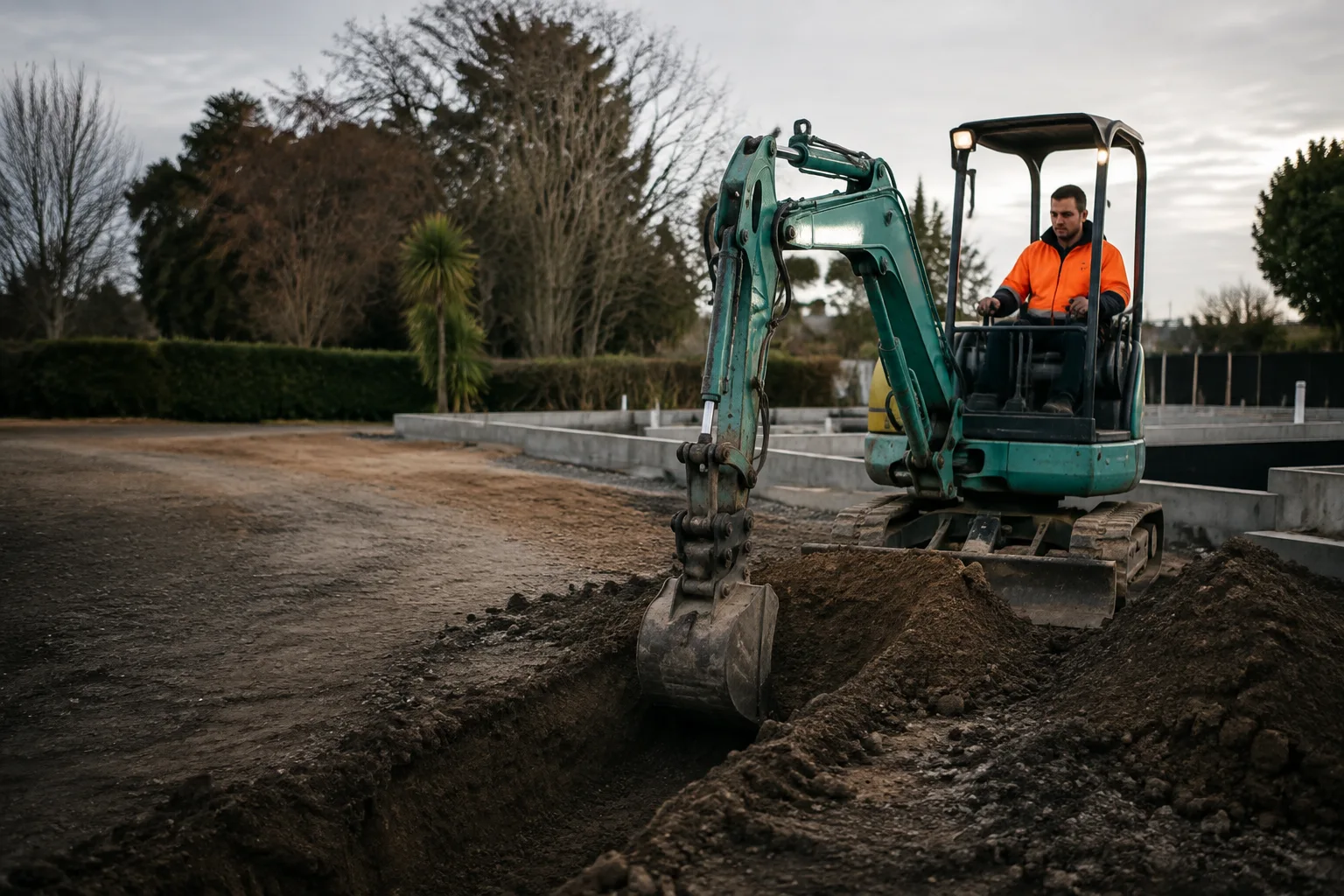
Operator-driven digger and excavator hire across Canterbury, with the machine matched to your access, ground and scope of work.
View serviceTell us about your project and we will come back with clear next steps — no pressure, no jargon.
YOUR SITE. THE NEXT CHAPTER.
Start with your suburb, a few site details and what you want to build.
Plan your project