
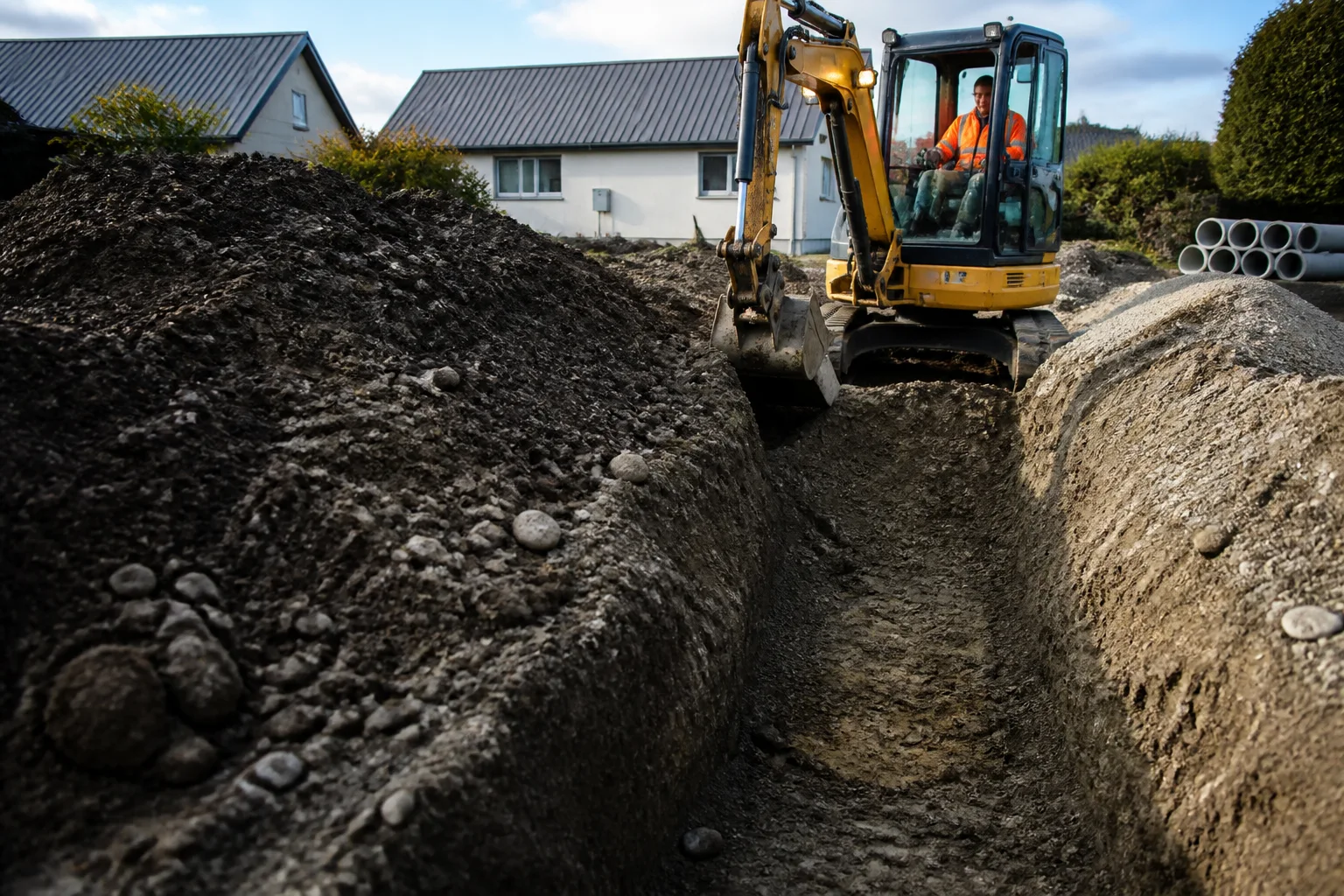
Drainage-Ready Excavation
Excavation for wastewater and drainage runs, dug to the falls and depths your licensed drainlayer specifies before they lay and connect the pipework.
View serviceDrainage-Adjacent & Trenching
Excavation for septic tanks and effluent disposal fields, dug to the depths, clearances and layout set by your suitably qualified designer.
03 661 7200Your site. A clear next step.
Christchurch Septic And Effluent Field Excavation means excavation for septic tanks and effluent disposal fields, dug to the depths, clearances and layout set by your suitably qualified designer.
Tell us what you want to achieve, where your site is and when you would like to start. Include any plans, access constraints or measurements that will help us understand the work.
Background
Septic tanks are underground wastewater treatment systems used by properties not connected to municipal sewer lines. They're a common solution for rural and semi-rural homes throughout New Zealand, providing safe, self-contained treatment for household waste.
A septic tank works by collecting wastewater from a property's toilets, sinks, and drains into a buried, watertight container — typically made of concrete, fibreglass, or plastic. Inside the tank, solid waste settles to the bottom as sludge, while lighter materials like fats and oils float to the top as scum. Bacteria naturally break down these solids over time, reducing their volume.
The relatively clear liquid in the middle layer, called effluent, flows out of the tank into a drain field (also known as a soakage or leach field). Here, the effluent filters slowly through layers of soil and gravel, which naturally treat and purify the water before it returns to the groundwater system.
Septic tanks require regular pumping every few years to remove accumulated sludge and scum, along with periodic inspections to ensure the drain field is functioning properly. When installed correctly and well-maintained, a septic system can operate effectively for decades, offering a reliable, low-maintenance wastewater solution.
Background
An effluent field — also called a drain field, leach field, or soakage field — is the area of land where treated wastewater from a septic tank is dispersed into the soil for final filtration and absorption.
After wastewater passes through the septic tank and solids settle out, the remaining liquid (effluent) flows out into a network of perforated pipes laid within the effluent field. These pipes are typically surrounded by layers of gravel or aggregate, which help distribute the effluent evenly across the field.
As the effluent seeps out of the pipes, it filters slowly downward through the soil. This natural filtration process removes remaining bacteria, nutrients, and contaminants before the water eventually rejoins the groundwater system. The soil itself acts as a biological filter, with microorganisms in the ground further breaking down any residual waste.
For an effluent field to work properly, it needs:
A properly designed and maintained effluent field is essential to the overall performance of a septic system, preventing groundwater contamination and system failure.
Recognise your project
Define the work
The tank location is excavated to the depth, size and clearances on your designer's approved plan. Clearances from boundaries, bores and buildings are set by the design and are not ours to adjust on site.
Disposal field trenches or beds are excavated to the layout, spacing and depth your qualified designer specifies. Spacing and depth determine how the field performs, so they follow the drawing exactly.
Excavation is carried out in line with the regional or district council consent conditions you or your designer provide. Those conditions are specific to your property and often include setbacks and depths.
A beforeUdig check is run and we dig carefully around existing services, bores and waterways near the work. Rural properties often have undocumented lines, and a bore or waterway nearby raises the stakes.
In clay soils we take care not to over-work or smear the trench walls. Smeared clay seals the surface water needs to pass through, which can compromise how well the field percolates afterwards.
Once the responsible installer or designer has completed and inspected the installation, we backfill around the tank and field lines. Backfill is placed carefully so nothing shifts out of level.
Pasture, lawn or driveway surfaces disturbed by the excavation are reinstated. A tank and field cover a sizeable area, so putting the surface back properly is a visible part of the outcome.
We excavate to the specification provided. Designing the system and confirming it meets AS/NZS 1547 and consent requirements is your qualified designer's responsibility, as that work carries professional liability.
Why work with us
Setbacks from boundaries, bores, buildings and waterways are set by your designer's approved plan and the consent. They are not adjusted on site for convenience.
Over-working or smearing trench walls in clay seals the surface water needs to pass through. That care is the difference between a field that works and one that surcharges.
Trench spacing, length and depth determine how the disposal field performs over years. We build to the drawing rather than adjusting the layout to suit the machine.
Lifestyle blocks often have undocumented lines, bores and waterways near the work. beforeUdig is run and excavation proceeds carefully, because the consequences here are environmental as well as costly.
Regional and district council conditions on wastewater are specific to your property. We excavate to the conditions you or your designer give us rather than a general approach.
Designing the system and confirming it meets AS/NZS 1547 and consent requirements is your qualified designer's job. We excavate to their specification and do not pretend otherwise.
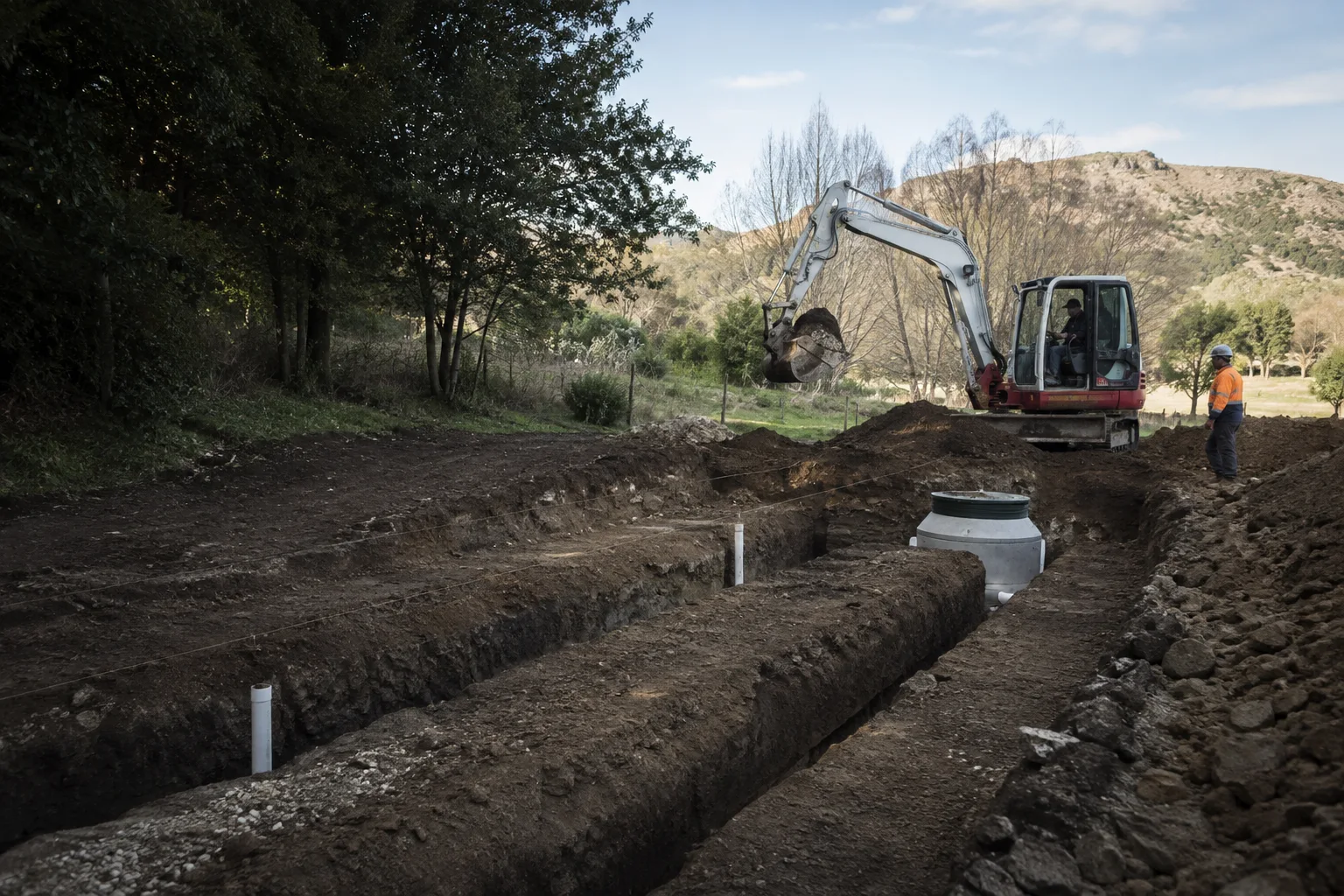
Working conditions
Tank and field excavation is generally done with a mid-size excavator, sized to the depth and layout your designer specifies and the access available on the property. Sites with limited access or steep contour may need a smaller machine or staged digging. We confirm the right approach once we've seen the site and the approved design.
Expect open excavation across the tank and field area for the duration of digging, installation and inspection, which we fence or cover as needed for safety, particularly around stock or children. Vehicle and machinery access across paddocks or driveways will be disrupted until backfilling and reinstatement are finished. Timing depends on when your designer or installer can attend to place and inspect the system.
Get the detail right
An effluent field only performs as designed if the trench walls and base aren't smeared or over-compacted during digging, since that can reduce how well the soil accepts effluent over time. We also work strictly to the depths, spacing and clearances your suitably qualified designer sets, since septic and effluent systems are governed by AS/NZS 1547 and specific consent conditions that vary by site and district.
No. Design and certification against AS/NZS 1547 and your council's consent conditions is the responsibility of a suitably qualified designer. We excavate to the plan they provide.
We excavate the tank and field area to specification. Placing, connecting and certifying the tank and field components is carried out by the installer or designer responsible for sign-off.
In most districts yes, since septic and effluent systems are usually subject to regional or district council conditions. We work to whatever consent conditions and design you or your designer provide.
That's assessed by your designer, who may relocate or resize the field or specify a different system type. We excavate to whatever design results from that assessment.
Yes, provided there's a current design and any required consent for the replacement. We excavate to that specification the same way as for a new system.
Effluent fields rely on soil structure to work properly, so digging in overly wet conditions or over-compacting the trench walls can reduce how well the field disperses effluent, even if the location and dimensions are correct.
The next part of your project
Excavation for wastewater and drainage runs, dug to the falls and depths your licensed drainlayer specifies before they lay and connect the pipework.
View service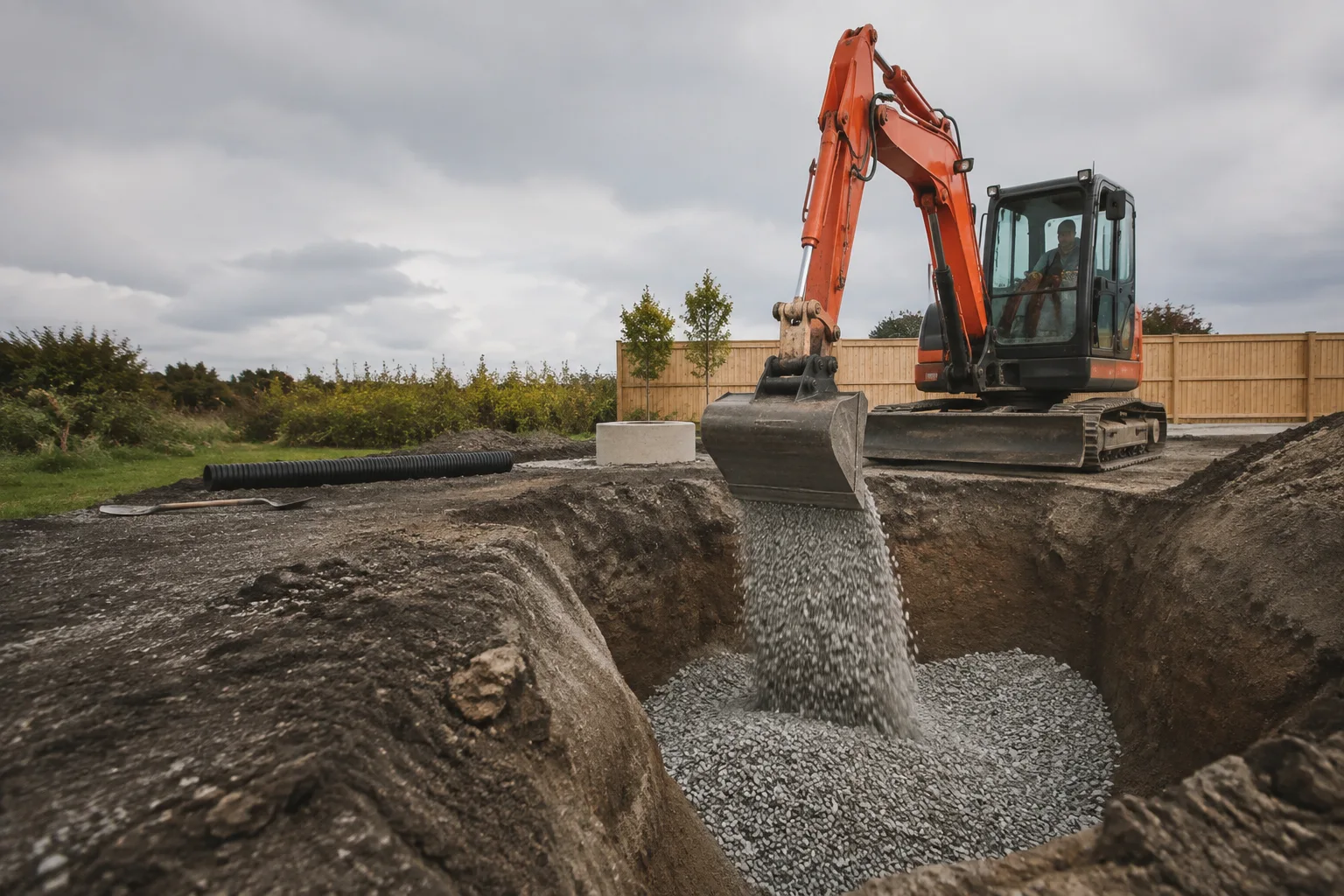
Excavation for stormwater systems across Christchurch — pipe runs, sumps and catchpits, attenuation tanks and connections out to a kerb channel or council main.
View service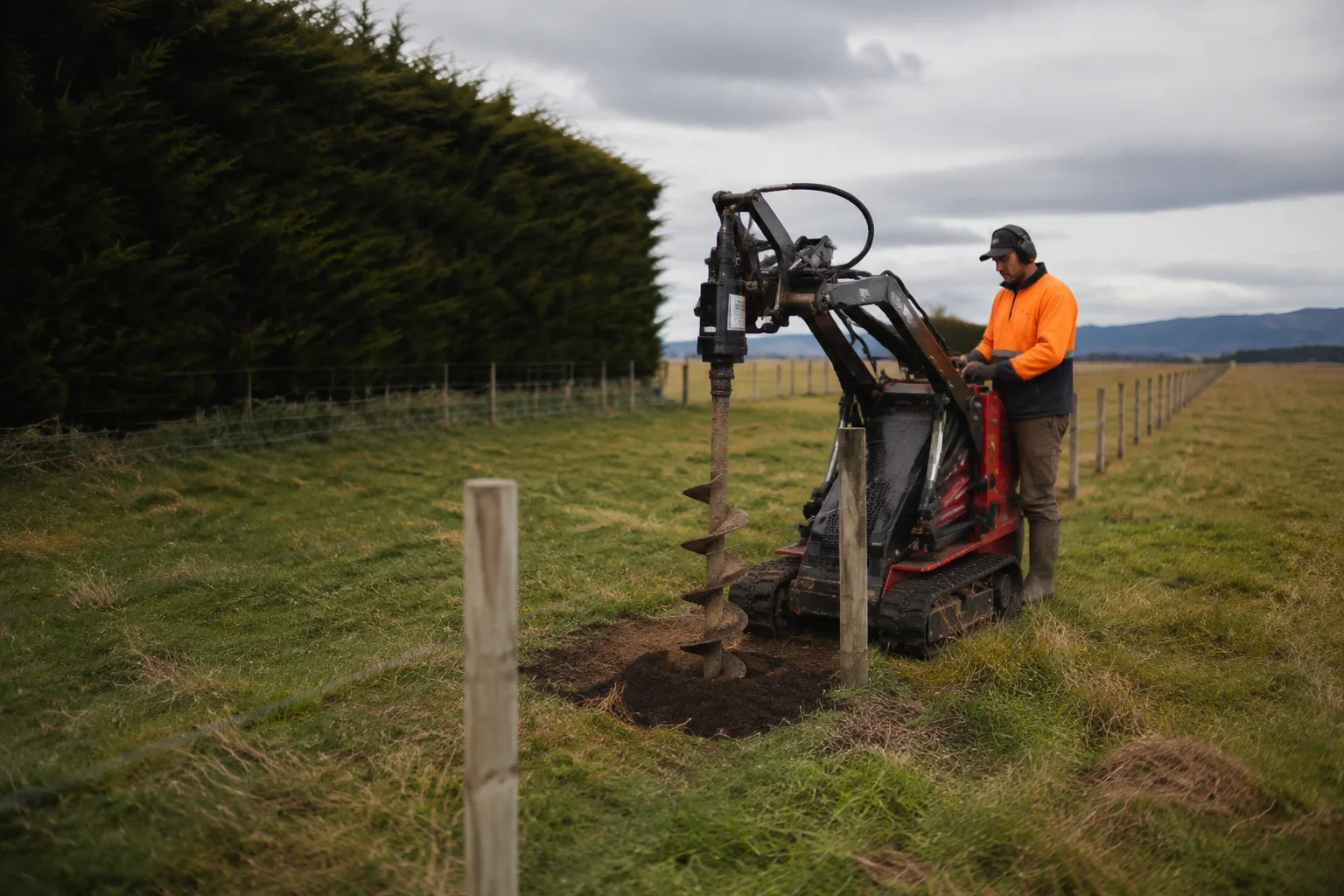
Mechanical post-hole boring and augering for fencing, decking and pergolas, plus long-run rural fence-line augering across Canterbury properties.
View service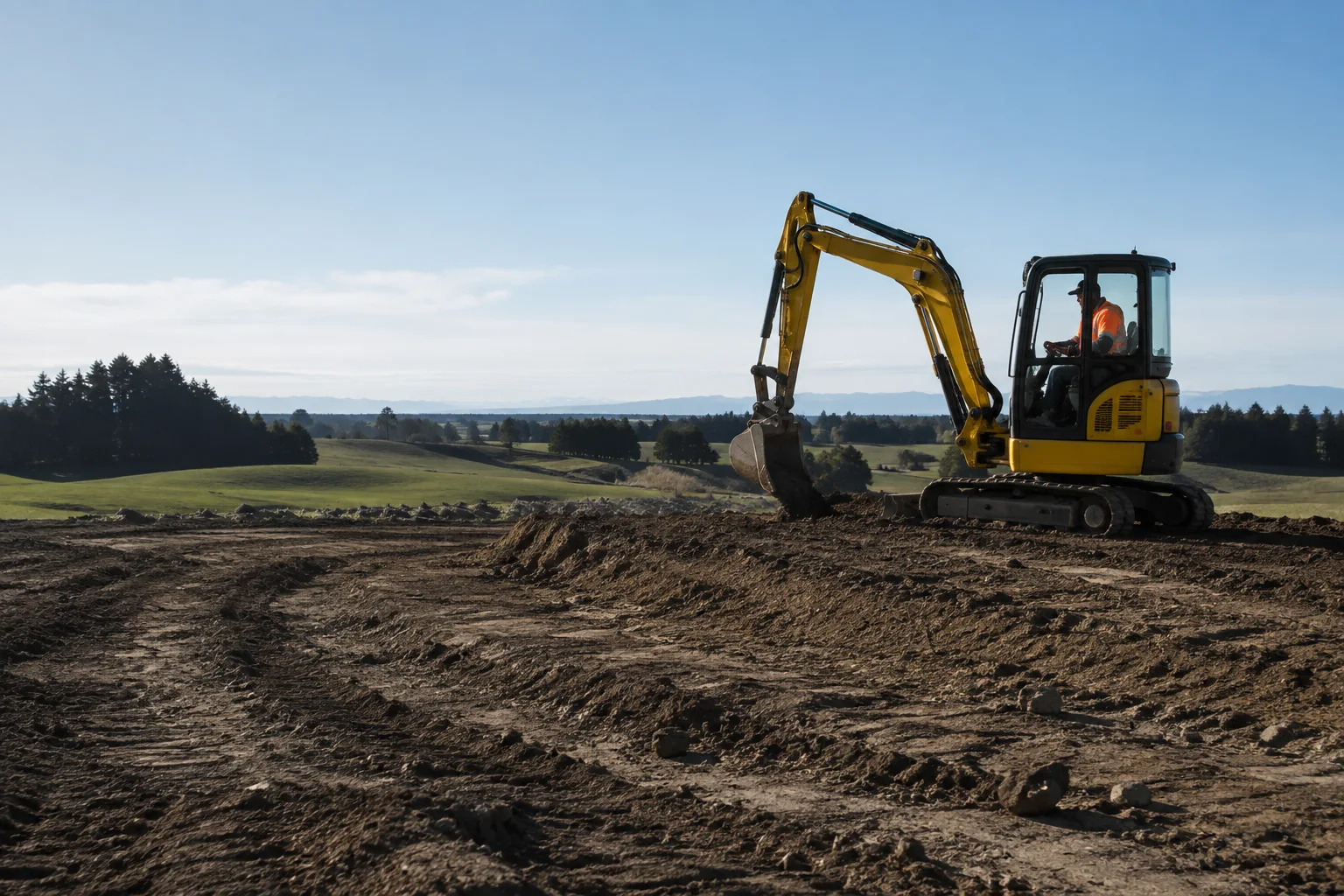
General earthworks for farms and lifestyle blocks, including access tracks, building pads, yard formation and paddock drainage shaping across rural Canterbury.
View serviceTell us about your project and we will come back with clear next steps — no pressure, no jargon.
YOUR SITE. THE NEXT CHAPTER.
Start with your suburb, a few site details and what you want to build.
Plan your project