
Driveway Excavation & Construction
Excavation and sub-base preparation for new or replacement driveways, shaped and compacted correctly before your concrete or asphalt contractor arrives.
View serviceOutdoor projects
What actually happens beneath a driveway surface, from excavation and base layers to the falls that keep water moving away from your property.
03 661 7200Your site. A clear next step.
Christchurch Driveway Construction Guide: Excavation, Base Prep and Drainage Falls covers what actually happens beneath a driveway surface, from excavation and base layers to the falls that keep water moving away from your property.
Tell us what you want to achieve, where your site is and when you would like to start. Include any plans, access constraints or measurements that will help us understand the work.
Outdoor projects
Updated 2026-09-06
A driveway that cracks, ruts or ponds water within a year or two of being laid usually has a problem underneath it, not on top of it. Before any concrete, asphalt or paving goes down, the area needs to be excavated to remove topsoil, organic material and any soft or variable ground, down to a stable subgrade that can actually support vehicle loading. Skipping or rushing this step is one of the more common reasons a driveway underperforms, because whatever base and surfacing goes over unstable ground will eventually move with it.
On Canterbury clay and silt soils in particular, getting down to consistent, workable material, and dealing with any soft spots properly rather than building over them, sets up everything that follows.
Outdoor projects
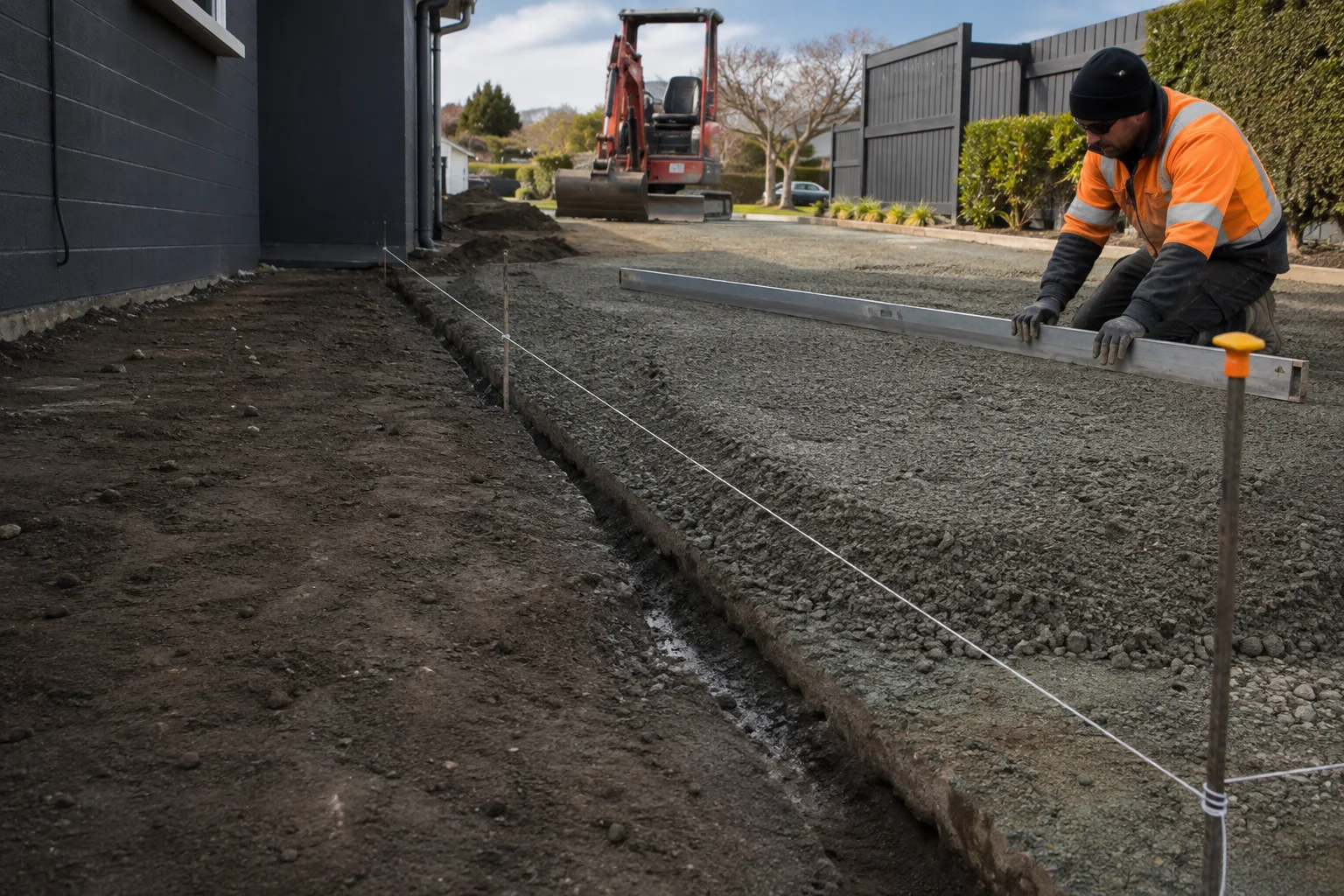
A typical driveway build-up involves several layers rather than one. Once the subgrade is exposed and, if needed, a geotextile fabric laid to separate soft ground from the fill above, a subbase aggregate layer goes in first, followed by a finer compacted basecourse layer that provides the even, stable surface the final surfacing sits on. Total depth varies with what the driveway needs to carry: a car-only residential driveway needs less base than one that will regularly see trucks, trailers or heavy machinery, and soil type also affects how much depth is sensible.
Getting the excavation depth right from the start avoids either over-digging, which wastes material and cost, or under-digging, which leaves an under-strength driveway that will not hold up over time.
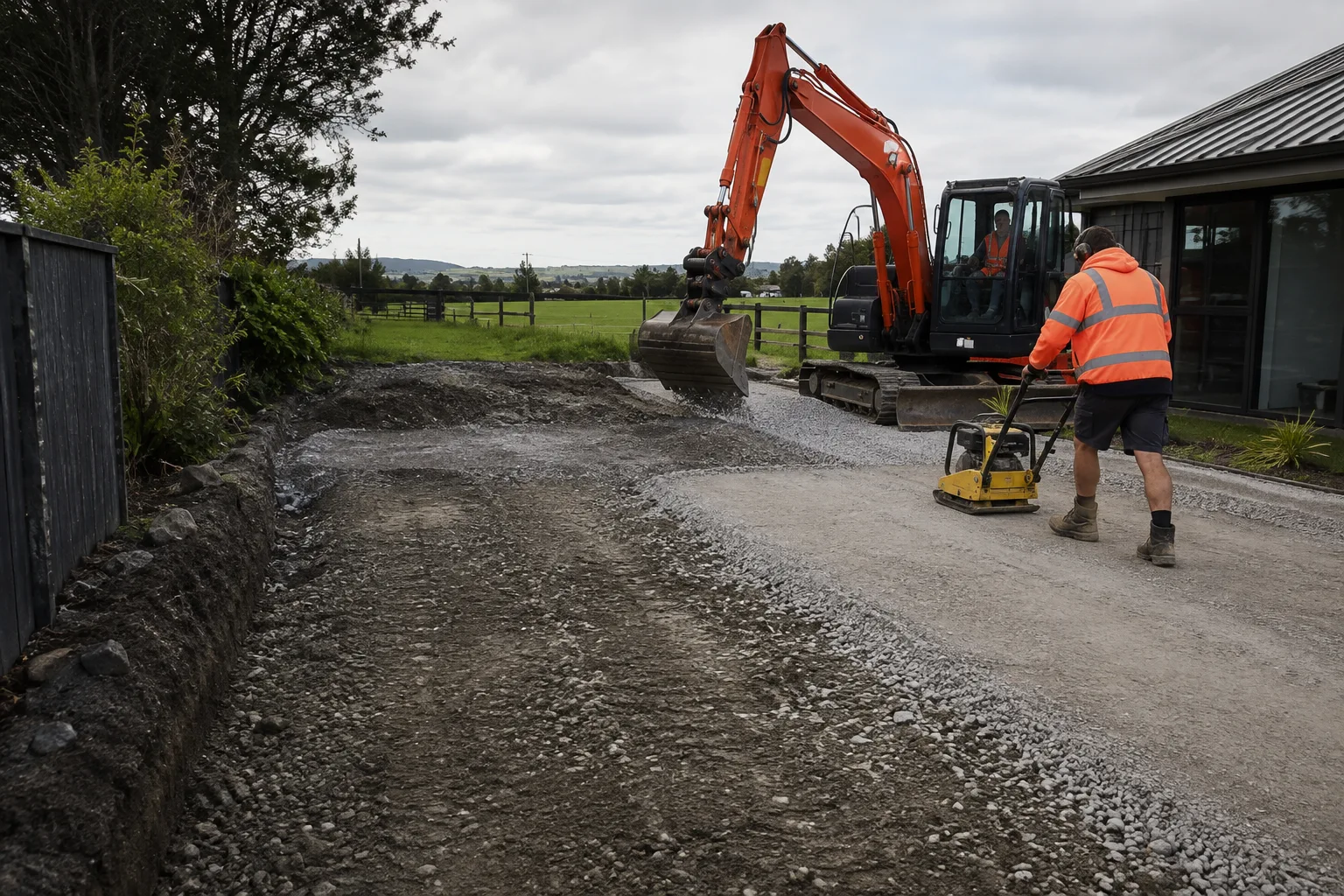
Aggregate that is simply tipped in and levelled off, without being compacted, contains air voids that allow it to settle unevenly once vehicles start driving over it. Proper practice is to place base material in layers, or lifts, and compact each one with an appropriate roller or plate compactor before adding the next, so the whole base reaches a consistent, dense state. This is what gives a driveway the even support it needs under wheel loads, and it is one of the main reasons a professionally built driveway holds its shape and surface over years of use, while a poorly compacted one develops dips, cracks and rutting relatively quickly, particularly at gateways and turning points where loading is concentrated.
Outdoor projects
A driveway needs to shed water, not collect it. That means building in both a crossfall, so water runs off to one side rather than pooling in the middle, and a longitudinal fall along the length of the driveway that directs water toward a legal point of discharge, such as the street channel or an approved soakage area, rather than toward a garage or the house itself. Getting these falls wrong is a common and frustrating fault, showing up as ponding after rain, ice forming in cold snaps, or water tracking toward a building instead of away from it.
These falls are set during the excavation and base preparation stage, using level checks to confirm the base is graded correctly before any surfacing contractor arrives to finish the job.
Excavation and base preparation is only the first half of a driveway project; a concrete, asphalt or paving contractor typically finishes the job on top of the prepared base. Coordinating between the two trades matters more than people expect. The base needs to be built to the exact finished levels the surfacing contractor requires, including allowance for the thickness of their surface course, and any edge restraints, expansion joint locations or drainage channel positions should be agreed before base work is finished rather than adjusted afterward.
Confirming these details early, and making sure both contractors are working from the same set of levels and drawings, avoids the awkward situation of a base needing to be reworked once the surfacing contractor arrives on site.
Outdoor projects
Altering or forming a new vehicle crossing, meaning the section of driveway that crosses the footpath and kerb to meet the road, generally requires approval from the relevant council before work starts. Christchurch City Council, Selwyn District Council and Waimakariri District Council each set standards covering crossing width, position relative to boundaries and street corners, sightlines for road safety, and construction detail where the crossing meets the formal road. In rural and semi-rural parts of Selwyn and Waimakariri, a culvert pipe under the crossing is often required to maintain roadside drainage.
Confirming these requirements, and any necessary approval, before excavation begins avoids work being non-compliant or needing to be redone to meet the council's standard.
Driveway projects run more smoothly with a clear order of operations: confirm any council crossing approval, excavate and prepare the base to the agreed levels and falls, hand over to the surfacing contractor, then finish with any adjacent landscaping or fencing. Weather matters more than people expect too, since compacting base material into wet, saturated ground rarely achieves a good result, and excavation in heavy rain can undo work already done. Building in some flexibility around weather, and sequencing base preparation so the surfacing contractor can follow on promptly once the base is ready, keeps a driveway project moving without unnecessary delays between trades.
Keep these points in mind
Driveway performance starts below the surface: excavation must reach stable subgrade before any base material goes down.
Subbase and basecourse aggregate layers are built up and compacted in stages to suit expected vehicle loading.
Compacting material in layers avoids the settlement, rutting and cracking that comes from loose, uncompacted fill.
Crossfall and longitudinal falls direct water away from buildings toward a legal point of discharge.
Excavation and base levels must match what the concrete, asphalt or paving contractor needs before they start.
Vehicle crossing works generally need council approval, with culvert requirements common in rural Selwyn and Waimakariri areas.
Put the guide into practice
Excavation and sub-base preparation for new or replacement driveways, shaped and compacted correctly before your concrete or asphalt contractor arrives.
View service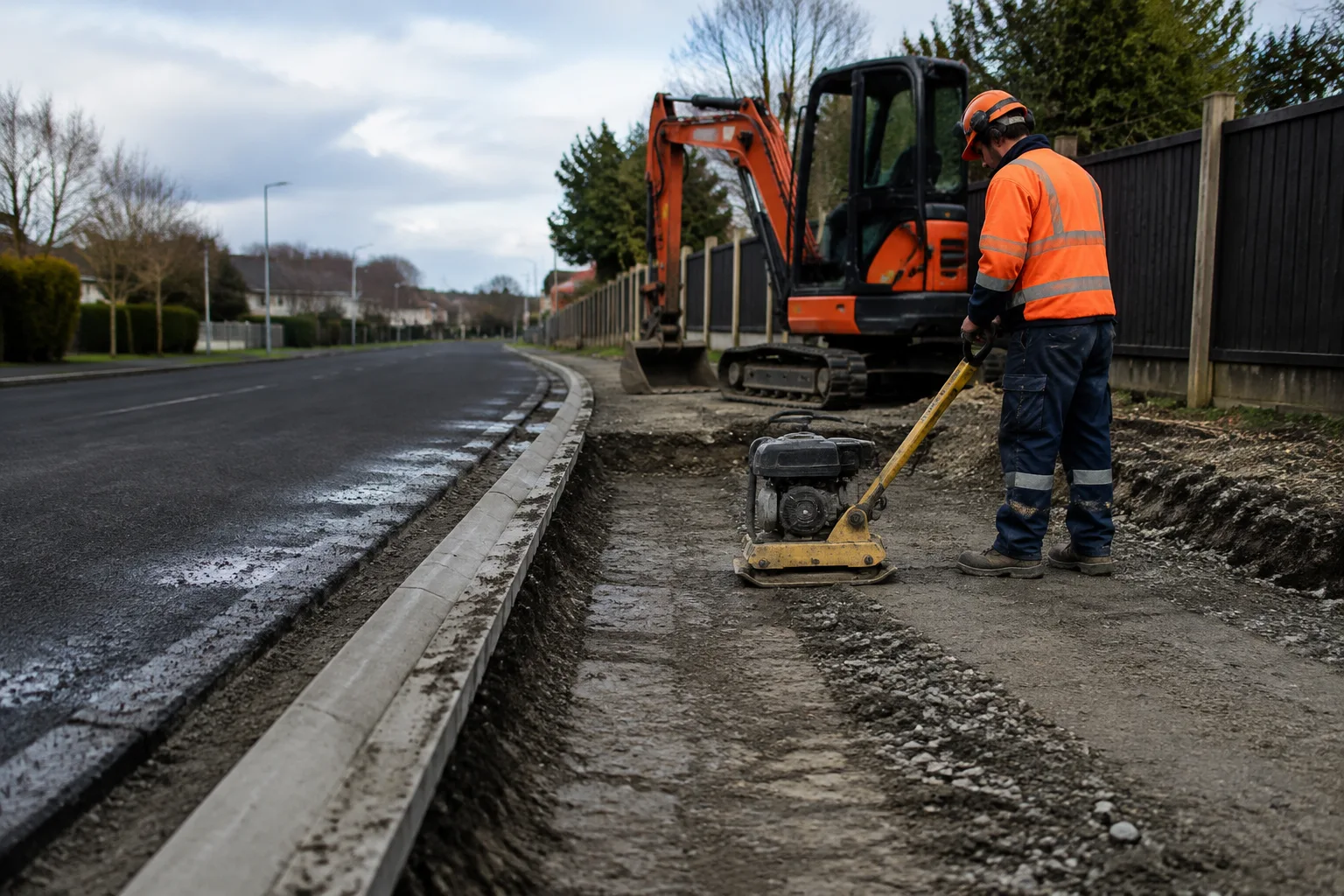
Ground preparation for kerb and channel work and vehicle crossings, excavated and graded to match road levels ahead of concrete placement.
View service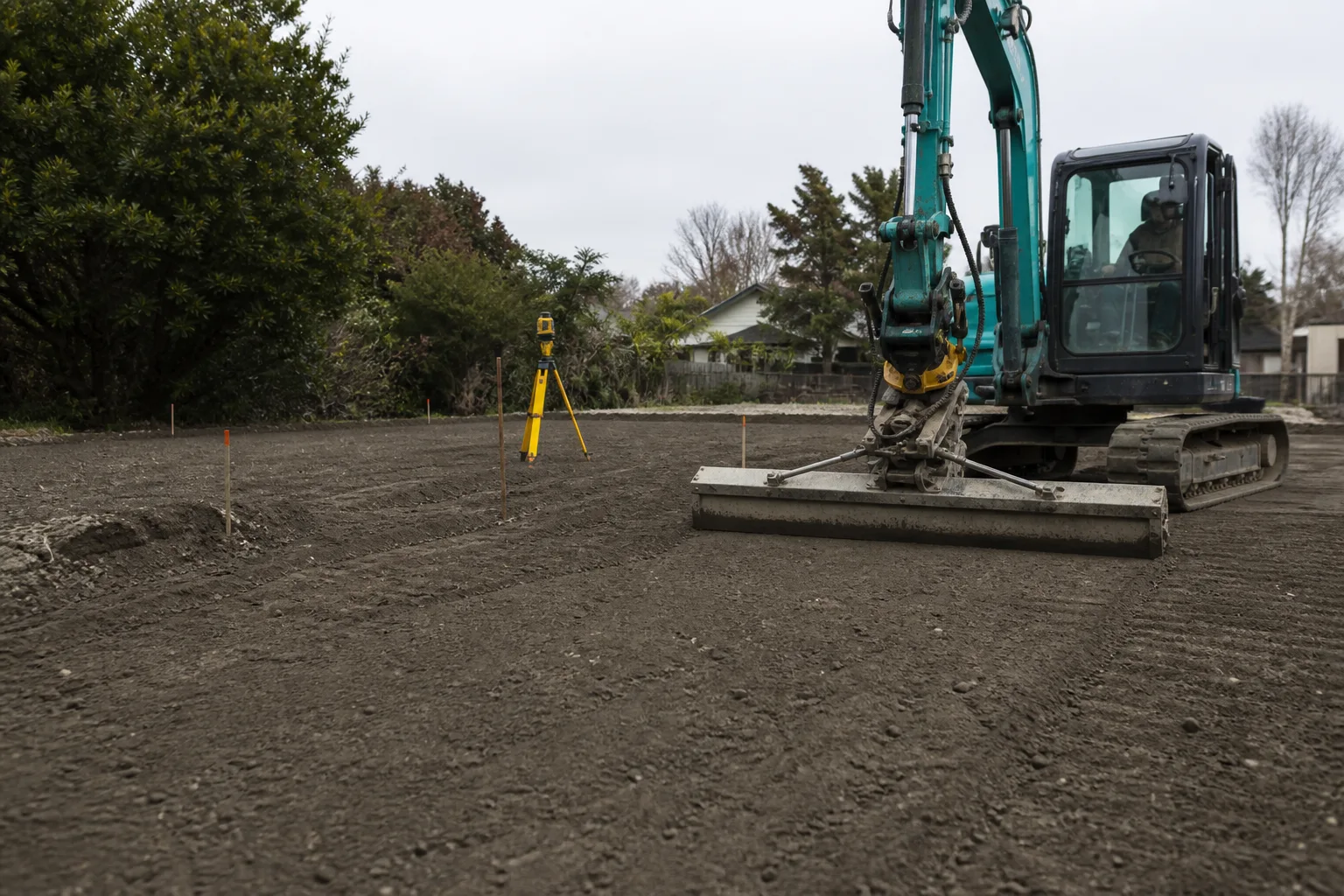
Laser-guided fine grading and final trim work across Christchurch, setting accurate levels and falls before paving, turf or a slab pour.
View service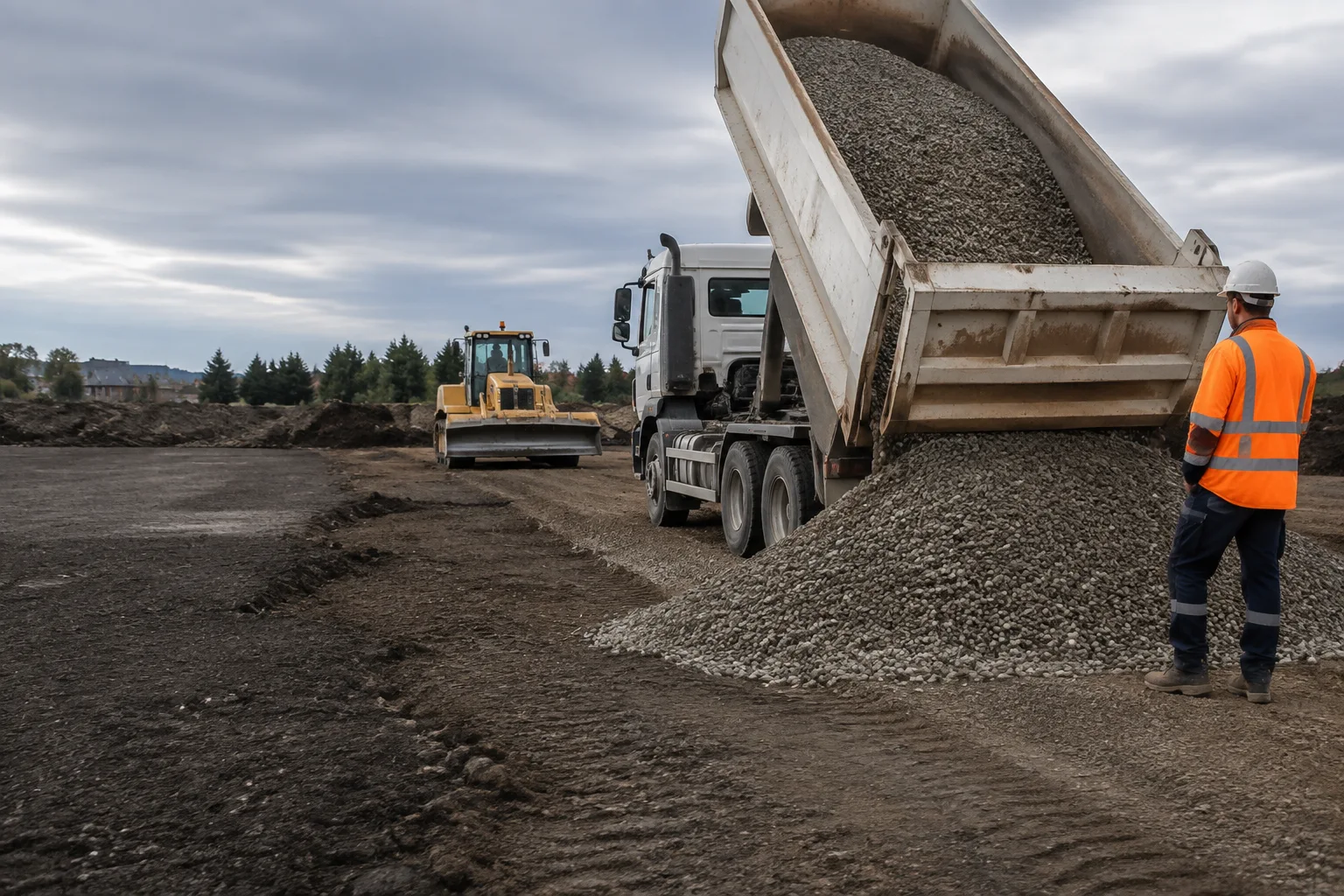
Shingle, aggregate and fill supplied and delivered for driveways, drainage and building work across Canterbury.
View serviceTell us about your project and we will come back with clear next steps — no pressure, no jargon.
YOUR SITE. THE NEXT CHAPTER.
Start with your suburb, a few site details and what you want to build.
Plan your project