
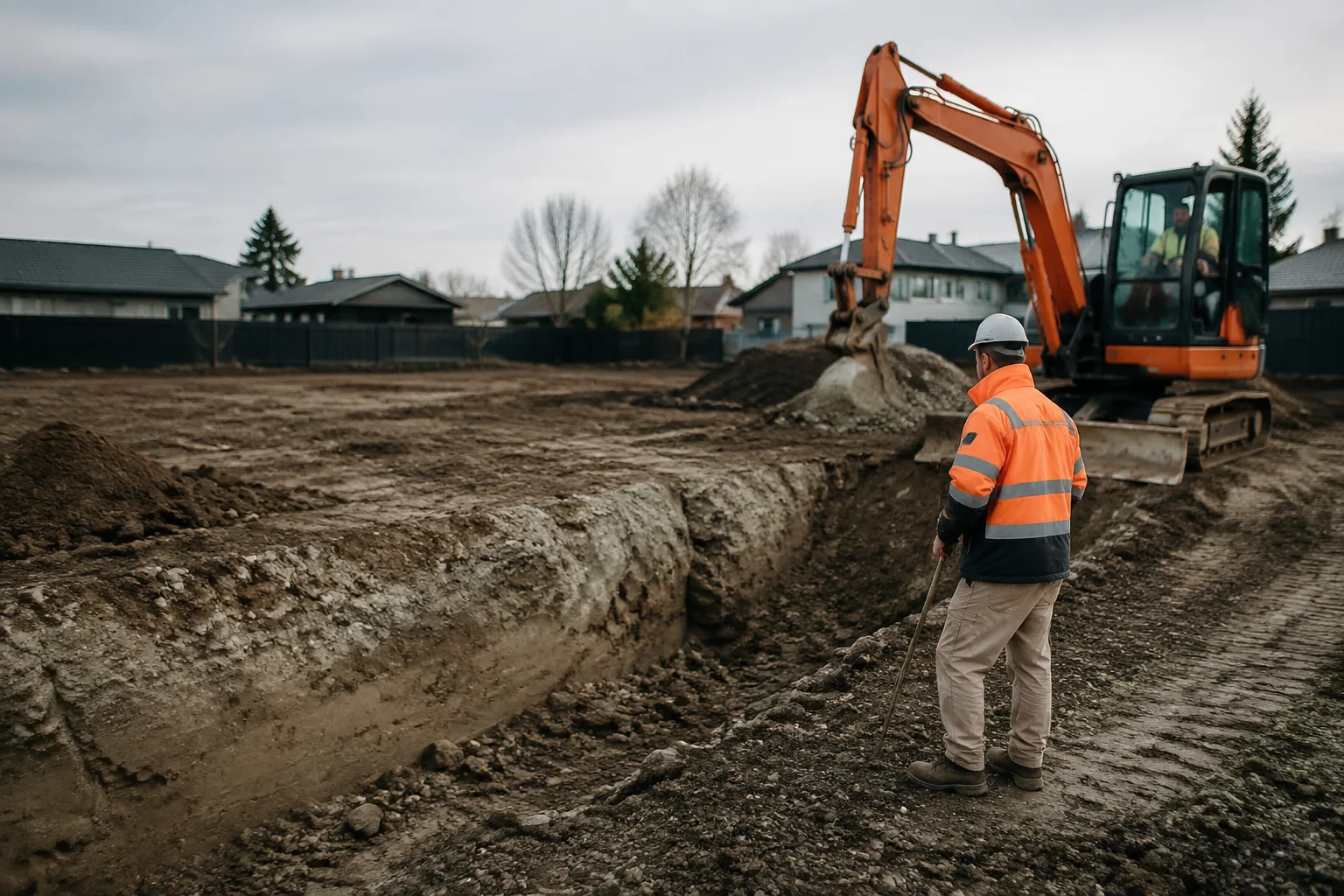
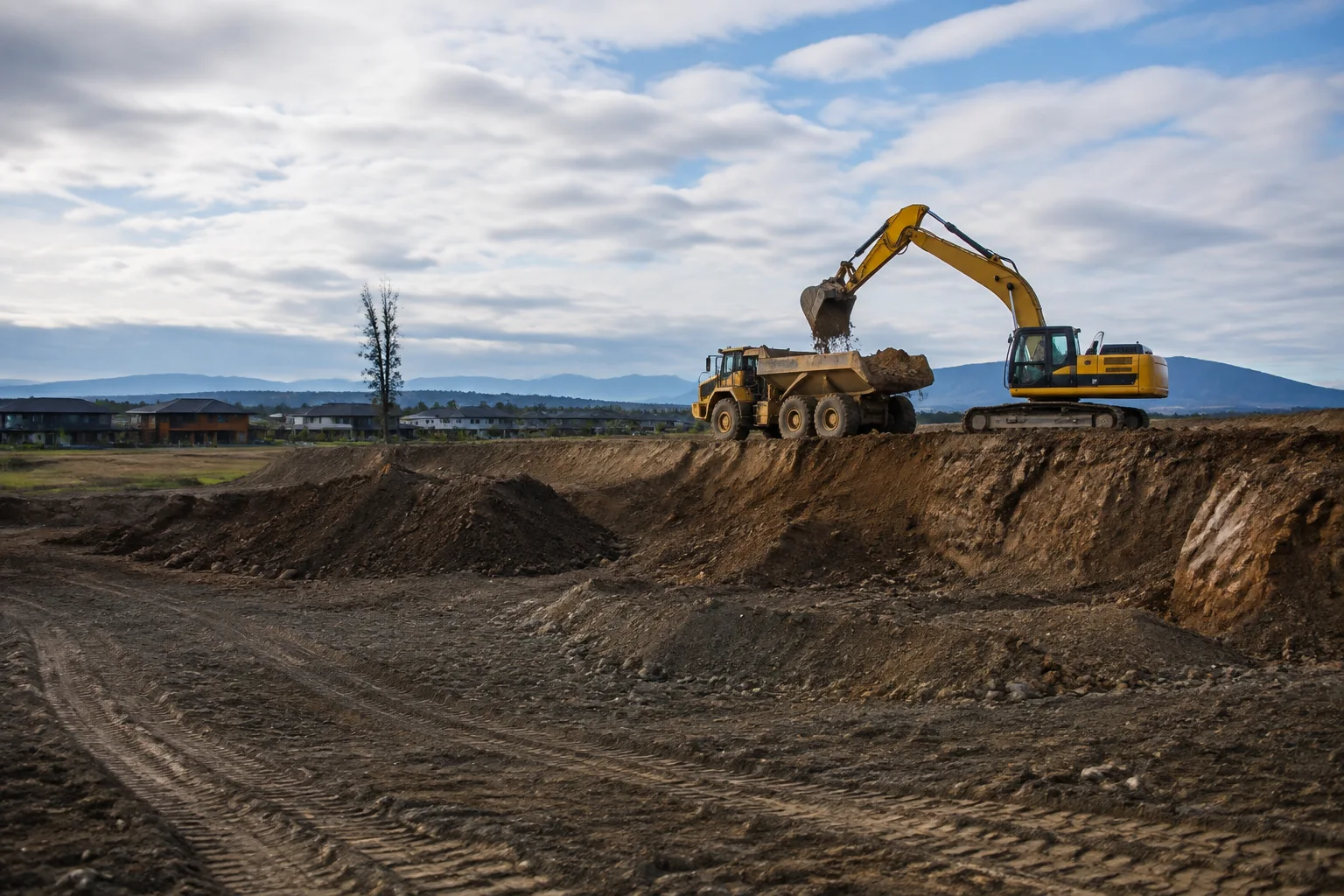
Bulk Earthworks & Site Cut-to-Fill
Cutting, filling and re-shaping land to bring a site to the levels your build or subdivision design calls for.
View serviceBudget & planning
Earthworks quotes for the same job can land a long way apart — here's what actually drives the price, and how to compare quotes on scope rather than the number at the bottom.
03 661 7200Your site. A clear next step.
Christchurch How Much Does Earthworks Cost? (What Changes the Quote) looks at why quotes for the same job can land a long way apart, covering what actually drives the price and how to compare quotes on scope rather than the number at the bottom.
Tell us what you want to achieve, where your site is and when you would like to start. Include any plans, access constraints or measurements that will help us understand the work.
Budget & planning
Updated 2026-09-06
When two contractors price what looks like the same job and the figures come back far apart, it rarely means one of them is wrong. Earthworks pricing is built from a chain of variables: how machinery can get onto the site, what the ground turns out to be once you're under the topsoil, how much material actually has to move, where that material ends up, and how long the job realistically takes given the time of year. A quote that looks attractive on paper may have quietly assumed easy access, excluded disposal costs, or budgeted for a dry week that doesn't arrive.
This guide won't hand you dollar figures, because a genuine number can only come from a contractor walking your specific site and understanding your specific ground. Instead, it sets out the factors that make one job cost more than another, so you can ask sharper questions and compare quotes on what's actually included.
Access is often the first thing that shapes a price before any soil has moved. A section with a wide, clear driveway and open frontage lets a contractor bring in larger excavators and trucks, shift material efficiently, and finish in fewer days. A narrow urban site, a battle-axe section, a steep driveway, or a rural property reached by an unsealed or winding road may only suit smaller machinery, need several smaller loads instead of one large truck movement, or require hand-trimming in spots a digger bucket can't safely reach.
Overhead lines, retaining walls, established trees, fences and boundary clearances all narrow the usable working space further. Restricted access generally means smaller plant, more trips back and forth, and more time on site — and that shows up in the price regardless of how simple the design itself looks on a plan.
Budget & planning
What lies beneath the topsoil has a bigger effect on price than almost anything else, and it's rarely visible until machinery starts digging. Canterbury ground varies enormously across short distances — free-draining gravels in parts of Selwyn, heavier clay through parts of the city, and areas with a high water table or filled ground near waterways and the coast. Wet, unstable or soft ground may need to be removed and replaced with imported hardfill, or may simply need time to dry out or be worked around the weather.
Unexpected rock, old foundations, buried rubble, or contamination from a former use of the site can all stop work while it's assessed. Because these conditions are often only confirmed once excavation begins, a contractor's quote should ideally note the assumptions they've made about ground conditions, and what happens to the price if those assumptions turn out to be wrong.
The sheer quantity of material being cut, filled or moved across a site is one of the more straightforward cost drivers, but it's often underestimated by anyone without an engineering or surveying background. A building platform that needs a large volume cut from a sloping site, or a large volume of fill imported to raise a low-lying section, involves far more machine hours and truck movements than a modest level site. Where possible, balancing cut and fill on site — using material excavated from one area to build up another — is usually more economical than cutting material away and importing fresh fill, because it avoids paying twice: once to remove material and again to bring more in.
A contractor who calculates cut-to-fill volumes early, ideally from a proper site plan or survey, can usually offer a more accurate price than one working from a rough estimate.
Budget & planning
Any material that can't stay on site has to go somewhere, and any shortfall has to be brought in from somewhere else — both carry cost that scales with distance and volume. Cleanfill sites, transfer stations and quarries are not evenly spread across Christchurch City, Selwyn, Waimakariri and Banks Peninsula, so a site further from an accepting facility means longer truck cycle times and fewer loads per day. The type of material matters too: clean, uncontaminated soil is generally simpler to dispose of than material affected by prior land use or demolition debris, which may need testing and disposal at a facility able to accept it.
Similarly, imported topsoil, aggregate or hardfill carries a supply cost on top of the cartage cost of getting it to site. A contractor who quotes disposal and import as a rough allowance rather than a firm figure is usually flagging genuine uncertainty about volumes, not padding the price.
Earthworks over a certain scale, on a sloping site, near a waterway, or within a hazard-prone area typically trigger requirements from Christchurch City Council, Selwyn District Council or Waimakariri District Council before work can start, and these requirements add both time and cost to a project. Erosion and sediment control measures required under Environment Canterbury rules — silt fences, stabilised entrances, sediment ponds — need to be installed, maintained and eventually removed. Locating existing underground services through beforeUdig, and working near utilities safely, may add investigation time before excavation begins.
None of this is optional extra work a contractor is padding into a quote — it's compliance that protects your neighbours, waterways and the wider site, and a quote that has properly accounted for consent conditions and sediment control is more realistic than one that hasn't mentioned them at all.
Budget & planning
Canterbury's weather has a real effect on how efficiently earthworks can be carried out, and therefore on price. Wet winter ground holds moisture, becomes difficult to compact properly, and can turn a site into a mess that costs time to manage — tracking mud onto roads, rutting, and delays waiting for ground to dry enough to work safely. Nor'west winds and dust in drier months can trigger their own management requirements on exposed sites.
Many contractors are simply busier over spring and summer, when better ground conditions and daylight hours suit most building programmes, and a job squeezed into a tighter winter window may need extra measures — additional aggregate to firm up wet ground, extra sediment control, or a longer programme allowance — that a summer job wouldn't need. If a quote doesn't consider what season the work will actually happen in, it's worth asking about directly.
Once you understand what drives the cost, the most useful thing you can do with two or three quotes is line them up against each other item by item rather than just looking at the total. Check whether each quote includes disposal of surplus material or assumes you'll arrange it separately, whether it includes importing any fill or aggregate needed, whether sediment and erosion control is priced in or excluded, and what ground conditions each contractor has assumed. Ask what happens if the ground turns out to be different from what's visible on the surface, and how that would be priced and communicated.
A detailed quote that spells out inclusions, exclusions and assumptions is more useful — and usually more trustworthy — than a lower one that's vague about what's actually covered, even if the bottom-line figure looks more attractive at first glance.
Keep these points in mind
Access, ground conditions, volume, disposal and season all shape an earthworks price more than the size of the job alone.
Ground conditions are often only confirmed once digging starts, so ask what assumptions a quote is based on.
Balancing cut and fill on site is usually more economical than removing material and importing replacement fill.
Consent conditions and sediment control aren't padding — they're compliance work that protects your site and neighbours.
Compare quotes line by line on inclusions and exclusions, not just the total figure.
A detailed, specific quote is generally more trustworthy than a vague one that looks cheaper.
Put the guide into practice
Cutting, filling and re-shaping land to bring a site to the levels your build or subdivision design calls for.
View service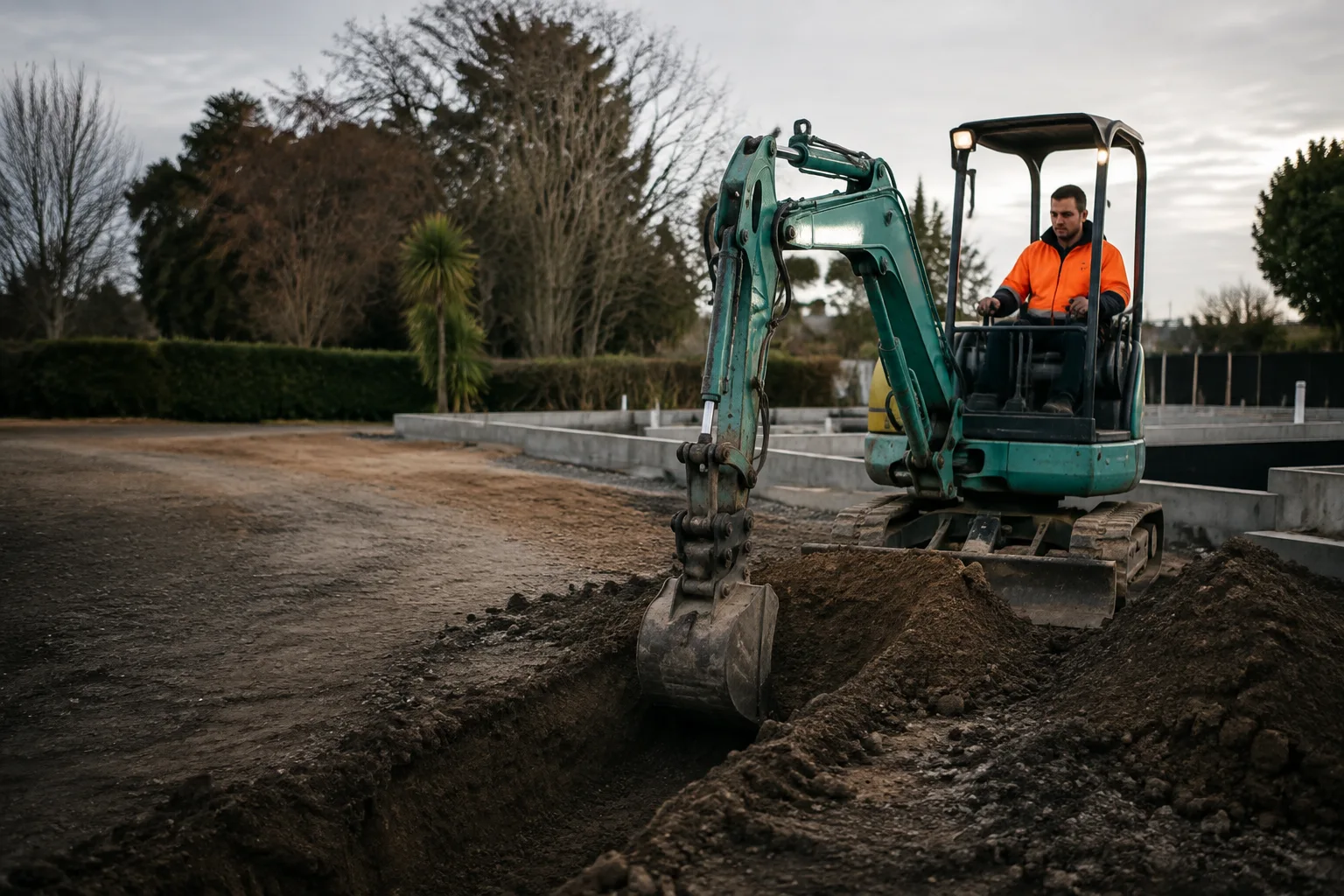
Operator-driven digger and excavator hire across Canterbury, with the machine matched to your access, ground and scope of work.
View service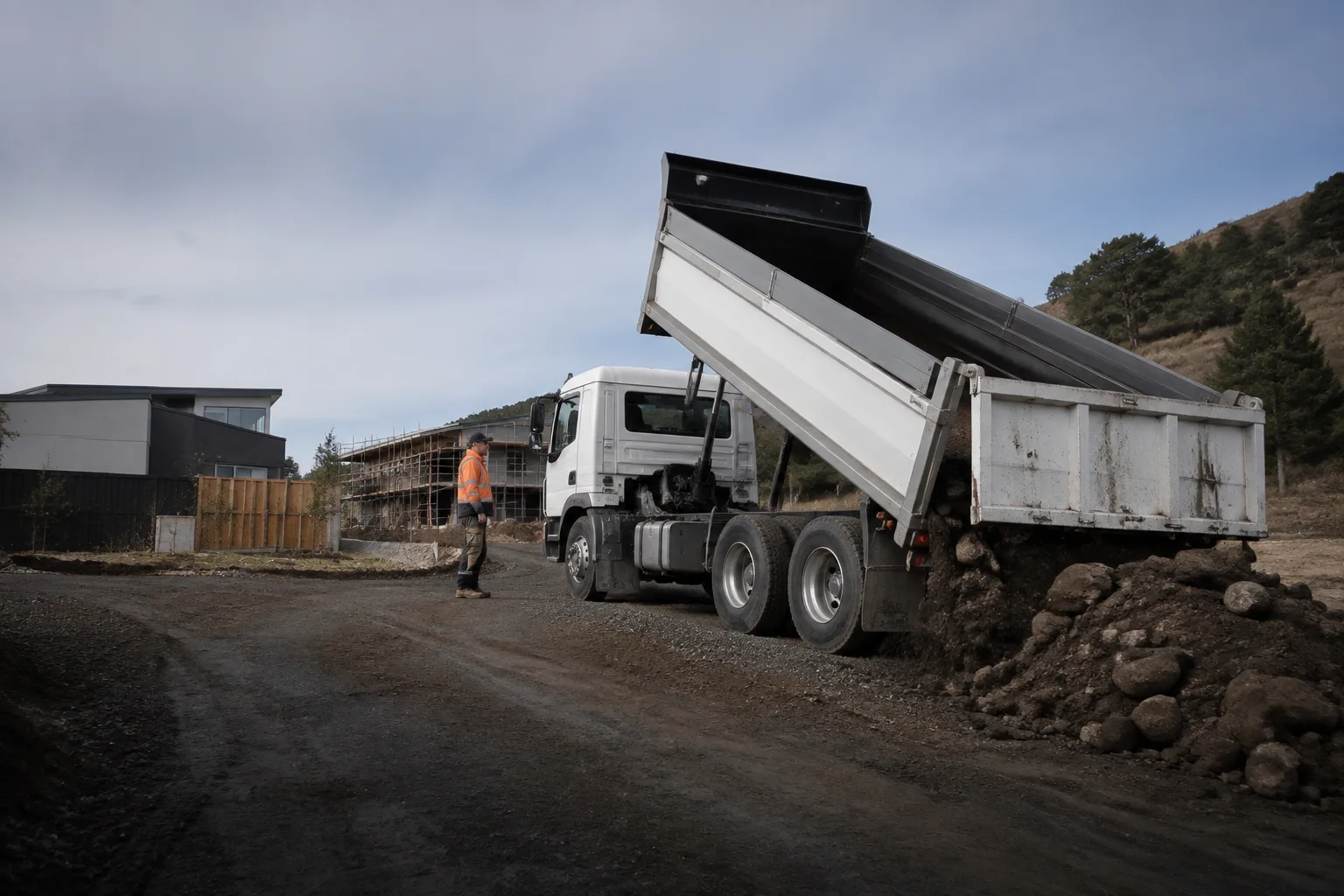
Driver-operated tip truck cartage for spoil removal and material delivery, coordinated with your excavation or landscaping work.
View service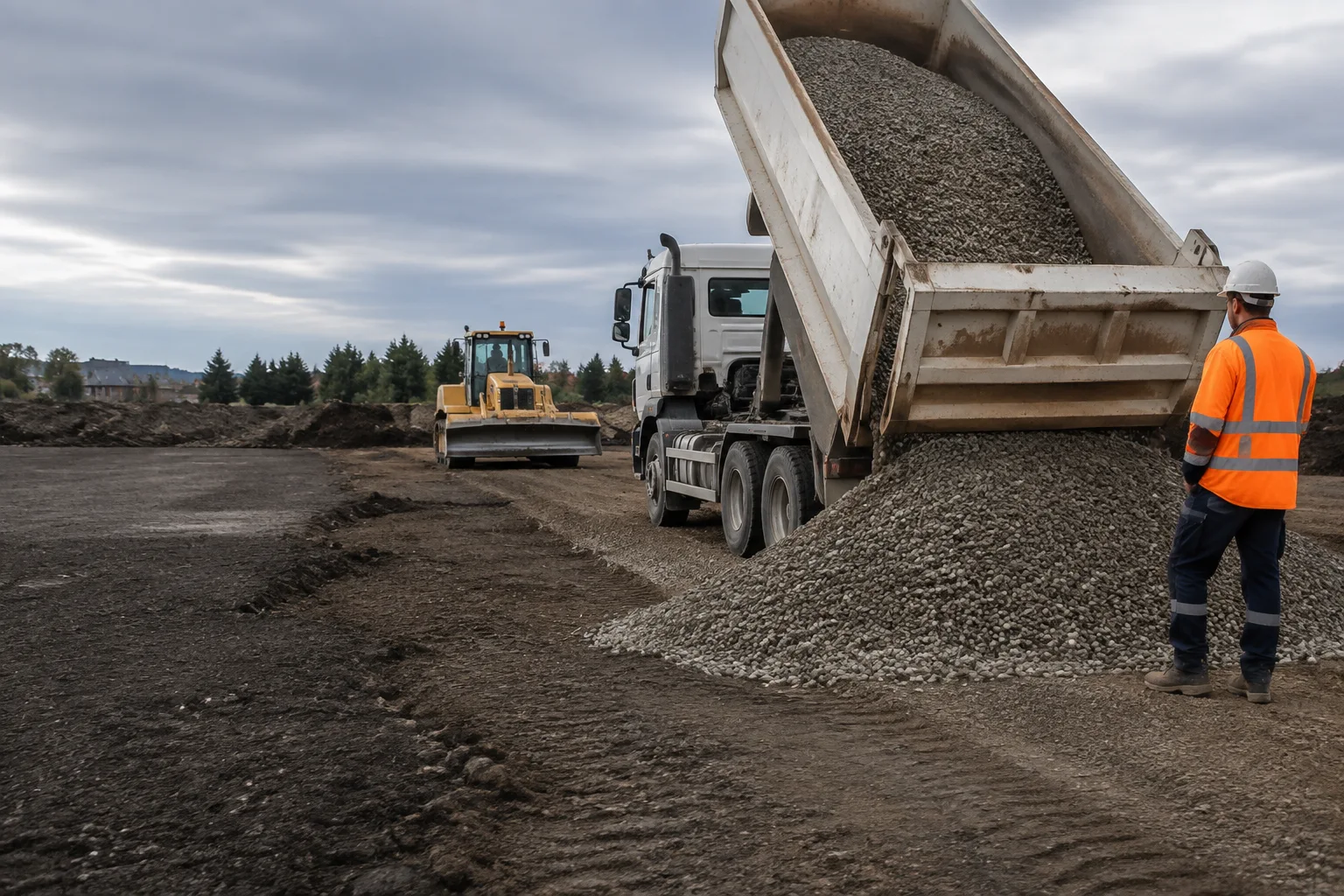
Shingle, aggregate and fill supplied and delivered for driveways, drainage and building work across Canterbury.
View serviceTell us about your project and we will come back with clear next steps — no pressure, no jargon.
YOUR SITE. THE NEXT CHAPTER.
Start with your suburb, a few site details and what you want to build.
Plan your project