
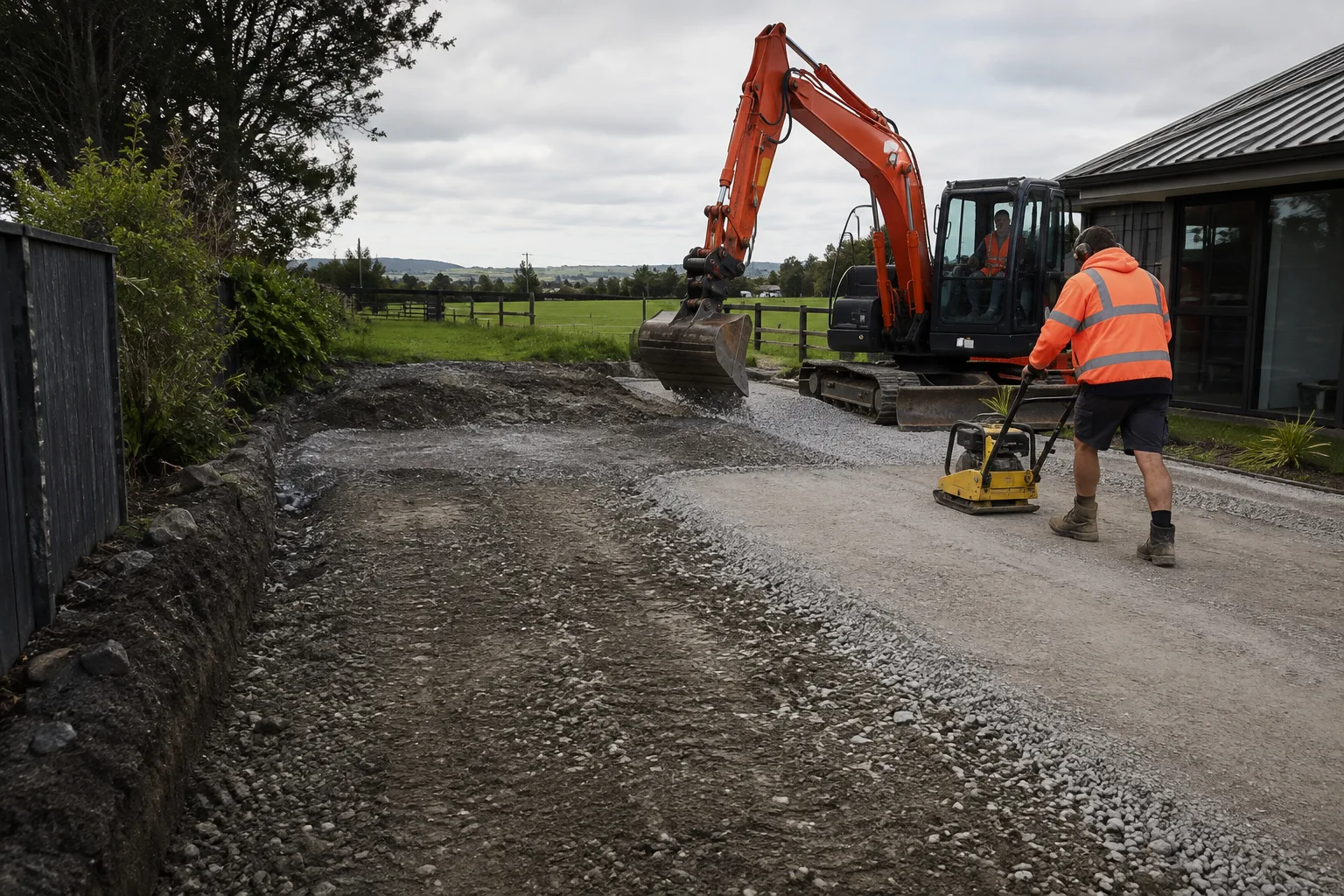
Driveway Excavation
Excavation and sub-base preparation for new or replacement driveways, shaped and compacted to the finished levels the surface needs — as a standalone job or as the first stage of a full install.
View serviceDriveways, Access & Civil Groundworks
Asphalt driveways laid across Christchurch on a base built to carry them, plus resurfacing and overlays where the existing driveway is still sound underneath.
03 661 7200Your site. A clear next step.
Christchurch Asphalt Driveways covers asphalt driveways laid on a base built to carry them, plus resurfacing and overlays where the existing driveway is still sound underneath.
Tell us what you want to achieve, where your site is and when you would like to start. Include any plans, access constraints or measurements that will help us understand the work.
Recognise your project
Define the work
We look at slope, the vehicles using the driveway, the ground and the length of the run, then say where asphalt makes sense. On steep driveways we will usually point you toward concrete instead.
On an existing driveway we work out whether an overlay will hold or whether the base has failed. Quoting an overlay over a moving base is easy money for a contractor and a waste of yours.
The line is excavated and aggregate base placed and compacted in layers to carry the surface. Asphalt is flexible and takes its strength from the base, so base depth matters more here than with concrete.
Geotextile goes over soft or variable ground before the aggregate. It keeps the base from migrating into the subgrade, which is what causes the patchy dips that appear in asphalt after a few winters.
Falls are set so water sheds off the surface to a legal discharge point. Water sitting on asphalt works into the surface and accelerates the cracking and ravelling that shortens its life.
Edge restraint is prepared so the asphalt has support at the sides. Unrestrained asphalt edges crumble under a wheel, and edge failure is the most common early complaint on a new asphalt driveway.
Hotmix asphalt is laid to the specified depth and rolled while it is still at temperature. Rolling hot is what achieves density, and density is what determines how long the surface lasts.
Where the base is genuinely sound, we resurface or overlay the existing driveway rather than rebuild it. It is a much smaller job, and we check the base properly before recommending it.
From site assessment to completion
We look at the slope, the vehicles, the ground and the length of the run, and tell you where asphalt is the sensible choice and where concrete would serve you better.
On an existing driveway we work out whether an overlay will hold or whether the base has failed, because asphalt laid over a moving base cracks in the same places within a couple of seasons.
For a new driveway the line is excavated and aggregate base placed and compacted in layers, with fabric over soft ground, since asphalt is a flexible surface and takes its strength from what is under it.
Cross-fall and longitudinal grade are trimmed in and edge restraint prepared, because unsupported asphalt edges are the first thing to break away under a wheel.
Hotmix asphalt is laid to the specified depth and rolled while it is at temperature, which is what achieves the density the surface needs to last.
The surface is left to cool and set before vehicles use it, and we tell you how long that is and how to treat it over the first few weeks.
Working conditions
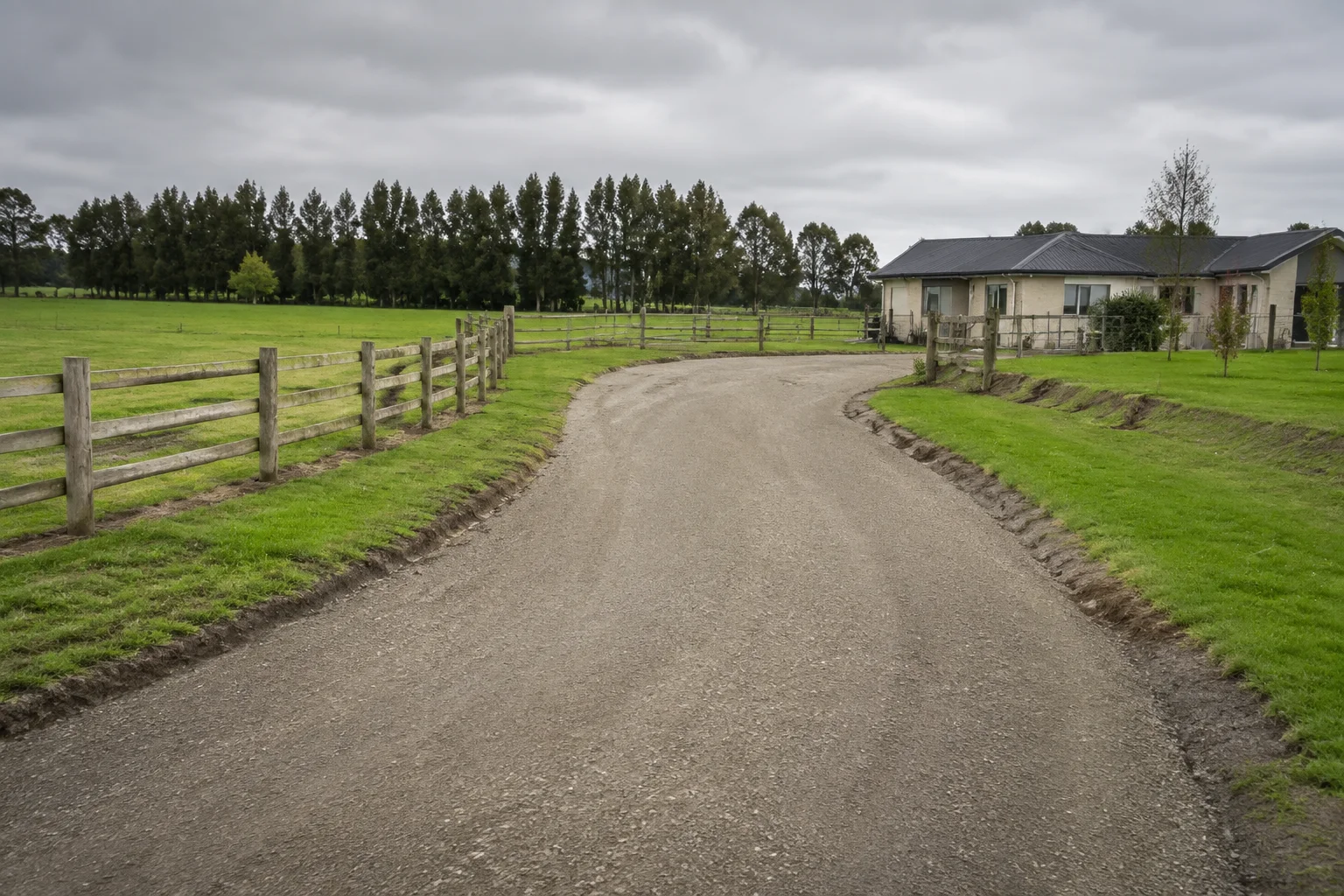
Asphalt work needs the material laid and compacted while it is still hot, so it runs to a tighter timetable than concrete: a paver or hand-lay crew depending on the size and access, and rollers following behind. Base preparation uses the usual excavation and compaction plant. Narrow access affects asphalt more than most surfaces, because material that cools before it is rolled will not achieve density.
Asphalt is one of the quicker surfaces to get back into use, usually a day or so after laying once it has cooled, though the work itself is a full site day or more. Expect the smell of hot asphalt while laying, truck movements delivering material, and rollers working the surface. The driveway cannot be used at all on the day. In the first few weeks warm weather can leave the surface soft enough to mark under a turning wheel or a jack stand.
Get the detail right
Asphalt is a flexible surface, which means it moves with what is underneath it. Laid on a properly built and compacted base it will handle slight ground movement better than concrete; laid over a base that was never built or has failed, it will crack straight back through in the same lines and no amount of surface work fixes that. The other half is temperature: asphalt has to be rolled while hot to reach density, so a crew that is set up to lay and compact in one continuous run is what separates a surface that lasts from one that ravels at the edges within a season.
Usually yes to lay, and the gap widens on longer runs. Over a full life concrete generally lasts longer with less attention, while asphalt is cheaper up front, quicker to use and wants resealing periodically. Which is better value depends on how long you plan to own the property and what the driveway carries.
If the base is sound, yes — an overlay is a good option and much less work than a rebuild. If the driveway has sunk, ponds, or cracks along consistent lines, that points to the base, and asphalt over it will crack in the same places. We check before quoting an overlay rather than after.
It depends on what the driveway carries and how good the base is, and residential and heavier commercial work differ. The important part is that thickness and base depth are decided together, because extra asphalt does not compensate for a base that is too thin.
Generally a day or so once it has cooled and set, which is one of asphalt's advantages over concrete. For the first few weeks avoid turning the wheels while stationary, parking on a jack stand, or leaving anything heavy in one spot on a hot day, since the surface stays a little soft.
On mild to moderate slopes yes. On steep driveways asphalt can creep or scuff under braking and turning, and concrete is often the better call. Slope is one of the first things we look at, and we will say if we think asphalt is the wrong choice for yours.
Asphalt benefits from resealing over its life to keep water out of the surface, and the interval depends on exposure, traffic and how the driveway was laid. It is a maintenance cost worth factoring in when comparing asphalt against concrete.
The next part of your project
Excavation and sub-base preparation for new or replacement driveways, shaped and compacted to the finished levels the surface needs — as a standalone job or as the first stage of a full install.
View serviceNew driveways built end to end across Christchurch, from excavation and base through to the finished concrete or asphalt surface, drainage and edges.
View serviceRepairing cracked, sunken, potholed and ponding driveways across Christchurch, starting with why the surface failed rather than just patching the top.
View service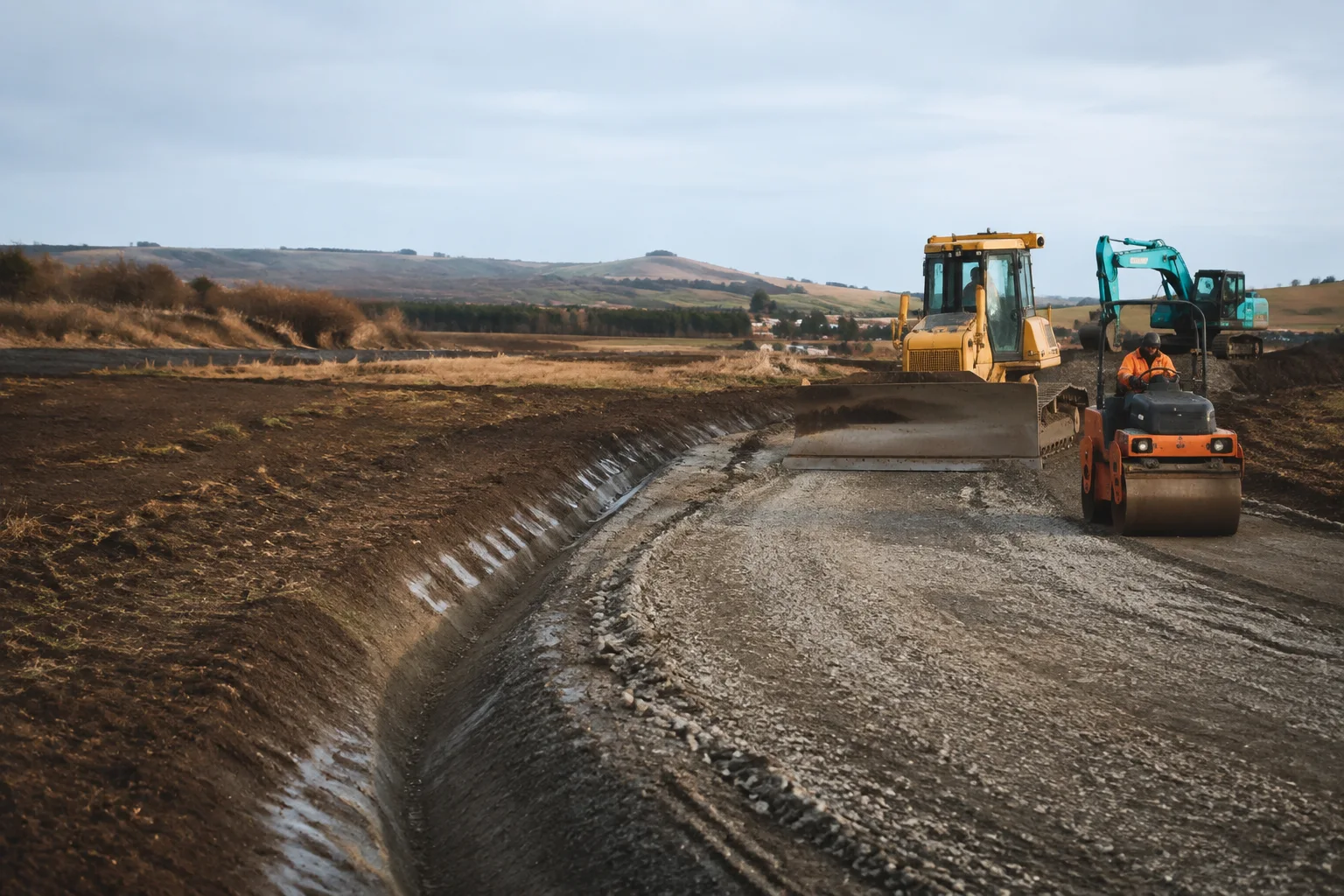
Formation, drainage and sub-base earthworks for private roads and access tracks on rural, lifestyle and small development sites.
View serviceTell us about your project and we will come back with clear next steps — no pressure, no jargon.
YOUR SITE. THE NEXT CHAPTER.
Start with your suburb, a few site details and what you want to build.
Plan your project