
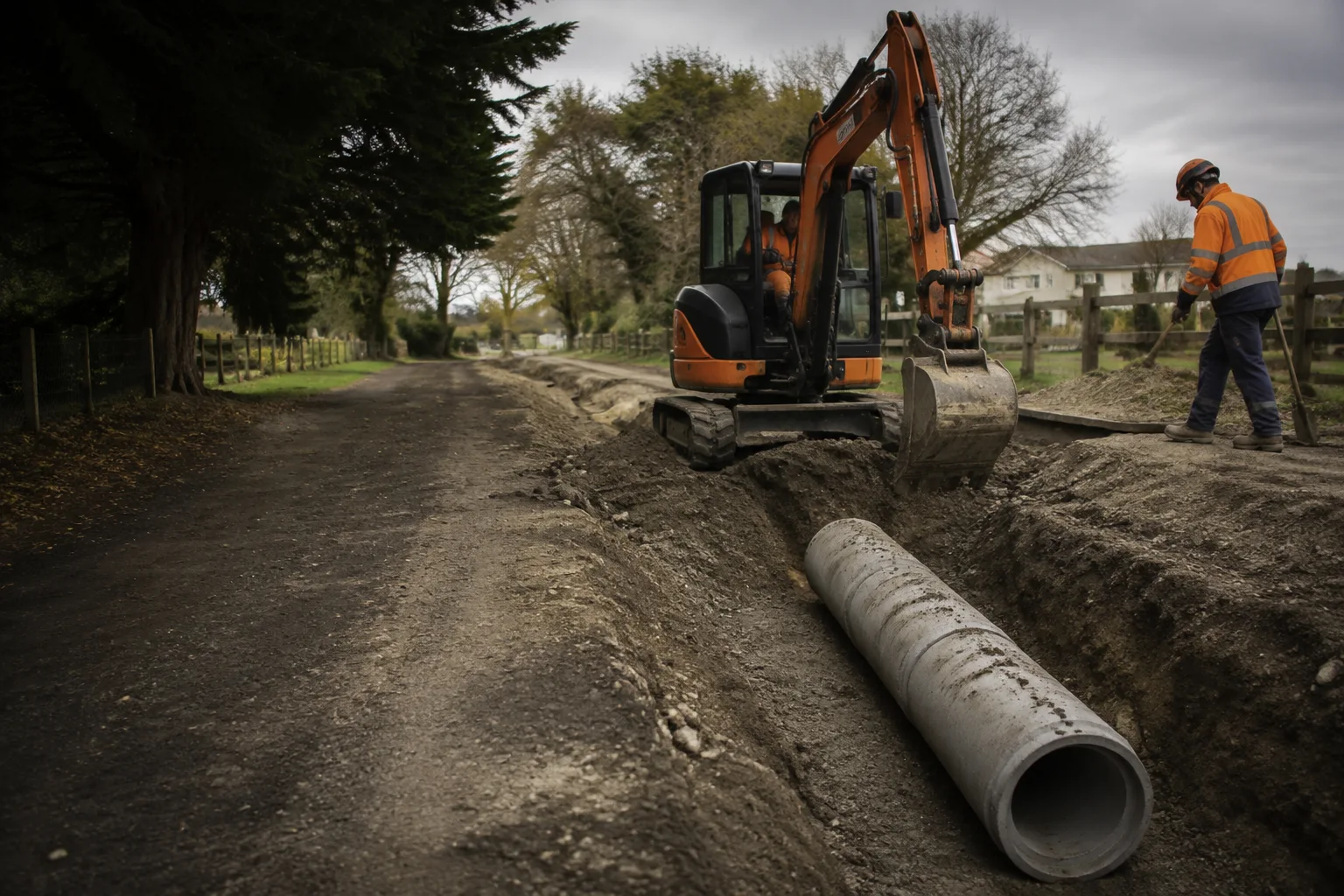
Culvert Installation & Driveway Culverts
Excavation and pipe-laying for driveway culverts, keeping water moving under an access way instead of pooling or washing it out.
View serviceDrainage-Adjacent & Trenching
Trenching dug to depth and clearance requirements for power, water, gas or telecommunications connections, coordinated with your network provider.
03 661 7200Your site. A clear next step.
Christchurch Trenching for Services (Power, Water, Gas, Telecoms) means trenching dug to depth and clearance requirements for power, water, gas or telecommunications connections, coordinated with your network provider.
Tell us what you want to achieve, where your site is and when you would like to start. Include any plans, access constraints or measurements that will help us understand the work.
Recognise your project
Define the work
Trenching to the depth, width and cover specified by the relevant network provider or their engineer
A beforeUdig check and on-site care around any existing services identified before we start digging
Trenching for power, water, gas or telecommunications ducting supplied and laid by others
Hand-digging or slower machine work around confirmed service crossings
Backfilling and compaction once cabling or pipework has been laid and inspected
Reinstatement of lawn, metal or paved surfaces disturbed by the trench
Excavation only — connecting, laying and certifying cables or pipework is carried out by the network provider's own contractor or a licensed tradesperson, not by us
Spoil removal or on-site spreading, whichever suits the site
From site assessment to completion
We look at access, ground conditions and the route your provider has specified before quoting the job.
We confirm what's already registered underground and mark out the trench line against that information.
We dig to the depth, width and clearances set by the network provider, adjusting for rock or existing services as we go.
Your power, water, gas or telecommunications provider, or their contractor, lays and connects the cable or pipe in the open trench.
Once the provider confirms the installation is ready to cover, we backfill in layers and compact to reduce future settlement.
We reinstate lawn, metal or paving disturbed by the trench, matching the surrounding area where practical.
Working conditions
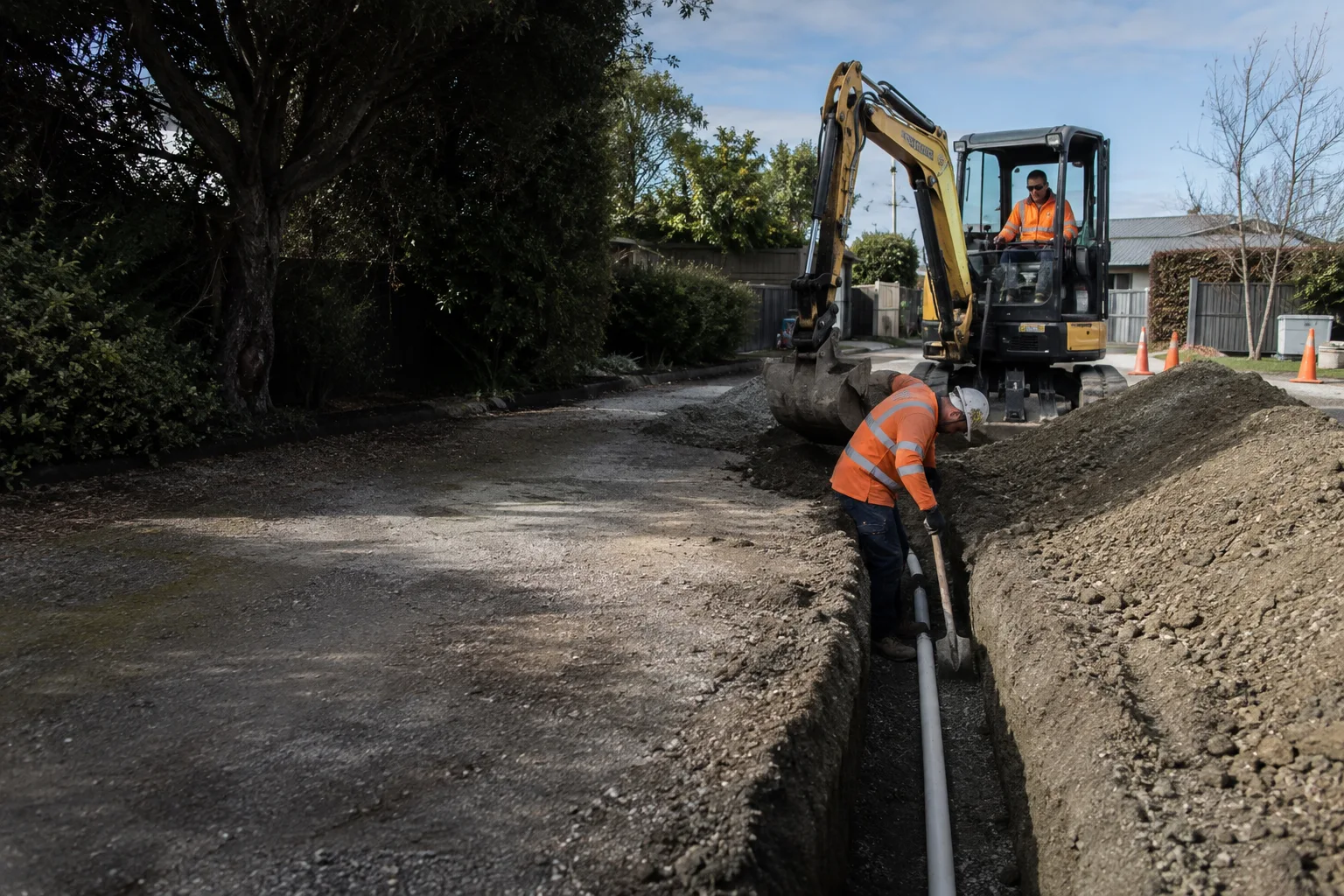
We typically use compact excavators or trenchers sized to the trench width and site access, choosing between tracked or wheeled machines depending on ground conditions. For narrow or tight-access trenches we may switch to a smaller machine or hand tools around known service crossings. Final equipment choice is confirmed once we've seen the site and your provider's specification.
Expect an open trench across part of the property for the time it takes to excavate, have the service installed, and backfill. We fence or cover trenches left open overnight where needed for safety. Vehicle access and lawn areas along the trench line will be disrupted until reinstatement is complete, and timing depends on when your network provider can attend to install and inspect their work.
Get the detail right
Getting depth, cover and clearances wrong can mean a failed inspection, a service that's vulnerable to future damage, or having to re-excavate. We coordinate the beforeUdig process and dig to each provider's specific requirements, which differ between power, water, gas and telecommunications networks. That coordination reduces the risk of striking an existing service or delaying your connection.
No. We excavate the trench to the depth and specification your network provider requires. Laying, connecting and certifying the actual cable or pipe is done by the provider's own contractor or a licensed tradesperson.
We coordinate a beforeUdig enquiry and factor in any registered services before we start digging, so you don't have to manage that step separately.
It depends on the service. Power, water, gas and telecommunications each have their own depth and cover rules set by the network provider, and we dig to whichever specification applies to your connection.
Sometimes, if the providers involved allow shared trenching and their separation requirements can be met. We confirm this with the relevant providers before combining trenches.
We stop work around it, assess the situation, and contact the relevant asset owner before continuing, rather than risk damaging it.
Yes, once backfilling and compaction are complete we reinstate lawn, metal or paving disturbed by the trench.
The next part of your project
Excavation and pipe-laying for driveway culverts, keeping water moving under an access way instead of pooling or washing it out.
View service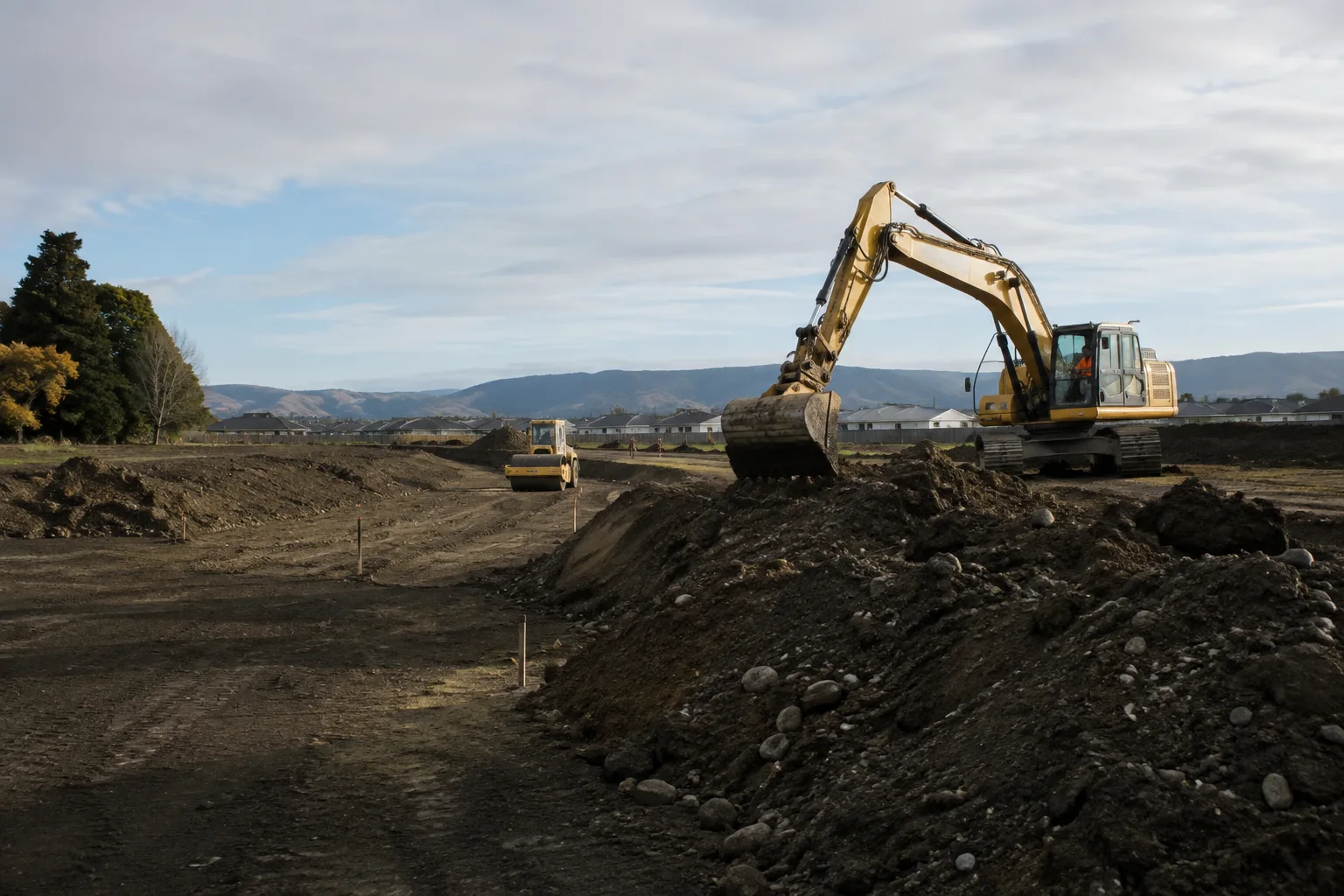
Bulk earthworks, roading and services groundworks for subdivision developments, carried out to the project engineer's design and staging.
View service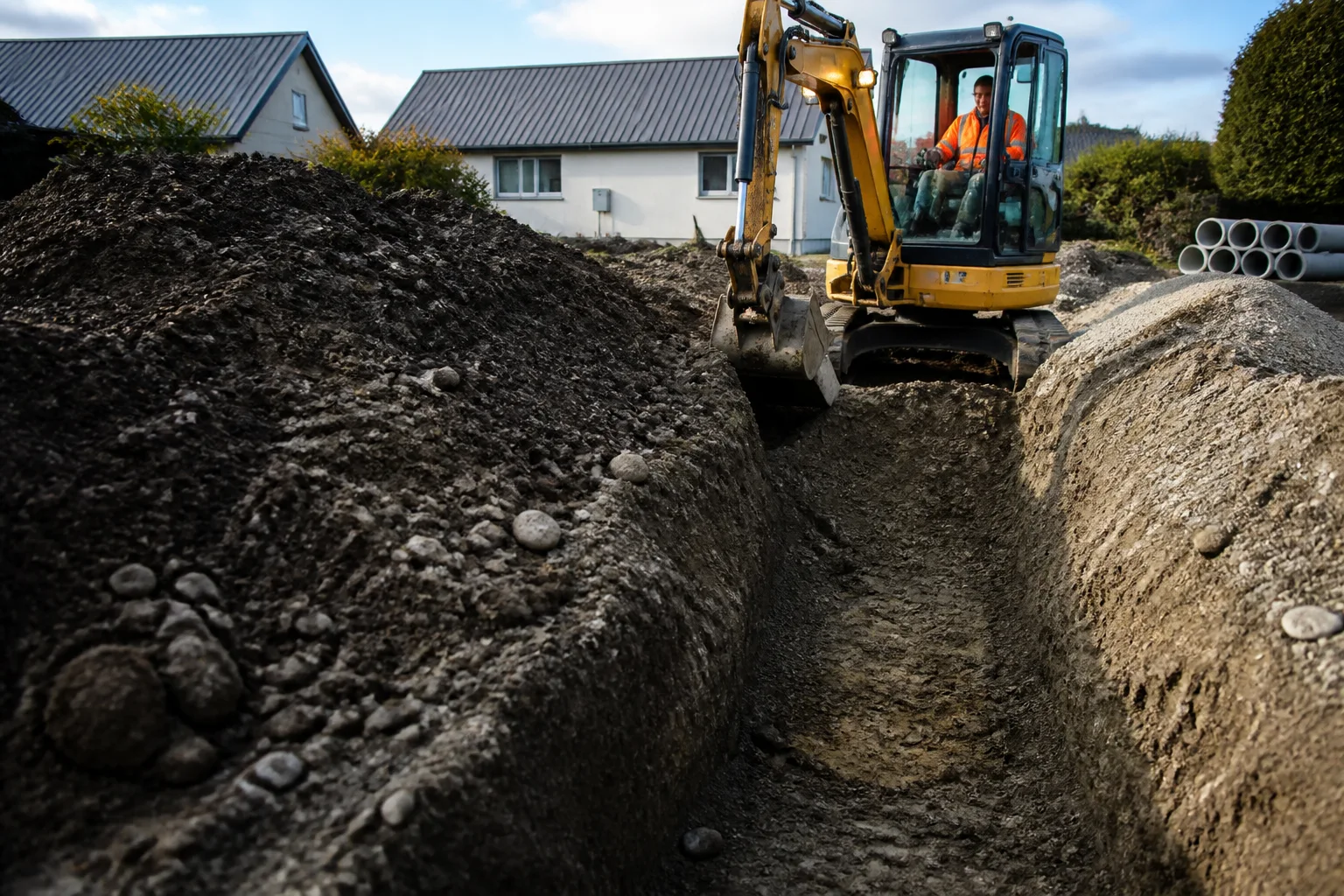
Excavation for wastewater and drainage runs, dug to the falls and depths your licensed drainlayer specifies before they lay and connect the pipework.
View service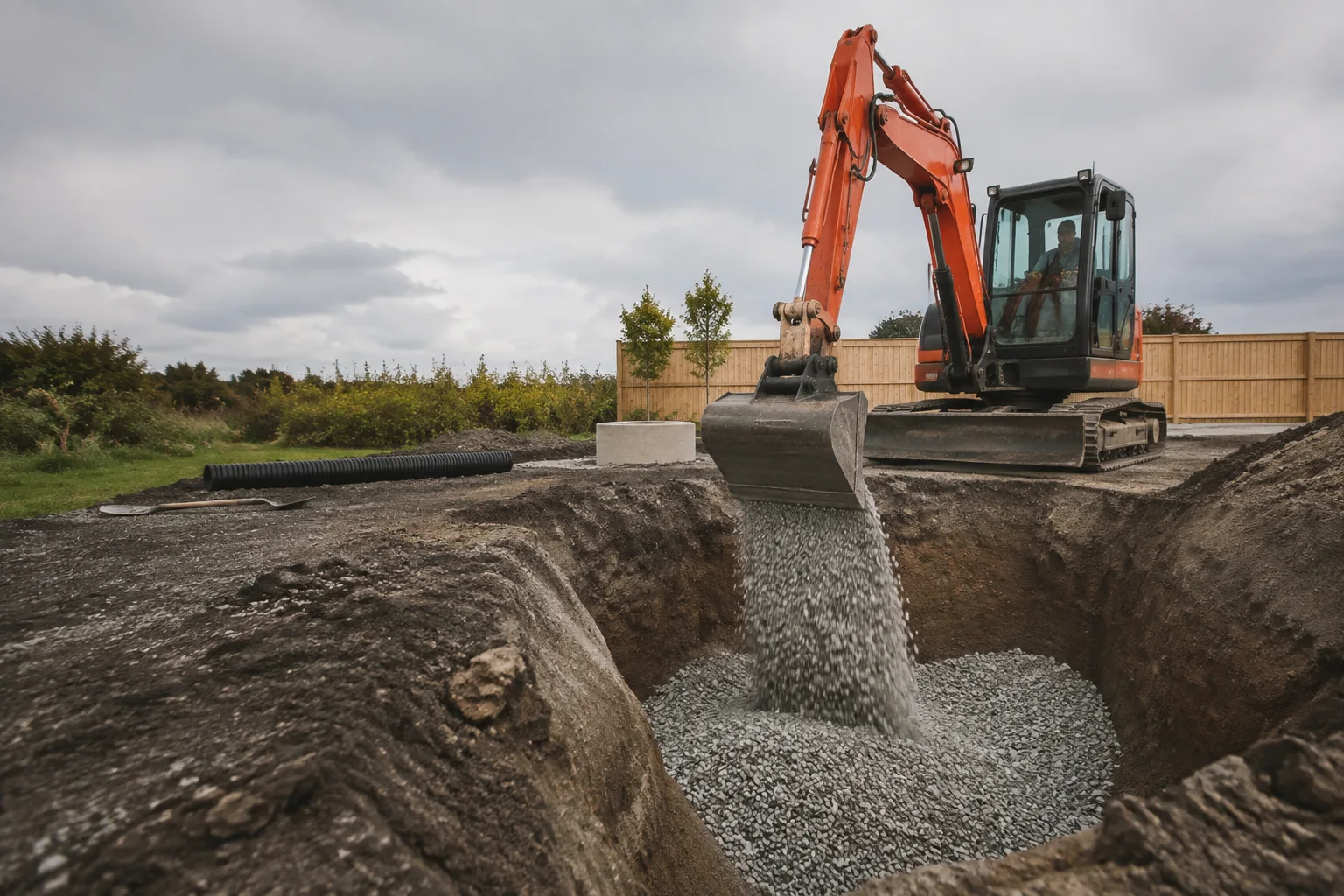
Excavation for soak pits, soakage trenches and stormwater disposal systems, dug to the dimensions your drainlayer or engineer specifies.
View serviceTell us about your project and we will come back with clear next steps — no pressure, no jargon.
YOUR SITE. THE NEXT CHAPTER.
Start with your suburb, a few site details and what you want to build.
Plan your project