

Channel Preparation
Excavation, set-out and base preparation for concrete channels — dish channels beside a kerb, spoon drains across a driveway, and channels alongside paths and yards.
View serviceDrainage-Adjacent & Trenching
Excavation for stormwater systems across Christchurch — pipe runs, sumps and catchpits, attenuation tanks and connections out to a kerb channel or council main.
03 661 7200Your site. A clear next step.
Christchurch Stormwater Groundworks covers excavation for stormwater systems, from pipe runs and sumps through to attenuation tanks and connections out to a kerb channel or council main.
Tell us what you want to achieve, where your site is and when you would like to start. Include any plans, access constraints or measurements that will help us understand the work.
Recognise your project
Define the work
Pipe runs are excavated to the grades your drainlayer's or engineer's plan sets out. Stormwater falls are unforgiving over distance, so the trench follows the drawing rather than the surface above it.
These are fixed points in the system, so they are dug at the specified positions and depths. The pipework is laid to connect with them, which means their location is not adjusted on site.
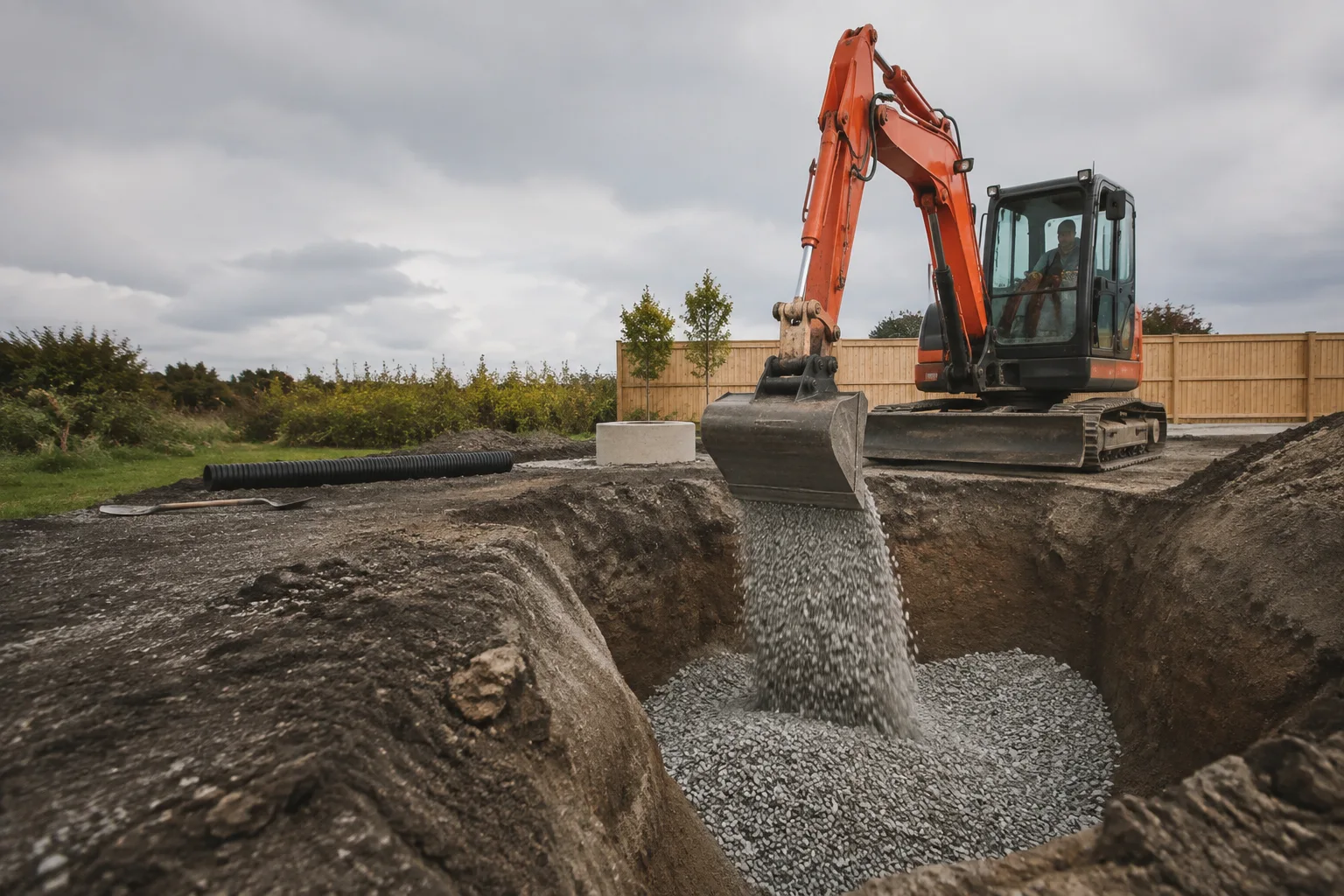
Where consent requires stormwater to be held and released slowly, we excavate the tank or basin to the design dimensions. Volume is the whole point, so the specification is followed exactly.
Stormwater runs tend to cross other services on their way to a discharge point. We check before digging and treat identified services as approximate until they are actually exposed.
The base is prepared so pipes sit evenly supported and hold the fall they are laid at. Uneven support is what lets bellies form in a line and water stand in them.
The connection point is excavated ready for the drainlayer, including work in the berm where the outlet is a kerb or channel. Road corridor work may need a council permit first.
Backfill goes in compacted in layers after inspection. Settlement over a stormwater line pulls up whatever sits above it, which on a stormwater route is often a driveway or path.
Stormwater lines usually run through the middle of a property, so putting the surfaces back is a visible part of the result rather than a detail at the end.
Why work with us
A stormwater system is only as good as where it ends. We confirm the outlet can take the flow before levels are set, rather than discovering it at the last connection.
Stormwater lines lose very little height over a long distance, so a trench dug approximately becomes a line that ponds. Grades are taken from the plan and checked along the way.
An evenly prepared and supported trench base is what stops bellies forming once pipes are laid. It is the part of the job your drainlayer notices immediately.
Stormwater routes cross other utilities on the way to an outlet. beforeUdig is run and the machine slowed or the trench hand-dug where something is confirmed.
Stormwater often runs under driveways and paths. Layered compaction is what stops a settled trench line appearing across them a few months later.
Laying, connecting and certifying stormwater pipework must be done by a licensed drainlayer in New Zealand. We excavate to their design and are explicit about that boundary.
Working conditions
Stormwater work is mostly trenching, so it runs a compact or mid-size excavator along the route with compaction gear for the backfill, and hand digging where the line crosses a confirmed service. Depth drives the machine choice more than volume does, and a deep connection at a kerb or main can need a longer-reach machine or staged excavation.
A stormwater line follows a route rather than an area, so expect a narrow open trench crossing lawn, paving or driveway for the duration. Access across the line is interrupted while it is open. Where the connection sits in the road corridor, a council permit and traffic management may be needed before a start date is set.
Get the detail right
Stormwater is decided by levels rather than by effort. A line laid with too little fall, or dug to a discharge point that cannot take the flow, will hold water no matter how well the pipework itself is jointed, and the fix means opening the trench again. The other half is what happens above: a stormwater route usually runs under a driveway or path, so compaction over the trench is what determines whether the surface stays flat. Both are settled during the excavation, before the drainlayer even arrives.
Stormwater groundworks covers systems that carry water away to a kerb channel, council main or other outlet — pipe runs, sumps, attenuation. Soakage groundworks is for systems that dispose of water into the ground through a soak pit or soakage trench. Plenty of Christchurch properties use one, some use both, and the design decides which.
No. Laying, connecting, jointing and certifying stormwater pipework must be carried out by a licensed drainlayer in New Zealand. We excavate the trenches, sumps and structures to their design and prepare the base ready for them.
That depends on your property and the council. A kerb channel, a reticulated stormwater main and on-site disposal are all possibilities, and Christchurch, Selwyn and Waimakariri each set their own rules. Your drainlayer or designer confirms the legal discharge point before the system is designed.
Often, particularly where you are adding impervious area, changing where water discharges, or working in the road corridor. Attenuation requirements frequently come from a consent condition. Confirm with your council or planner, and we will flag what we think applies.
Attenuation holds stormwater temporarily and releases it slowly, so a developed site does not send a sudden surge into the network. It is a common consent condition where a build adds roof and paving area. The volume comes from the engineer's calculation.
Yes, and it usually should be. Running stormwater, drainage and service trenching as one coordinated exercise saves machine time, reduces reinstatement and avoids one trade cutting through another's finished work.
The next part of your project
Excavation, set-out and base preparation for concrete channels — dish channels beside a kerb, spoon drains across a driveway, and channels alongside paths and yards.
View service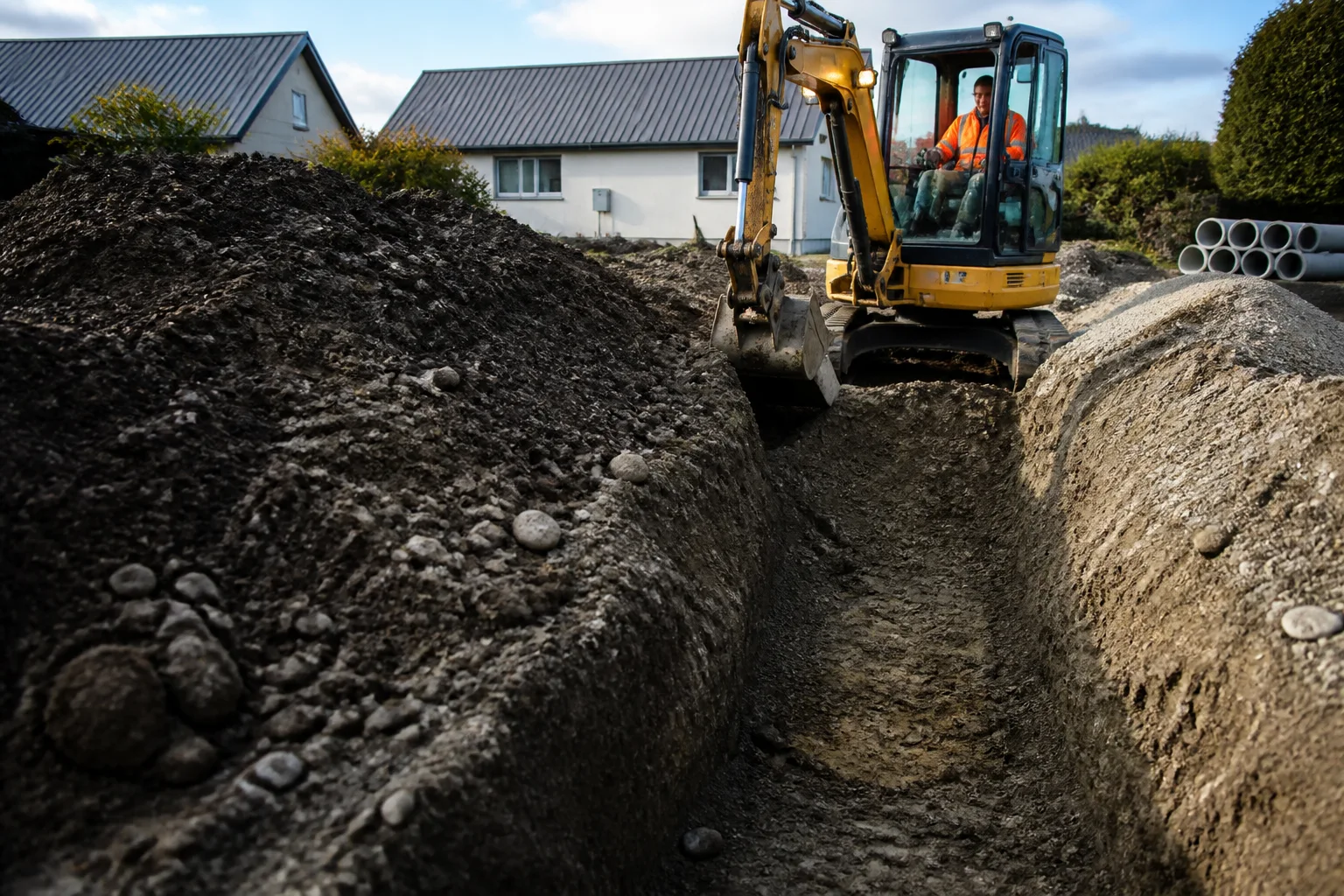
Excavation for wastewater and drainage runs, dug to the falls and depths your licensed drainlayer specifies before they lay and connect the pipework.
View service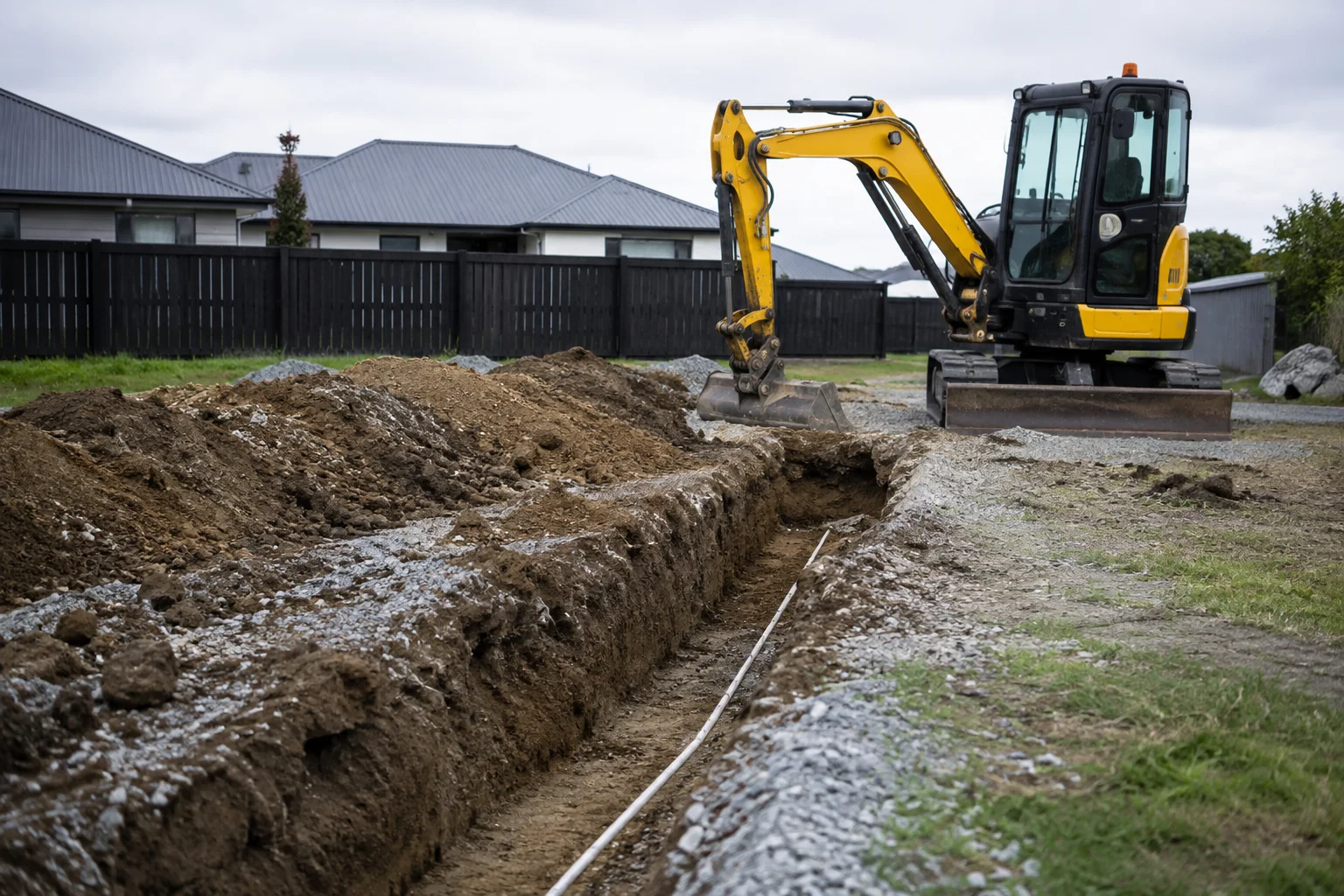
Excavation for soak pits and soakage trenches across Christchurch, dug to the dimensions your drainlayer or engineer specifies for disposing of stormwater to ground.
View service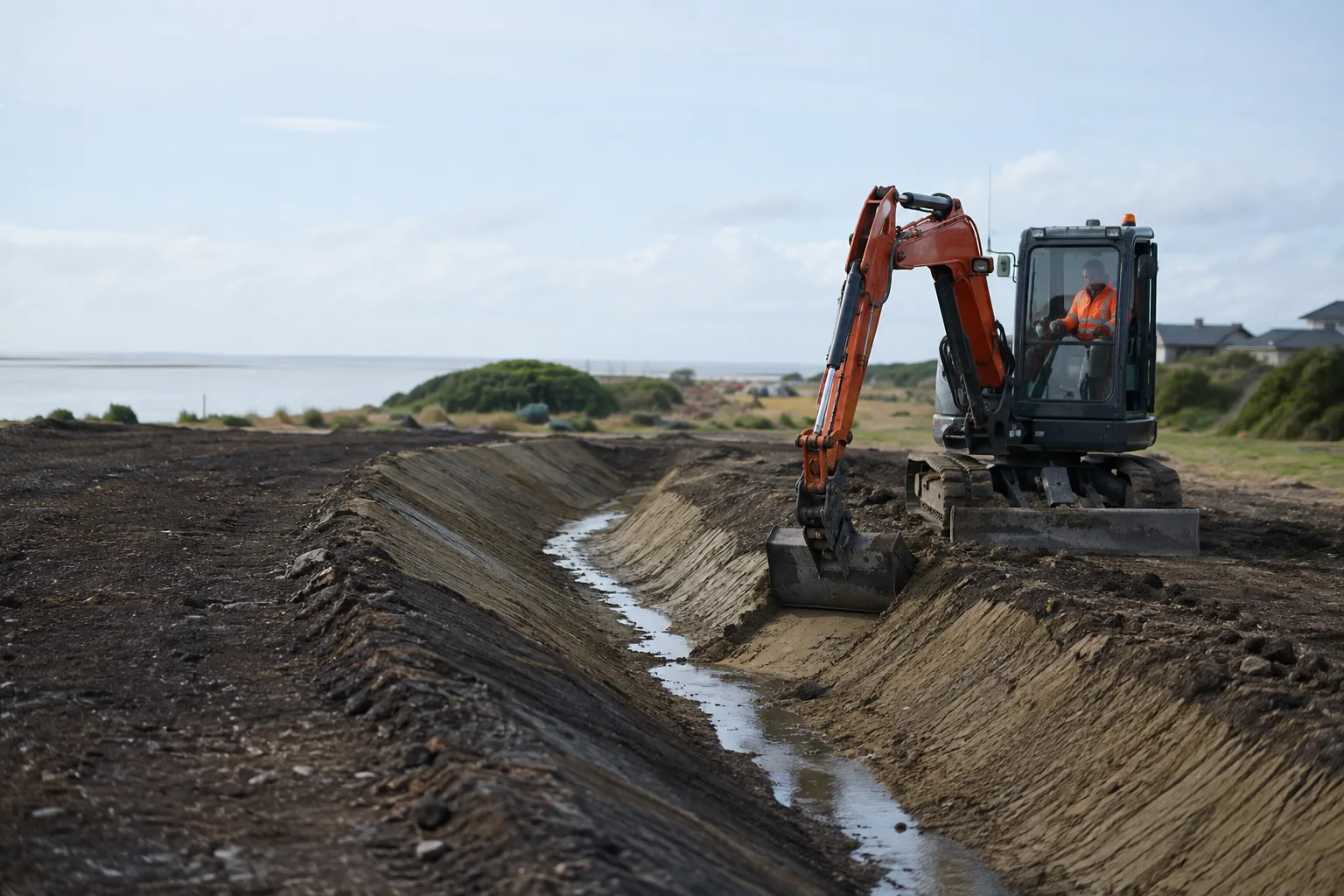
Grading and shaping work that supports erosion and sediment control on coastal and low-lying Christchurch sites, redirecting surface water and stabilising exposed ground.
View serviceTell us about your project and we will come back with clear next steps — no pressure, no jargon.
YOUR SITE. THE NEXT CHAPTER.
Start with your suburb, a few site details and what you want to build.
Plan your project