
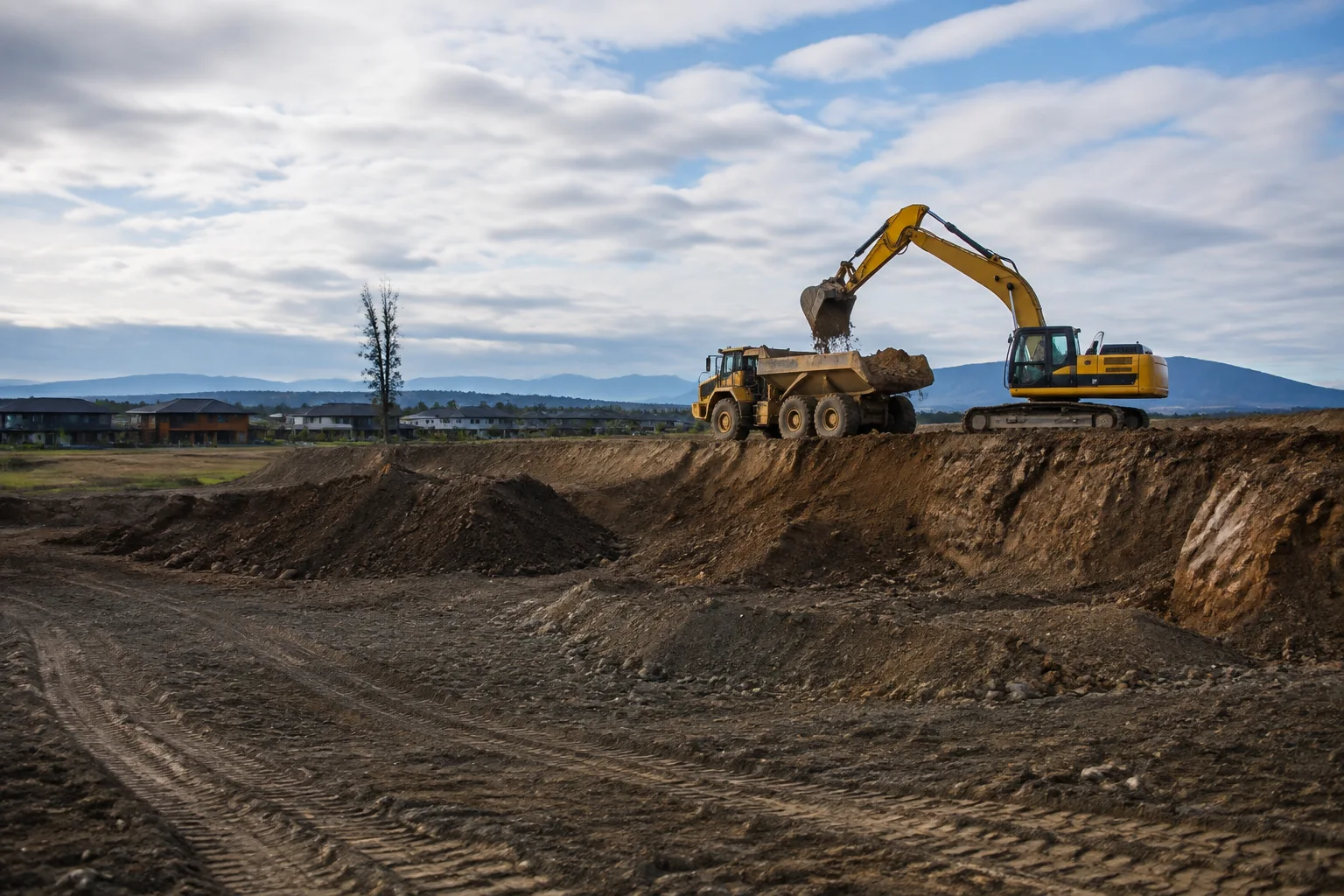
Bulk Earthworks & Site Cut-to-Fill
Cutting, filling and re-shaping land to bring a site to the levels your build or subdivision design calls for.
View serviceSite Preparation & Bulk Earthworks
Clearing larger and staged sites across Canterbury, from mixed vegetation and old hardstand through to stockpile management and sediment control on a live programme.
03 661 7200Your site. A clear next step.
Christchurch Site Clearing covers clearing larger and staged sites across Canterbury, from mixed vegetation and old hardstand through to stockpile management and sediment control on a live programme.
Tell us what you want to achieve, where your site is and when you would like to start. Include any plans, access constraints or measurements that will help us understand the work.
Recognise your project
Define the work
Walkover of the site to agree what is cleared and in what order
Clearing of mixed vegetation, scrub, trees and root systems in scope
Breaking out and removing old hardstand, seal or concrete areas
Removal of redundant fencing, structures and buried obstructions found
Topsoil stripping and stockpiling in agreed locations for reuse
Separation of material for reuse, recycling or disposal where practical
Cartage of surplus material off site
Sediment and erosion control measures over the cleared area
From site assessment to completion
We walk the site with you and agree what is being cleared, what stays, where material can be stockpiled and how the work fits your programme.
Clearing is sequenced so the parts you need first are available first, and access is formed or protected where truck movements would otherwise damage it.
Vegetation, scrub, trees in scope and redundant fencing or structures are cleared, with root systems taken out where the next stage requires it.
Old seal, concrete and compacted hardstand are broken out and removed, or crushed and retained on site where that is useful and agreed.
Topsoil is stripped and stockpiled where you want it, kept separate from unsuitable material so it can be reused later in the project.
Surplus material is carted away, sediment control is put over the exposed area, and the site is handed over ready for survey, design or bulk earthworks.
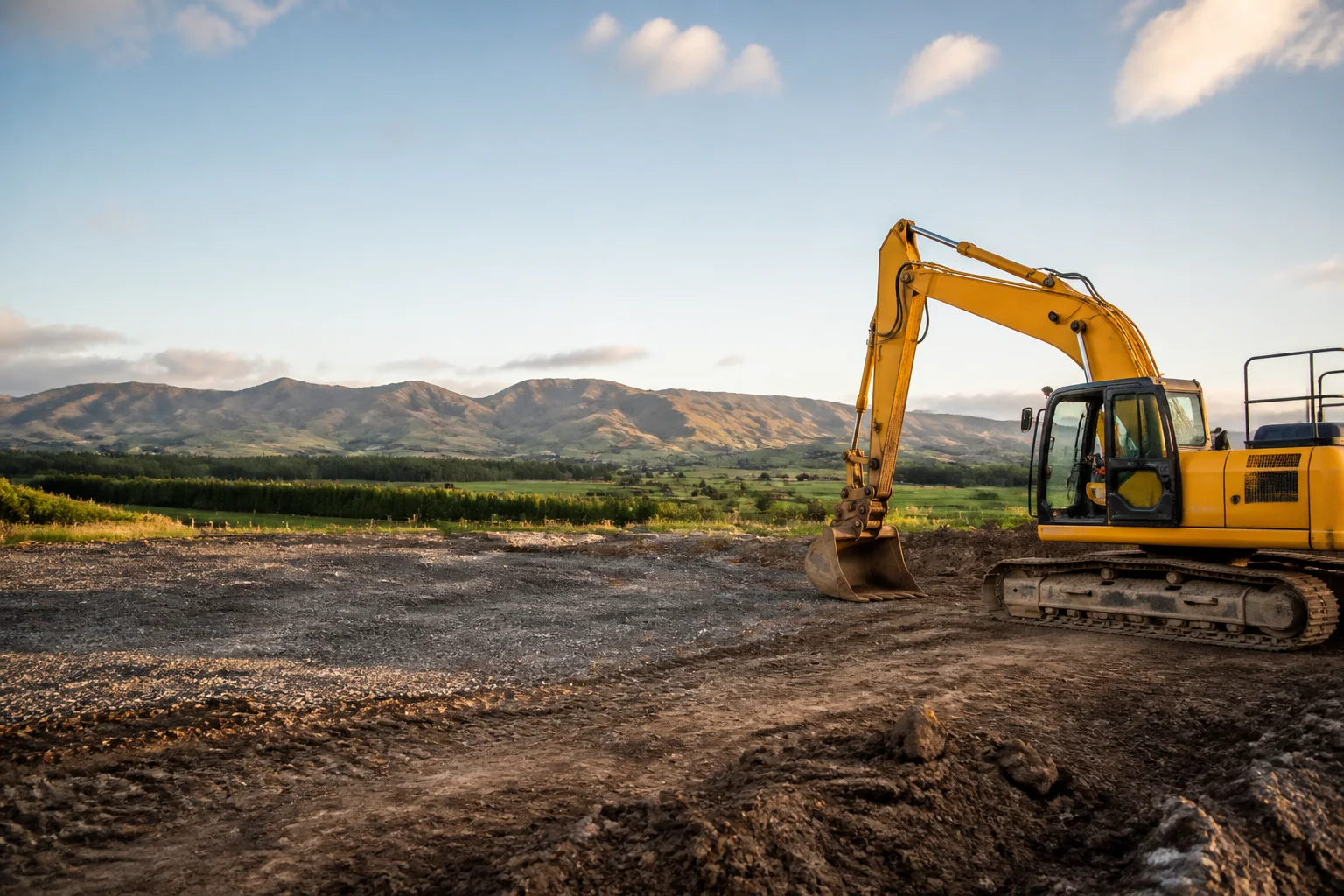
Working conditions
Site clearing at this scale generally runs larger excavators with a mix of buckets, a rock or concrete breaker for hardstand, and tip trucks working in rotation so machines are not left waiting. On staged sites we keep the working area separated from the parts still in use. Machine selection follows the volume of material and the access available for cartage.
Expect sustained truck movements for the duration of the clearing, dust on dry days and noise where hardstand is being broken out. Where a site is live, we agree the working area and haul route first so the parts of the site still in use stay accessible. Wet weather can pause cartage on unformed access, and clearing timetables move with it.
Get the detail right
The cost of clearing a larger site is decided mostly by what happens to the material, not by the clearing itself. Topsoil stripped and stockpiled separately can be reused; the same soil mixed with old hardstand and vegetation becomes cartage. Clearing also exposes bare ground, and Canterbury councils have rules about sediment leaving a site, so the control measures are part of the job rather than an afterthought. Getting the sequence and the stockpile plan right up front is what keeps the truck movements, and the bill, down.
Section clearing is the residential version: one section or lot cleared of vegetation and surface debris ready for design, survey or a build. Site clearing is for larger or staged areas where there is mixed material, old hardstand, stockpile management and sediment control to plan around. If you are not sure which fits, describe the site and we will tell you.
Yes, and that is common on development sites. We agree the working area, the haul route and the order of clearing first, so the parts of the site still in use stay accessible and other trades are not cut off.
Yes. Breaking out and removing old hardstand, seal and concrete is part of this service. Where it is worth doing, that material can sometimes be crushed and kept on site as fill or a temporary access surface rather than carted away.
It depends on the area, the volume of earth moved, the slope and how close you are to a waterway, and Christchurch City, Selwyn and Waimakariri each set their own earthworks rules. We can flag the likely triggers early, but confirm the requirements with your council or planner before you commit to a programme.
Topsoil is stripped and stockpiled separately so it can be reused later. Vegetation, hardstand and unsuitable material are separated for recycling or disposal where that is practical, and the rest is carted off site. We agree the stockpile locations with you before clearing starts.
We remove trees and root systems that are within the agreed scope using machinery. Large, protected or awkwardly placed trees needing climbing or dismantling are an arborist's job, and some trees are protected in the district plan, so check before anything is felled.
The next part of your project
Cutting, filling and re-shaping land to bring a site to the levels your build or subdivision design calls for.
View service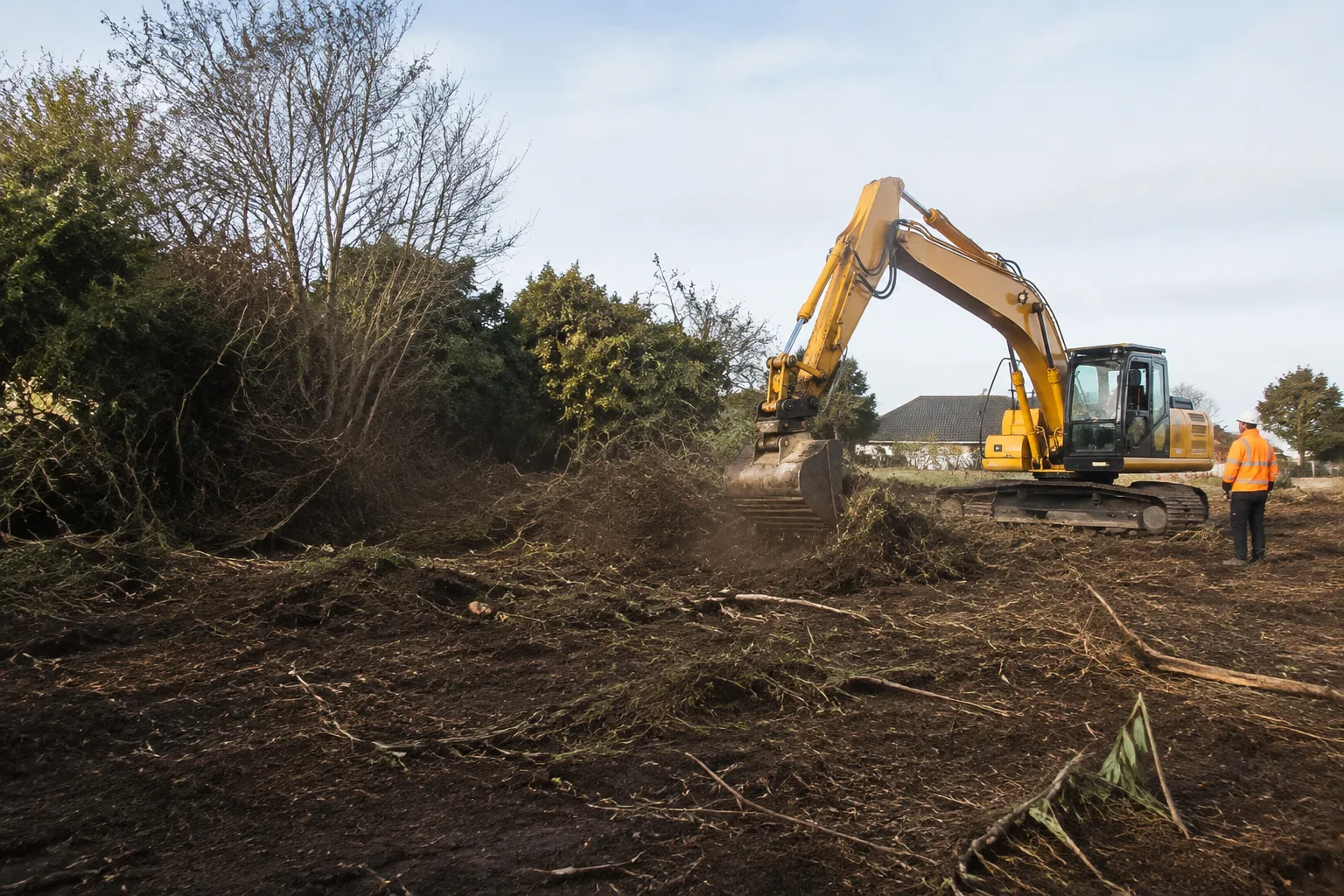
Clearing vegetation, scrub, topsoil and surface debris so a section is ready for design, survey or earthworks to begin.
View service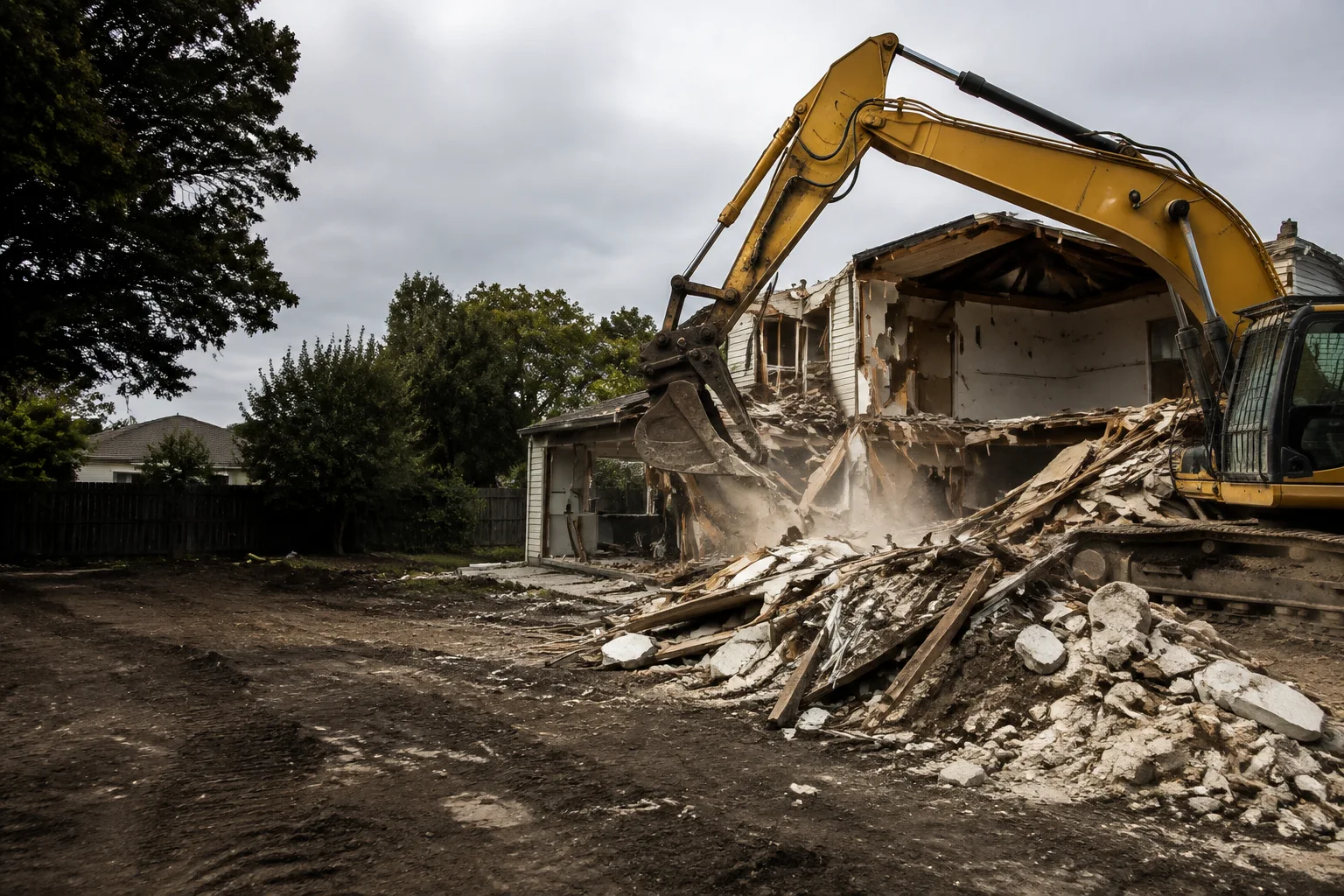
Demolishing houses, garages, sheds and concrete structures across Christchurch, then removing the resulting material so the site is safe and ready for what comes next.
View service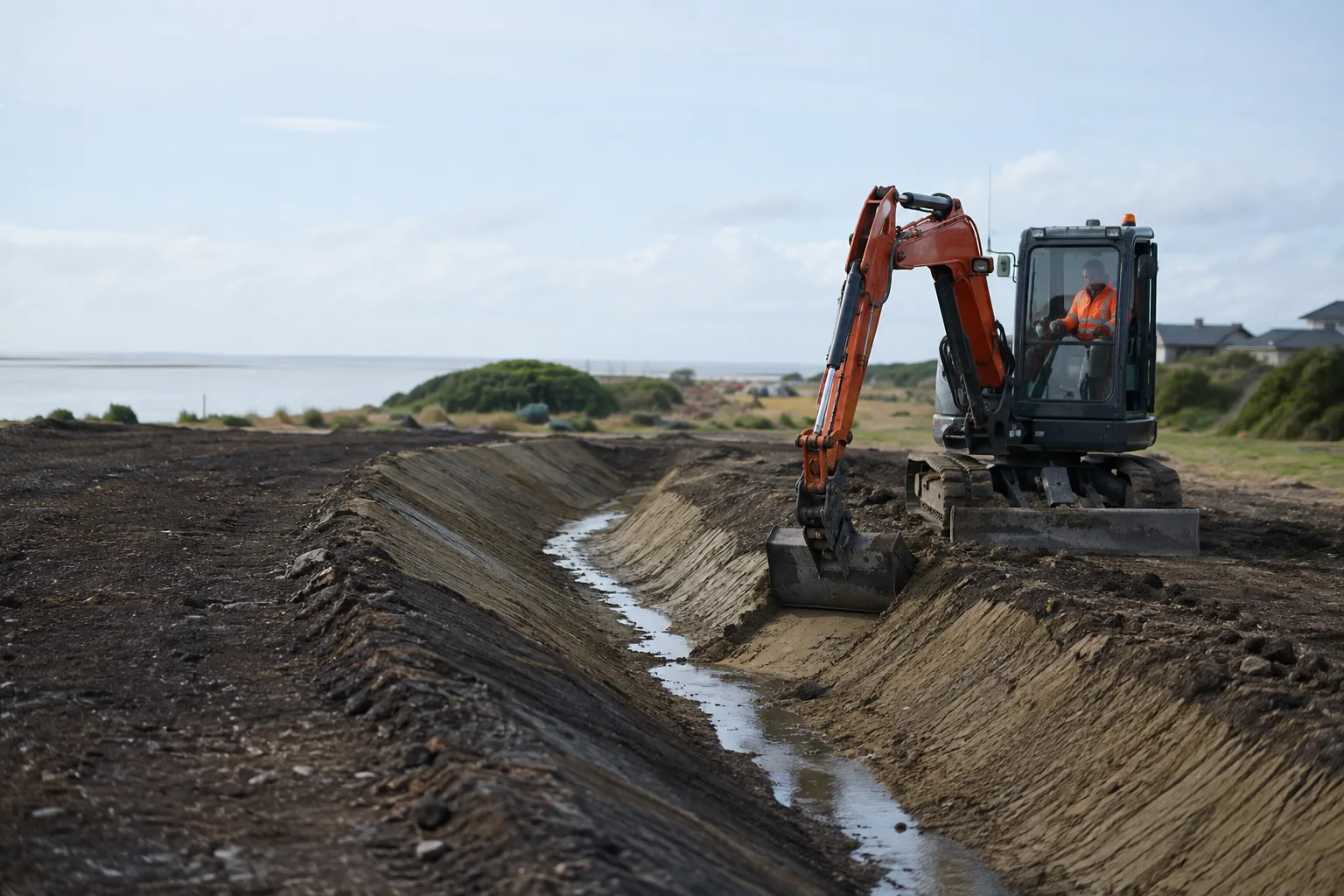
Grading and shaping work that supports erosion and sediment control on coastal and low-lying Christchurch sites, redirecting surface water and stabilising exposed ground.
View serviceTell us about your project and we will come back with clear next steps — no pressure, no jargon.
YOUR SITE. THE NEXT CHAPTER.
Start with your suburb, a few site details and what you want to build.
Plan your project