
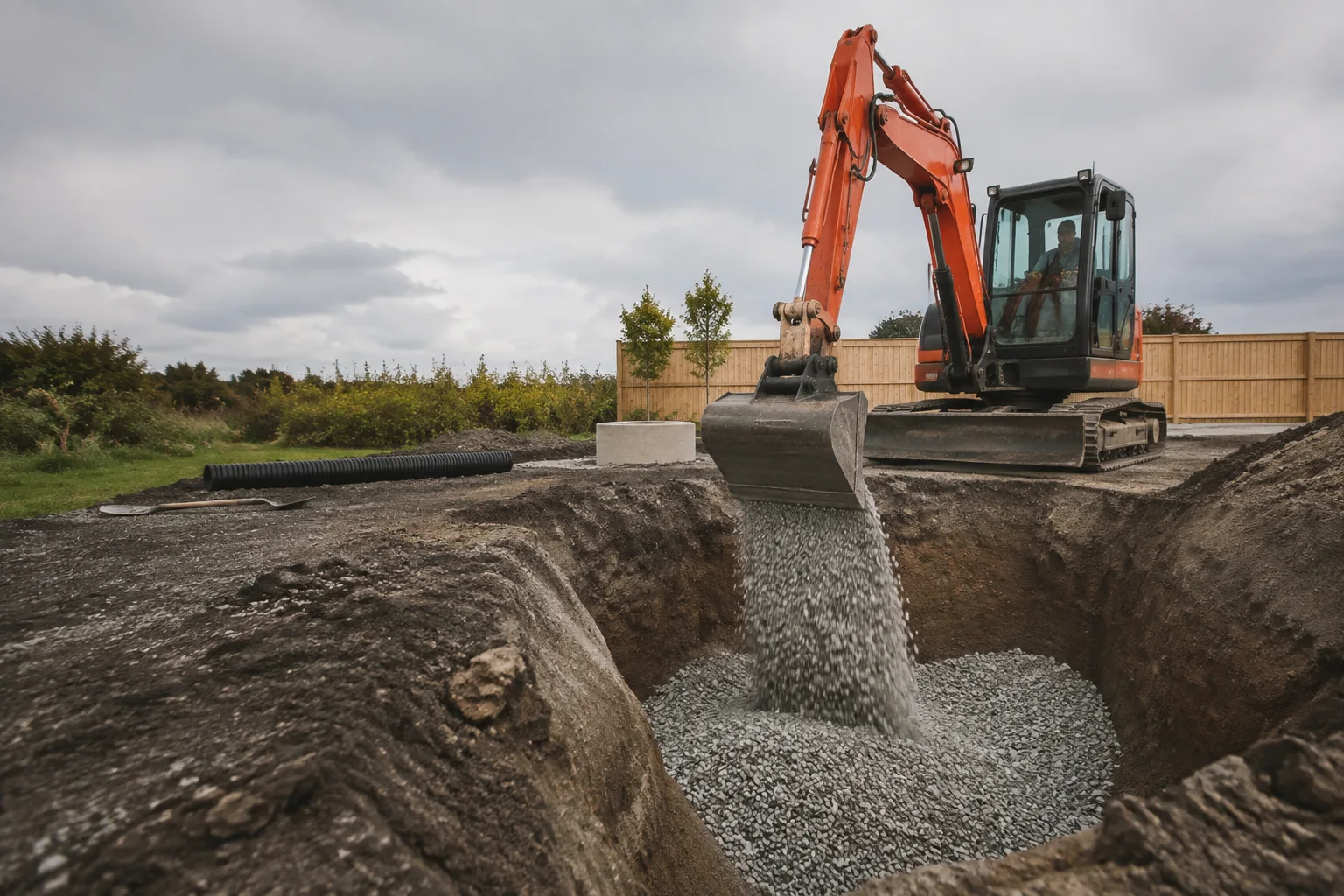
Stormwater & Soakage Groundworks
Excavation for soak pits, soakage trenches and stormwater disposal systems, dug to the dimensions your drainlayer or engineer specifies.
View serviceRetaining, Landscaping & Grading
Assessing and repairing leaning, cracked and failing retaining walls across Christchurch, dealing with the drainage and ground behind the wall as well as the wall itself.
03 661 7200Your site. A clear next step.
Christchurch Retaining Wall Repair covers assessing and repairing leaning, cracked and failing retaining walls across Christchurch, dealing with the drainage and ground behind the wall as well as the wall itself.
Tell us what you want to achieve, where your site is and when you would like to start. Include any plans, access constraints or measurements that will help us understand the work.
Recognise your project
Define the work
On-site assessment of the wall and the ground behind it
A plain explanation of what is causing the movement
Advice on whether repair or rebuild is the sounder option
Excavation behind the wall to expose the failure
Replacement of failed posts, rails, blocks or crib units
Installation or replacement of drainage metal, coil and geotextile
Recompacted backfill and reinstated ground above the wall
Referral to a chartered engineer where the wall needs a design
From site assessment to completion
We look at the wall, the ground above and below it and where water is going, so the cause of the movement is identified before any repair is priced.
We tell you whether the wall can be repaired in place or has reached the point where rebuilding is more sensible, and where a chartered engineer needs to be involved before work proceeds.
Where a wall is unstable, the area is made safe and the load above it reduced. We then excavate behind the wall to expose the footings, drainage and failed components.
Failed posts, rails, blocks or crib units are replaced and the wall brought back to line, or the affected section is rebuilt where repair is not enough.
Drainage metal, drainage coil and geotextile are installed or replaced so water has a controlled way out, since trapped water is usually what caused the failure.
Backfill is compacted in layers, the ground above the wall is regraded, and surplus material is carted away.
Working conditions
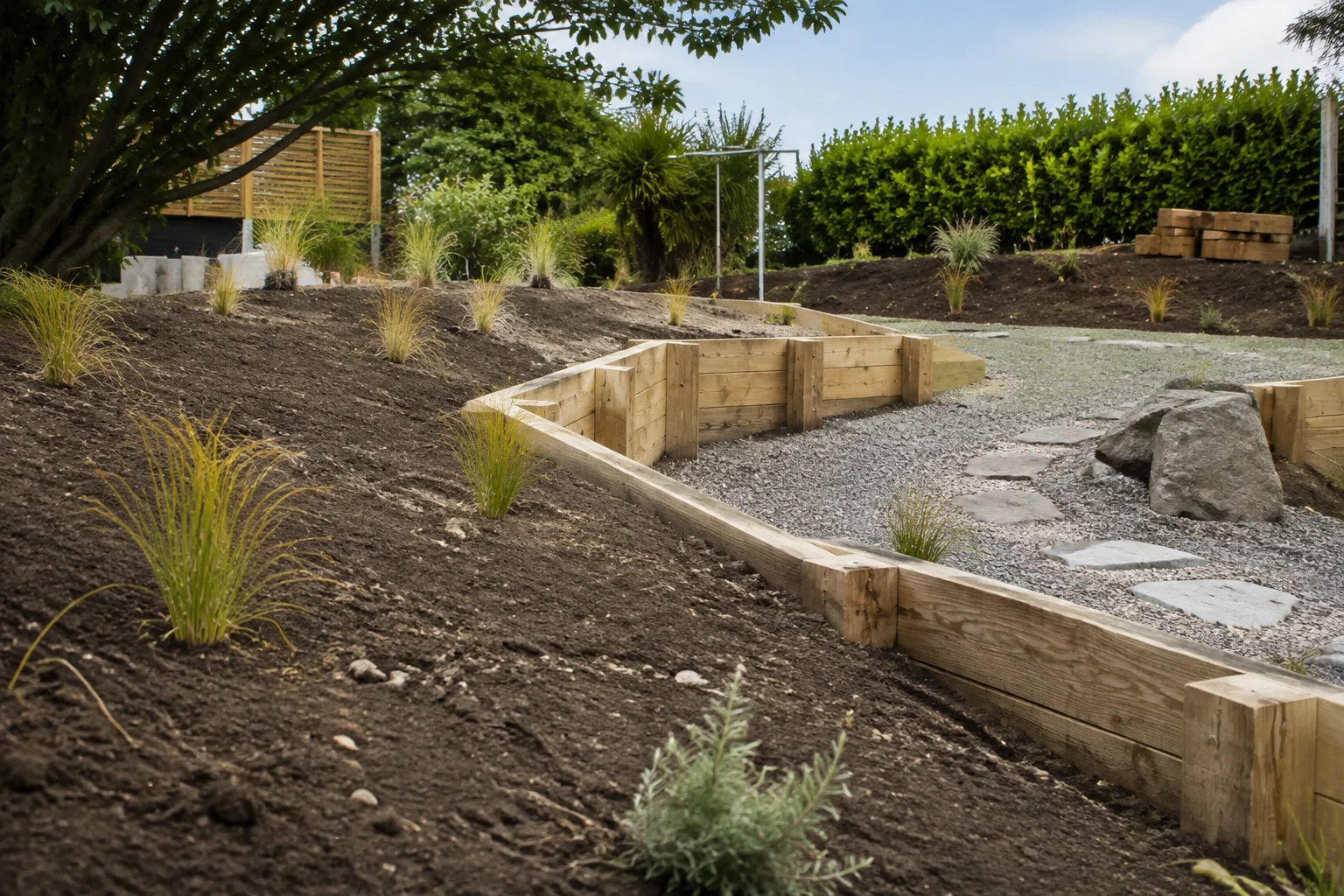
Repair work often has less room than a new build, because there is an existing wall, established planting and sometimes a driveway or structure close above. Compact excavators, small compaction gear and a fair amount of hand work near the wall face are usual. On steep or unstable sites we reduce the load above the wall before working at the face.
Repairs are more disruptive than they look from the street, because reaching the drainage and footings means excavating the ground behind the wall. Expect the area above the wall to be out of use, planting in the work zone to be affected, and truck movements for material and spoil. Where a wall is unstable we may restrict access to the area above it until the repair is complete.
Get the detail right
Repairing the visible face of a wall without finding out why it moved usually buys a short reprieve and no more. Most retaining wall failures in Christchurch come back to water that was never given a way out, backfill that was never properly compacted, or timber that has reached the end of its life below ground, and all three sit behind the wall where they cannot be seen. An assessment that starts with the cause tells you whether you are looking at a repair, a rebuild, or an engineer's involvement before money is spent on the wrong one.
It depends on what has failed and how far it has gone. A wall with sound footings and one or two rotten rails is usually repairable; a timber wall with posts failing below ground, or a wall that has rotated on its footing, is often past that point. We give you our read at the site visit and explain what it is based on.
Like-for-like repair of an existing wall often does not, but rebuilding, increasing the height or changing the wall structure can, particularly over 1.5 metres or where the wall carries additional load. Confirm with your council for your site. We will tell you when we think a consent or an engineer is likely to be needed.
Not necessarily, but leaning means the wall is being loaded in a way it was not designed for, and it is worth getting looked at rather than watched. If we consider a wall unsafe we will say so plainly and tell you what to keep clear of in the meantime.
In most cases yes, at the level of what to fix. Trapped water, poor backfill compaction and rotten below-ground timber account for the large majority of failures, and excavating behind the wall shows which one you have. Where the cause looks like wider ground movement, that is a question for a geotechnical engineer rather than us.
Usually some of it. The drainage and footings that decide whether a repair lasts sit behind and beneath the wall, so reaching them means excavating that ground. We agree the working area with you first and reinstate and regrade it afterwards, though established planting in the work zone may not survive.
That is between you and your insurer and depends on your policy and what caused the failure. Gradual deterioration is treated very differently from damage from a specific event. We can describe what we find, but we do not assess claims or advise on cover.
The next part of your project
Excavation for soak pits, soakage trenches and stormwater disposal systems, dug to the dimensions your drainlayer or engineer specifies.
View serviceBuilding timber, concrete and block retaining walls across Christchurch, from footing excavation and drainage through to a finished, backfilled wall.
View service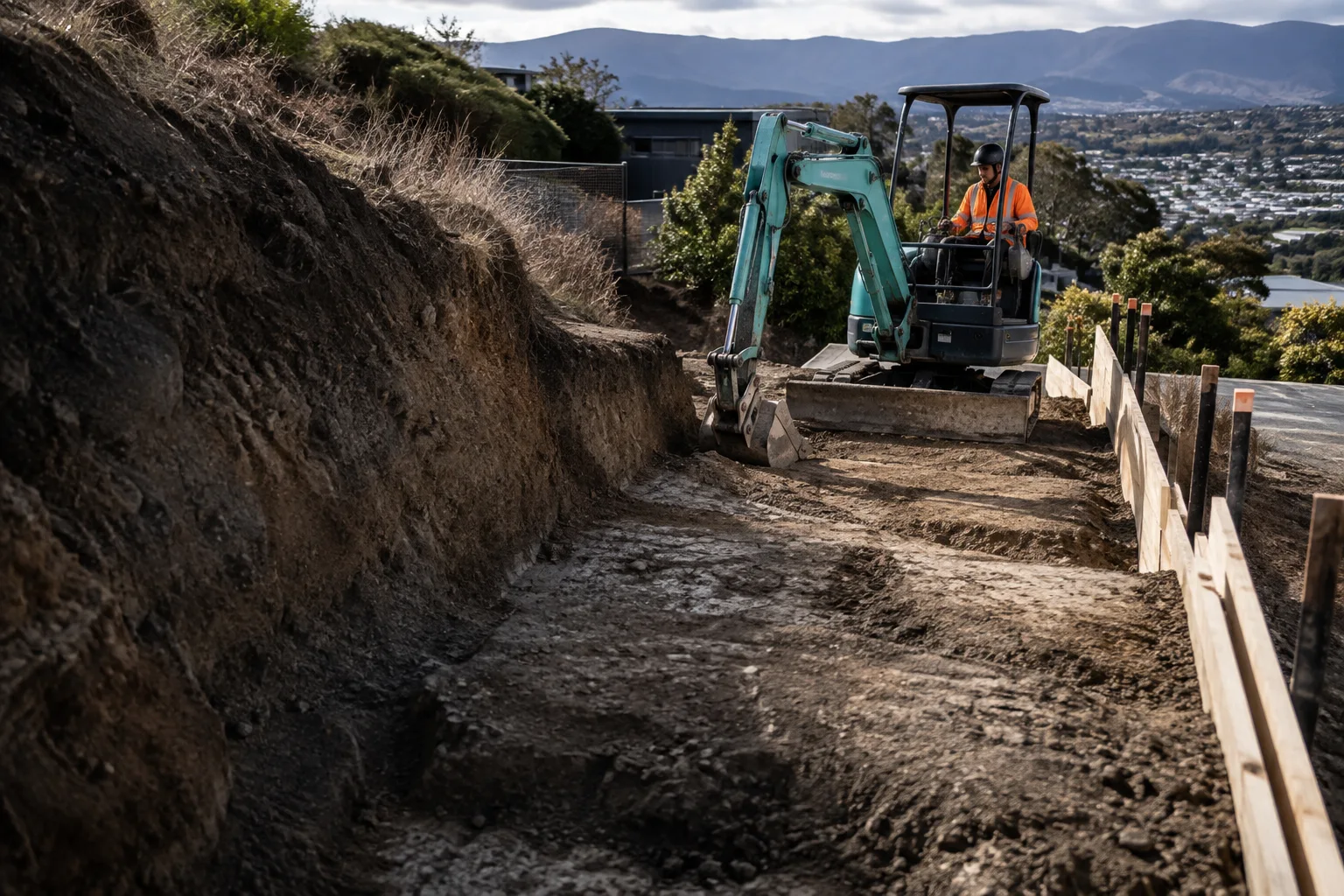
Precision excavation and groundworks for retaining walls across Christchurch's hill suburbs, cutting and benching to your engineer's design before the wall goes in.
View service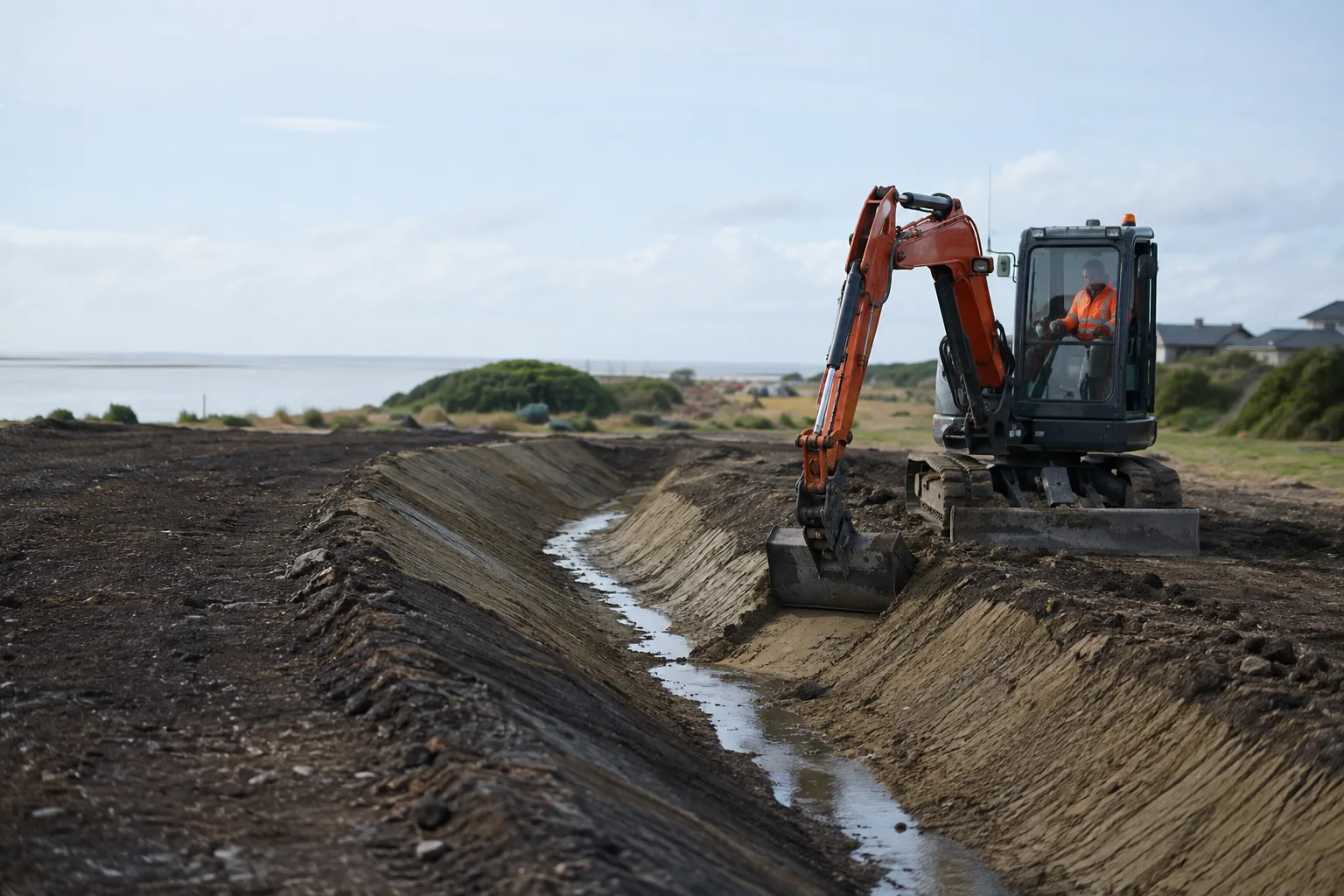
Grading and shaping work that supports erosion and sediment control on coastal and low-lying Christchurch sites, redirecting surface water and stabilising exposed ground.
View serviceTell us about your project and we will come back with clear next steps — no pressure, no jargon.
YOUR SITE. THE NEXT CHAPTER.
Start with your suburb, a few site details and what you want to build.
Plan your project