
Demolition & Site Clearance
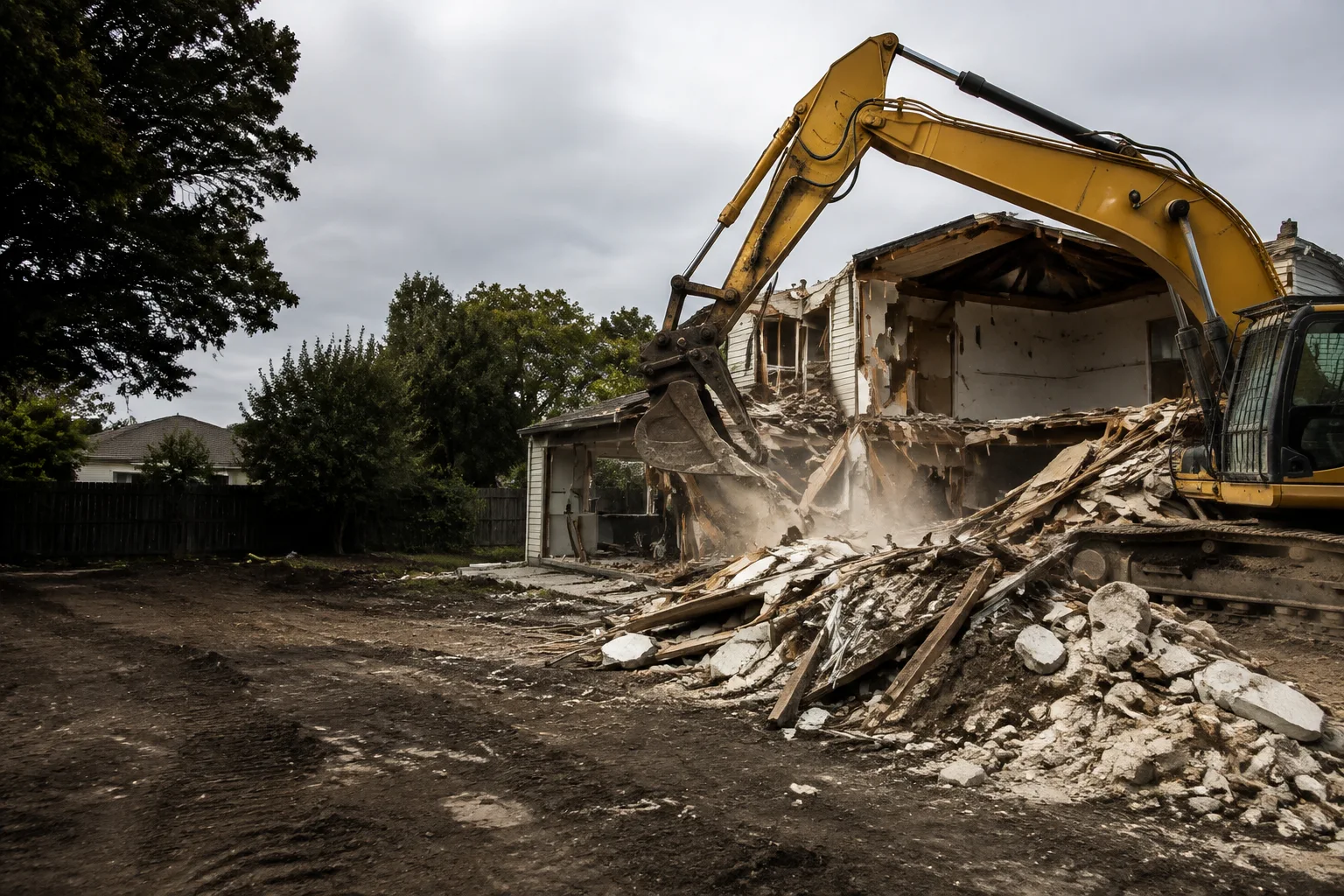
Demolishing structures and clearing the resulting debris so a site is safe and ready for the next stage of earthworks or building.
View serviceOutdoor projects
Removing an in-ground pool involves more than digging a hole - here is how the process generally works and what to plan for before and after excavation.
03 661 7200Your site. A clear next step.
Christchurch Pool Removal and Excavation: What's Involved shows that removing an in-ground pool involves more than digging a hole, covering how the process generally works and what to plan for before and after excavation.
Tell us what you want to achieve, where your site is and when you would like to start. Include any plans, access constraints or measurements that will help us understand the work.
Outdoor projects
Updated 2026-09-06
Pools get removed for a range of reasons: an ageing shell reaching the end of its practical life, ongoing maintenance and running costs no longer matching how much the pool is used, a change in how the family wants to use the outdoor space, or a wider landscaping or building project that needs the footprint back. Whatever the reason, removal is a bigger job than it looks from the surface, because what sits below ground affects how the work is sequenced, what backfill is needed, and what the area can safely be used for afterwards. Getting a clear picture of the shell type and the intended future use of the space early on makes the rest of the project far more straightforward.
Outdoor projects
Different pool shells are generally handled differently. A fibreglass shell is comparatively light and is often lifted out whole or cut into manageable sections once it's free of surrounding ground. A concrete or gunite shell is heavy and typically more embedded, so it's common for it to be broken up, or in some cases perforated with drainage holes and left largely in place as part of the fill profile, rather than fully extracted.
A vinyl liner pool built over a steel or panel wall usually has its liner and wall panels removed, with the remaining base treated similarly to other structural options depending on how it was originally built. Whether full removal or partial removal is the better path depends on the shell, site access, and what the area will be used for next.
Before any excavation equipment moves in, the pool's services need to be safely disconnected and isolated. This means a licensed electrician handling wiring to pumps, lighting and any control equipment, a qualified plumber disconnecting pump, filtration and plumbing lines, and a registered gasfitter dealing with any gas-fired heating. Christchurch Earthworks does not carry out this trade work and doesn't disconnect pool equipment ourselves - it's essential that these disconnections are completed and confirmed safe by the appropriate licensed trades before excavation begins.
Getting this sequencing right protects everyone on site and avoids delays caused by discovering a live connection partway through the dig.
Outdoor projects
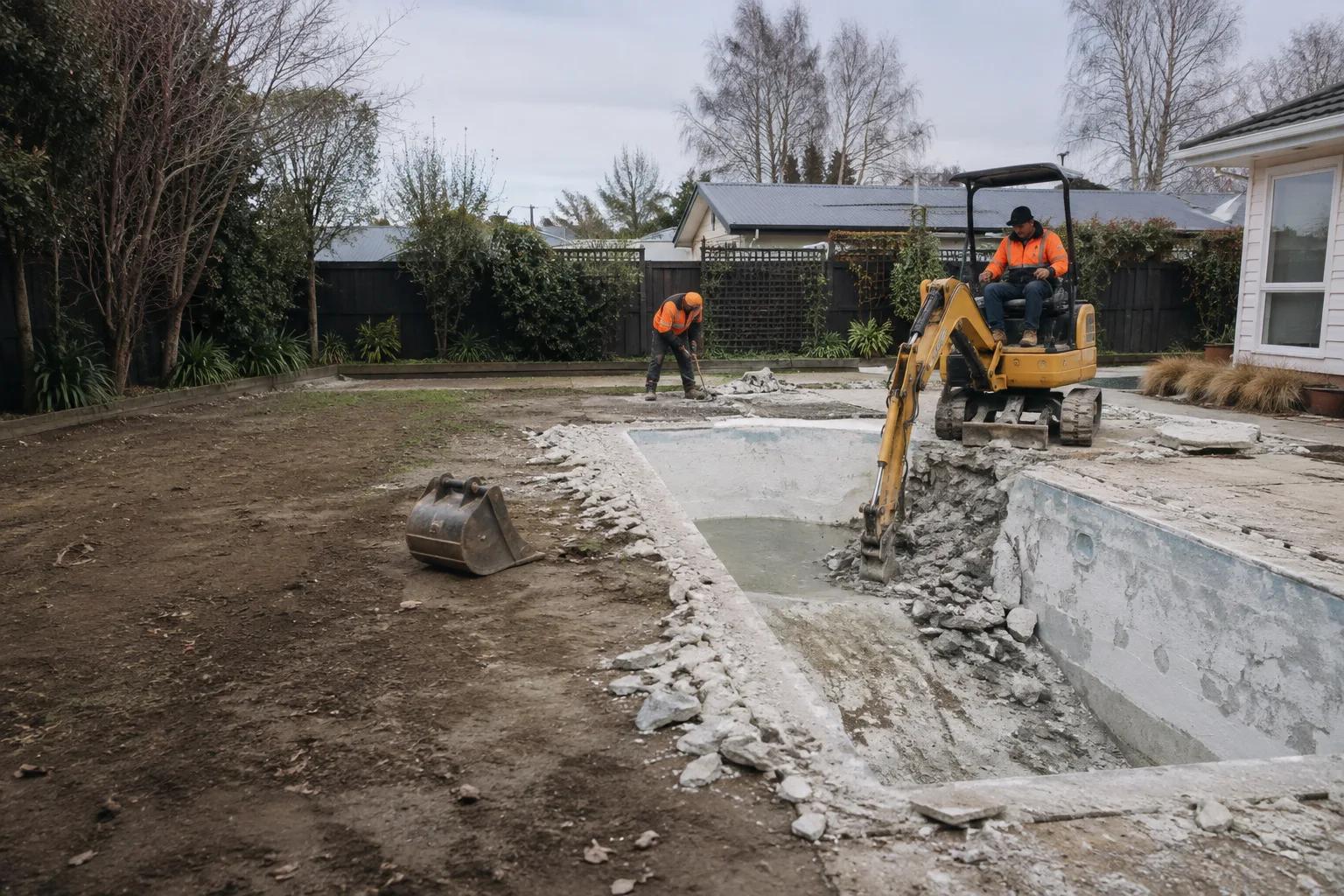
Once the pool is drained and services are confirmed disconnected, work generally involves breaking up or extracting the shell, removing debris and spoil from site, and then backfilling the resulting excavation. Backfill should go in and be compacted in controlled layers using suitable fill material, rather than being tipped in loosely and left to settle unevenly over time. Where a shell is perforated and left in place rather than fully removed, drainage provision is built into the base before backfilling proceeds.
Getting the compaction right at this stage matters far more than it might seem, since it directly affects how stable and predictable the ground above it will be for years afterwards.
If the reinstated area is simply becoming lawn or garden, standard backfill and compaction followed by topsoil and appropriate lawn preparation is usually sufficient. If the area is intended for a future building, deck, garage or extension, filling under that future footprint may need engineering input, such as a specified compaction standard or geotechnical testing, because inconsistent fill sitting under a structure risks uneven settlement later. It's worth discussing any future building plans for the space before the backfill method is finalised, since the right approach for a garden and the right approach for a future foundation are genuinely different, and it's much cheaper to get this right the first time than to remediate it later.
Outdoor projects
A pool removal project typically runs through a sequence: checking whether consent is required, arranging trade disconnections, draining the pool, excavation and demolition of the shell, cartage of spoil and debris off site, backfilling and compaction, and finally reinstatement of the surface. Keeping this sequence tight and making sure each step is properly signed off before the next begins helps the project run smoothly, avoids trades or machinery standing idle waiting on each other, and reduces the chance of costly rework.
In-ground pools often sit in confined backyard spaces with limited access for machinery, so the practical approach on any given site depends heavily on what equipment can actually get to the pool area and how it needs to manoeuvre once there. Protecting existing landscaping, paths, retaining walls, fences and neighbouring boundaries during the work is part of planning the job properly, as is managing the temporary open excavation safely while work is underway. A site visit before work starts helps identify these constraints early, rather than discovering them once machinery is already committed to the job.
Keep these points in mind
Pool removal is generally either full removal or partial removal with a perforated shell left in place, depending on the shell type and future plans for the site.
Licensed electricians, plumbers and gasfitters disconnect pool services before any excavation work begins.
Backfill should be placed and compacted in controlled layers rather than tipped in loosely, especially where settlement matters.
Fill sitting under a future building footprint may need engineering input and a specified compaction standard.
Confined backyard access often shapes the equipment and method used for a given site.
Clear sequencing between trades and excavation keeps the project moving safely and avoids rework.
Put the guide into practice
Demolishing structures and clearing the resulting debris so a site is safe and ready for the next stage of earthworks or building.
View service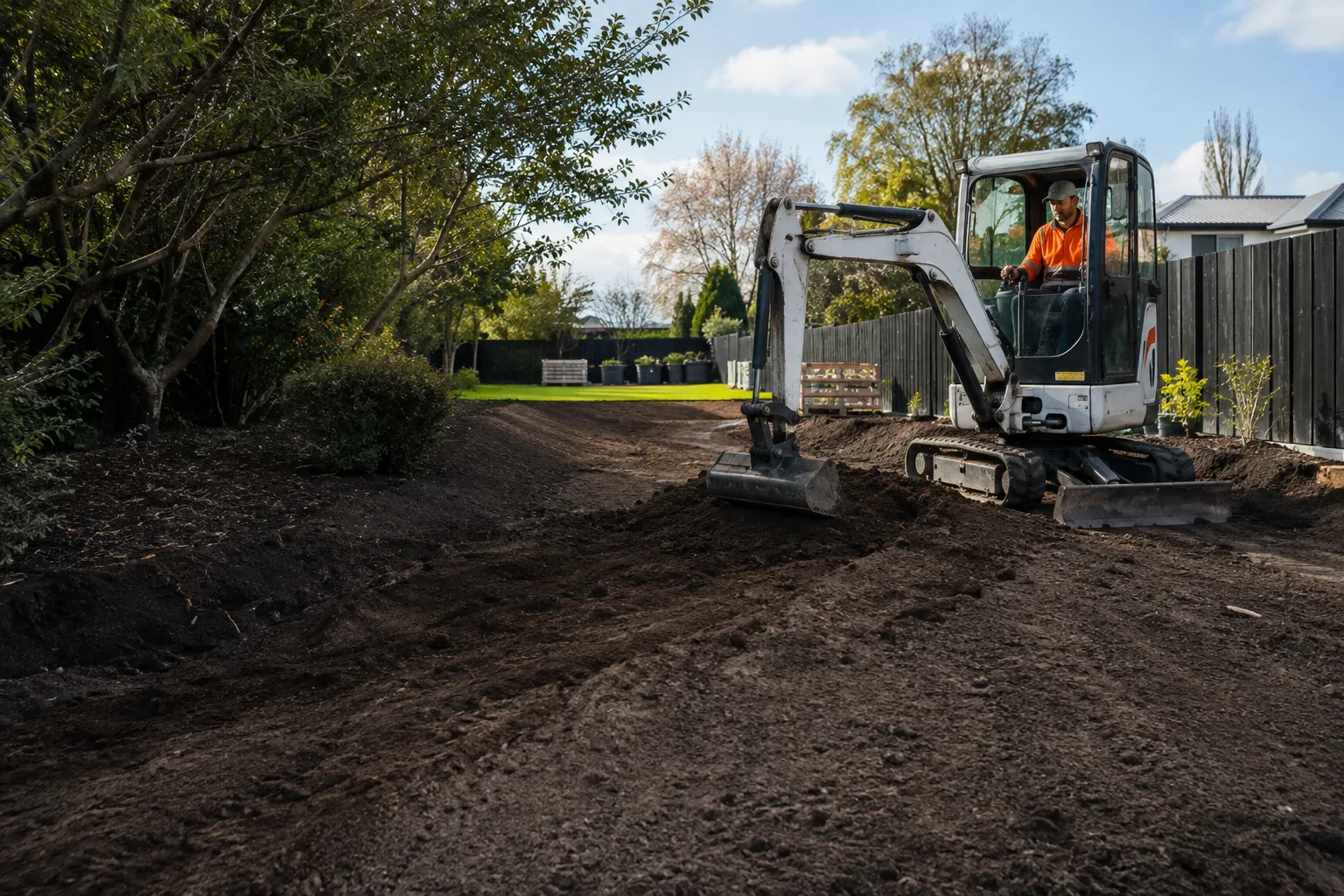
Cut, fill and contour grading for gardens, lawns and grounds across Christchurch, reshaping bare or uneven land ready for planting or turf.
View service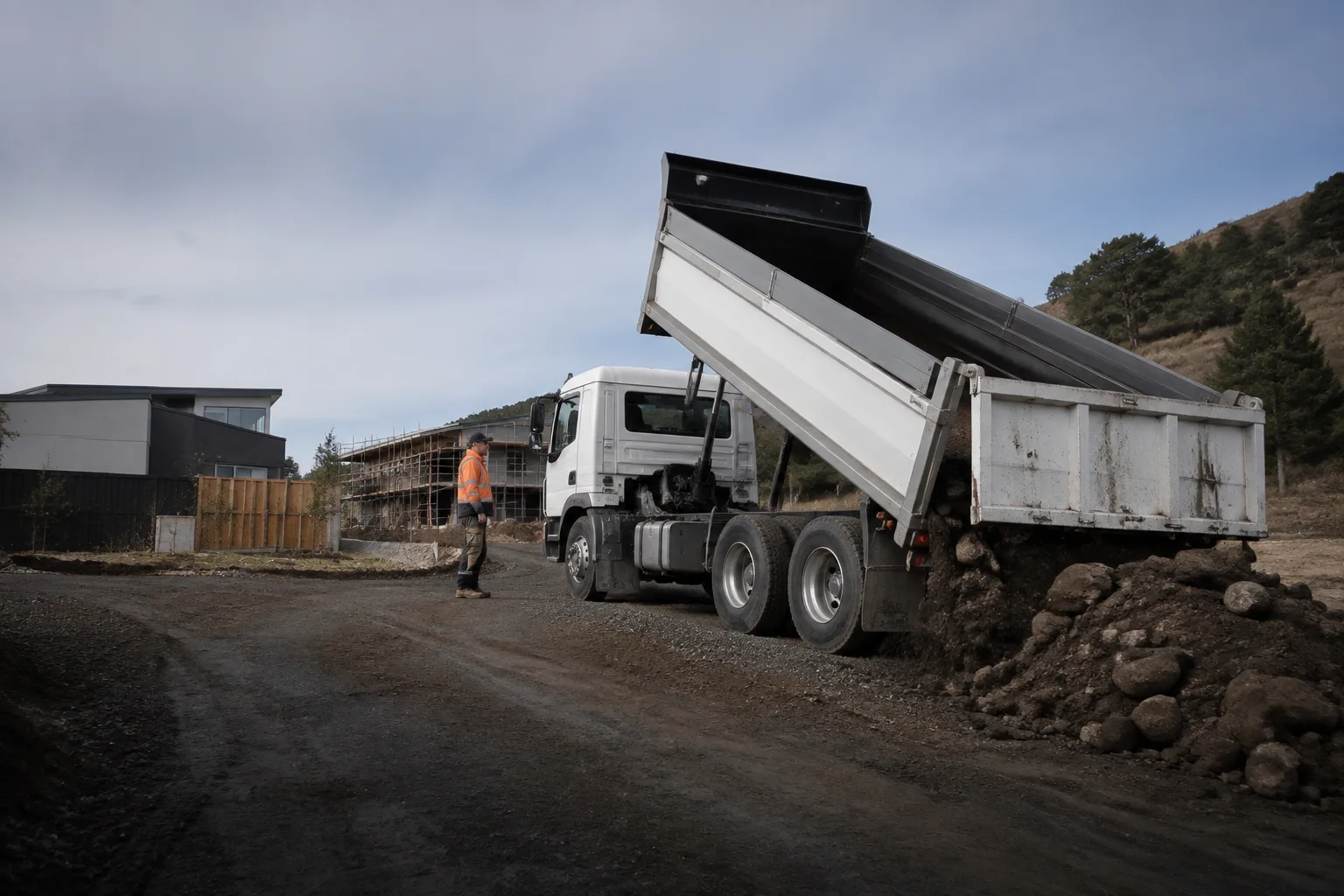
Driver-operated tip truck cartage for spoil removal and material delivery, coordinated with your excavation or landscaping work.
View service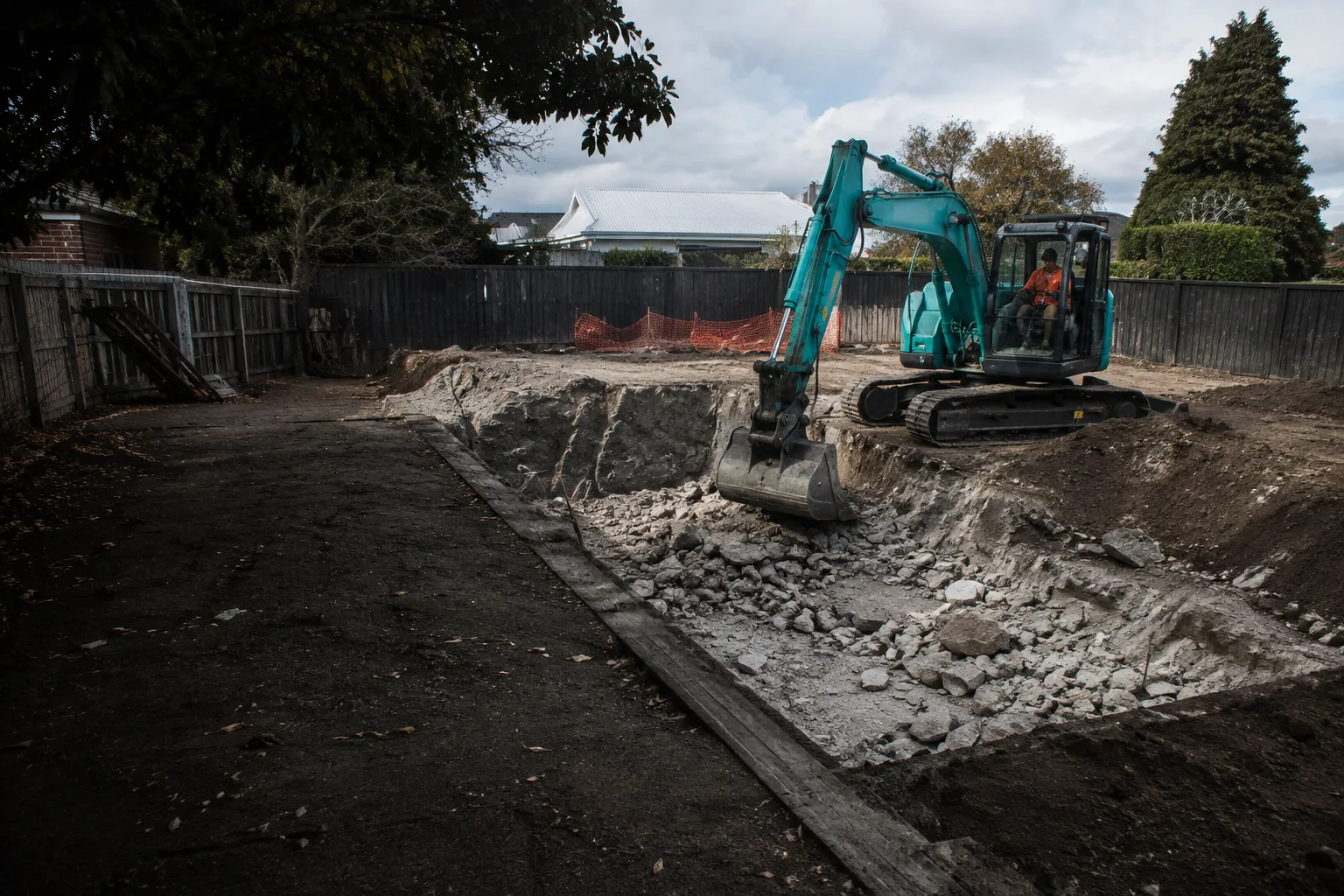
Excavation for new in-ground pool installations to your supplier's specified levels, plus full excavation and backfill for pool removal and reinstatement.
View serviceTell us about your project and we will come back with clear next steps — no pressure, no jargon.
YOUR SITE. THE NEXT CHAPTER.
Start with your suburb, a few site details and what you want to build.
Plan your project