
House Site & Building Platform Preparation
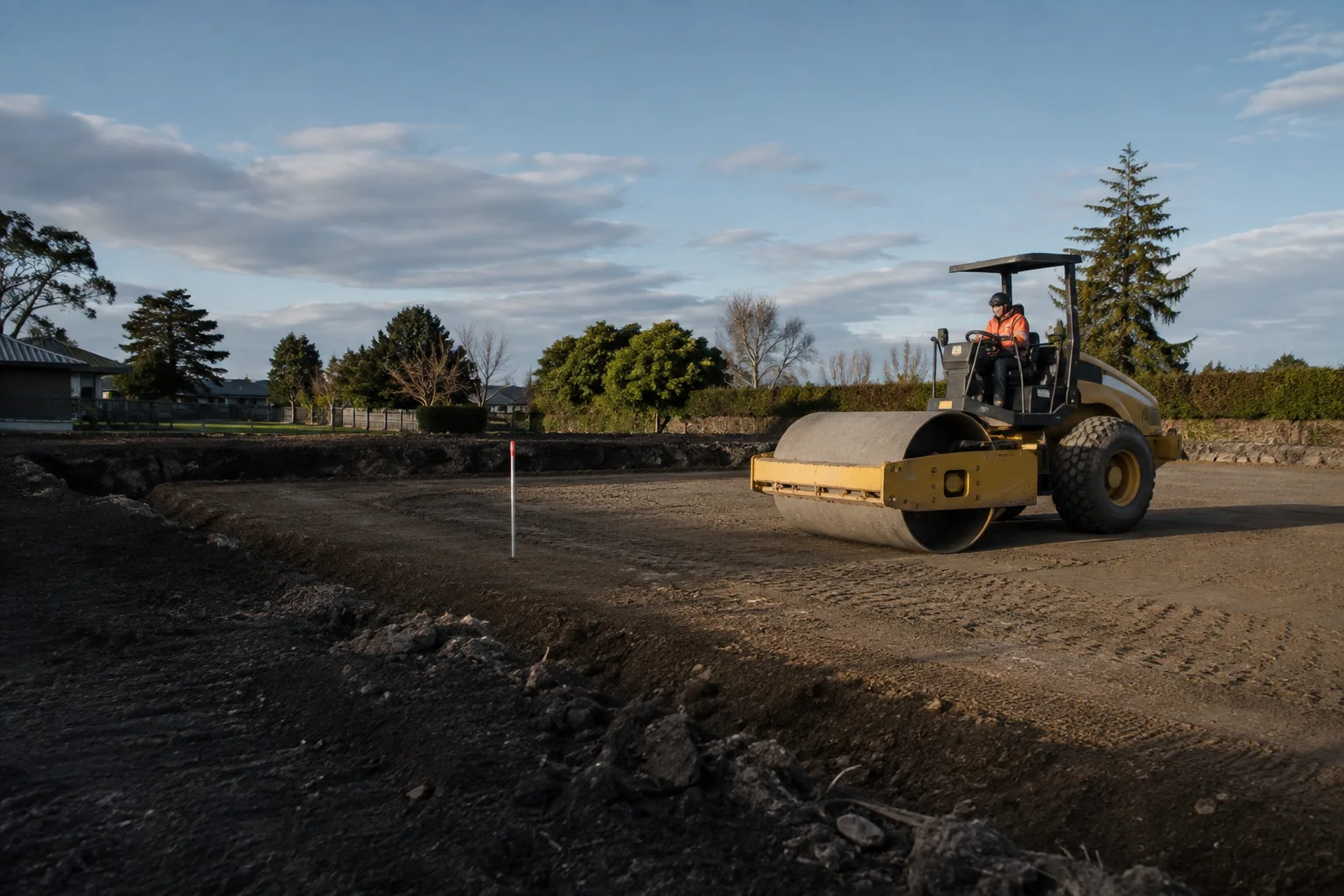
Excavating and compacting a level, engineered building platform ready for foundation work, to your designer's specification.
View serviceGround & materials
A plain-English explanation of topsoil, subsoil, engineered fill and aggregate, and how to work out roughly how much of each your project actually needs.
03 661 7200Your site. A clear next step.
Christchurch Topsoil, Fill and Aggregate: What's the Difference and What Do You Need? explains topsoil, subsoil, engineered fill and aggregate in plain English, and how to work out roughly how much of each your project actually needs.
Tell us what you want to achieve, where your site is and when you would like to start. Include any plans, access constraints or measurements that will help us understand the work.
Ground & materials
Updated 2026-09-06
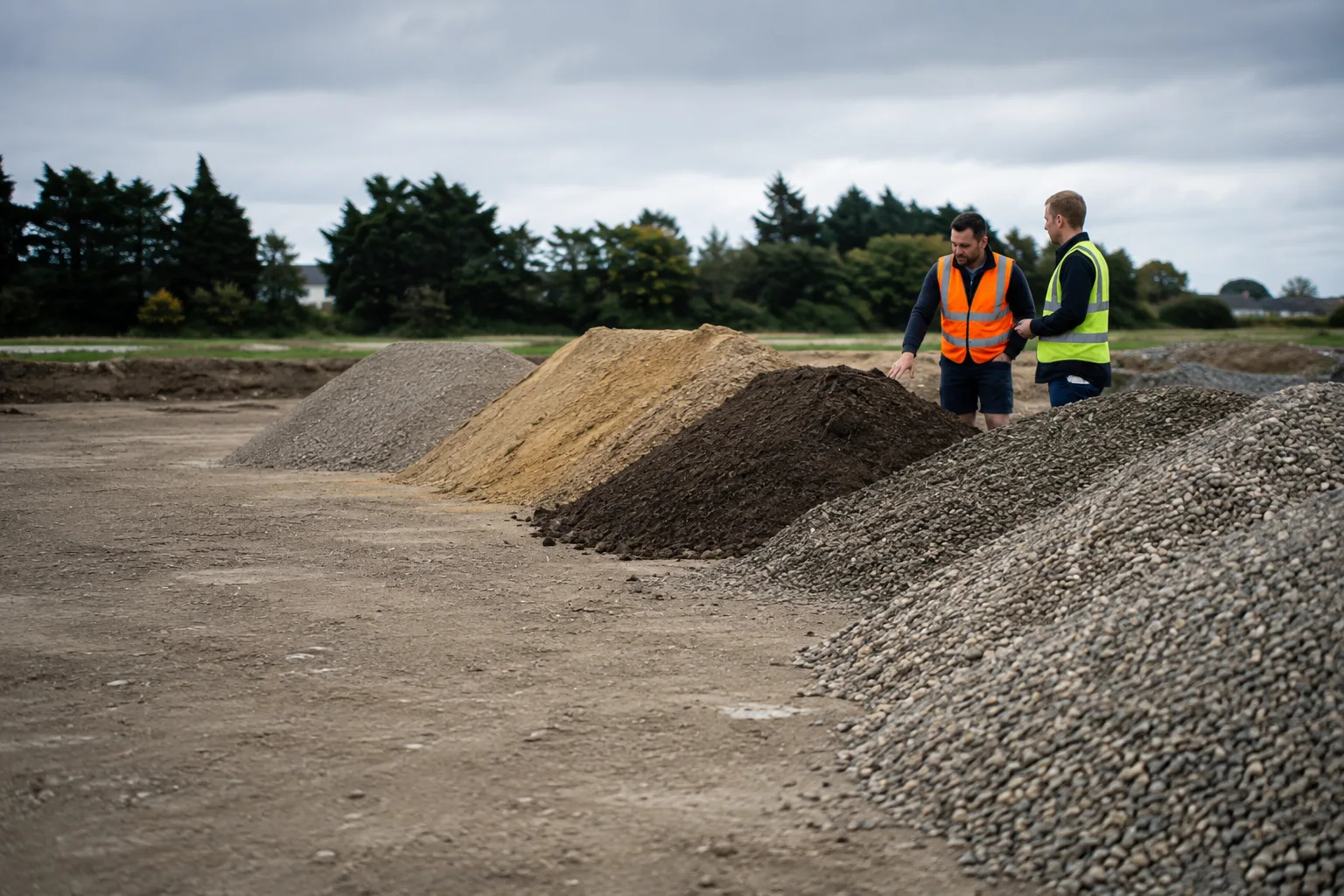
Topsoil is the biologically active upper layer of soil, generally darker in colour, higher in organic matter and structured to support plant root growth, which is why it is what you want under a lawn, garden bed or planting area. Subsoil sits below that layer, contains far less organic material, and is typically what gets excavated during cuts for driveways, building platforms or trenches. Subsoil is not generally suitable for growing plants without significant amendment, but it is often perfectly usable as bulk fill in areas that will not be planted, provided it meets the compaction requirements for its intended use.
Knowing which one you are dealing with, or being supplied, matters more than the name suggests, since using subsoil where topsoil was needed, or vice versa, causes ongoing problems.
Ground & materials
Engineered fill is material placed and compacted in controlled layers to meet a specific engineering standard, usually to support a building platform, driveway or road pavement. Each layer is compacted with appropriate equipment and, on larger or more critical projects, tested to confirm it meets the density the engineer has specified before the next layer goes on. This is quite different from clean fill that is simply dumped and roughly levelled without compaction control, which may be adequate for filling a low-value area but is not suitable under anything that needs to bear consistent load without settling unevenly over time.
Aggregate, often supplied as basecourse, is graded crushed rock or shingle used under driveways, building platforms, paths and roads, chosen for its ability to spread load, drain freely and compact into a firm, stable layer. Different grades suit different jobs, a finer grade might finish a path surface while a coarser grade forms a deeper structural layer, and this is usually specified by an engineer or worked out based on the loads a surface needs to carry, such as vehicle traffic on a driveway. Aggregate is generally compacted in layers similar to engineered fill, since a single thick layer tipped in and rolled once rarely achieves the same density as several thinner, well-compacted layers.
Ground & materials
For garden beds and lawns, topsoil is usually blended or amended to suit what is being planted, sometimes with added compost for vegetable beds. For a driveway, the typical build-up is a compacted subgrade, a basecourse aggregate layer, and then a wearing surface, whether that is seal, concrete or gravel. For a building platform, engineered fill is placed and compacted to the levels and density an engineer specifies, which matters even more in parts of Canterbury with variable ground conditions, including areas known for liquefaction-prone silts and gravels, where Toka Tū Ake EQC has published useful general guidance on ground behaviour.
Getting the base right under a building platform is one of those things that is far cheaper to do properly than to fix afterwards.
The basic method is area multiplied by depth, converted into cubic metres, for example a 20 square metre garden bed filled 150 millimetres deep needs roughly 3 cubic metres of topsoil. For irregular areas, breaking the space into rough rectangles and adding them together is usually accurate enough for ordering purposes. It is worth remembering that loose material compacts down once placed and worked, so a compacted layer generally needs somewhat more loose volume delivered than the finished depth alone suggests, and this bulking factor varies by material type, which is worth checking with your supplier rather than assuming a fixed ratio.
Ground & materials
Bulk materials such as topsoil, fill and aggregate need somewhere to be tipped and, often, temporarily stockpiled before they are spread or compacted, so it is worth thinking through where a stockpile can sit without blocking access, damaging a lawn, or washing into a neighbouring property or waterway during rain. Moisture content affects how workable material is, very wet topsoil or fill can be difficult to spread and compact evenly, while very dry material can be dusty to handle, so timing deliveries around reasonably settled weather generally helps. Ordering in stages rather than all at once can also help on a tight site, since one large stockpile takes up more room than most residential sections comfortably have to spare, and working through smaller deliveries as each area is finished keeps the site more manageable throughout the job.
Canterbury spans everything from free-draining gravels on the plains to silty and clay-rich soils, and low-lying peat in some coastal and river-margin areas, often within a short distance of each other. What works well as a fill or basecourse specification on one section may need adjusting on a neighbouring property with different underlying ground. This is part of why building platform fill specifications are usually set by an engineer based on site-specific ground investigation rather than a generic rule of thumb, and why it is worth treating any material estimate as a starting point to confirm with whoever is supplying or specifying the fill for your particular site.
Keep these points in mind
Topsoil is the organic, plant-supporting layer; subsoil sits beneath it and is generally used as bulk fill rather than for planting.
Engineered fill is placed and compacted in layers to a specified standard, unlike clean fill that is simply dumped and levelled.
Aggregate and basecourse are graded crushed rock chosen for load-spreading and drainage under driveways, platforms and roads.
Garden beds need topsoil, driveways need a compacted subgrade and basecourse, and building platforms need engineered fill to specified levels.
Estimate volume as area multiplied by depth, then allow for a bulking or compaction factor rather than ordering to the finished depth alone.
Canterbury's varied ground conditions mean fill and basecourse specifications are best confirmed site by site rather than assumed from a neighbouring property.
Put the guide into practice
Excavating and compacting a level, engineered building platform ready for foundation work, to your designer's specification.
View service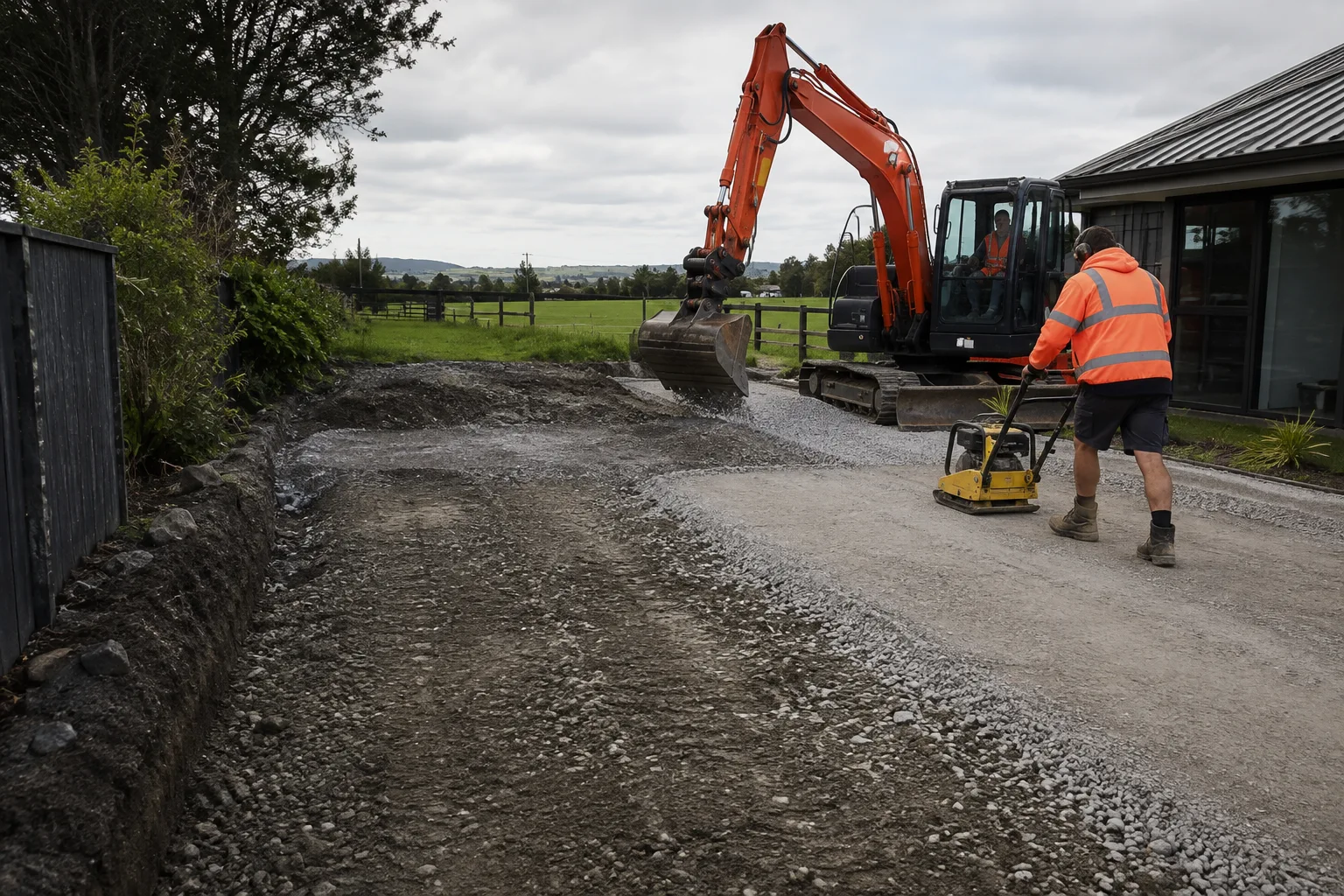
Excavation and sub-base preparation for new or replacement driveways, shaped and compacted correctly before your concrete or asphalt contractor arrives.
View service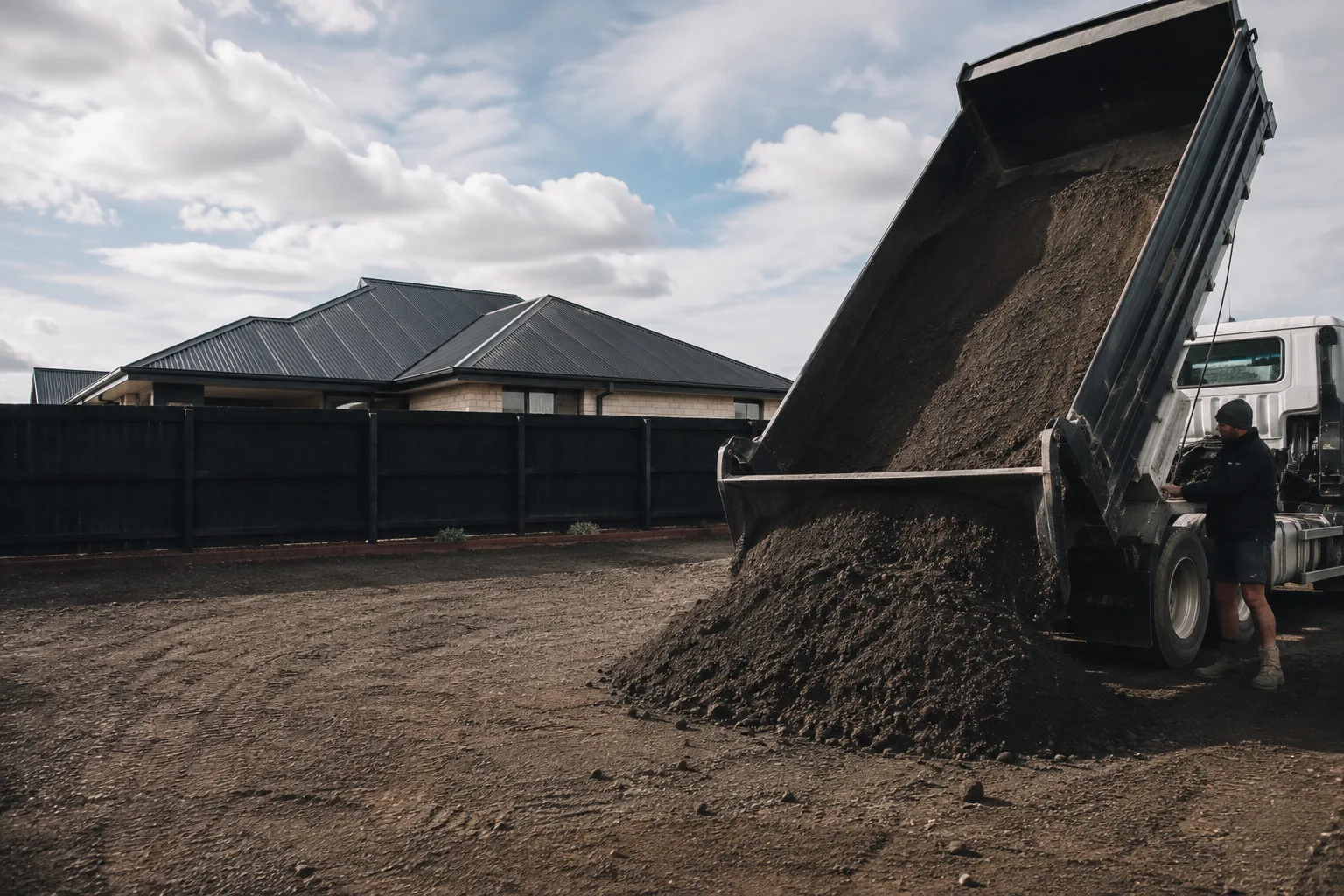
Topsoil supplied, delivered and spread ready for lawns, gardens or landscaping across Canterbury properties.
View service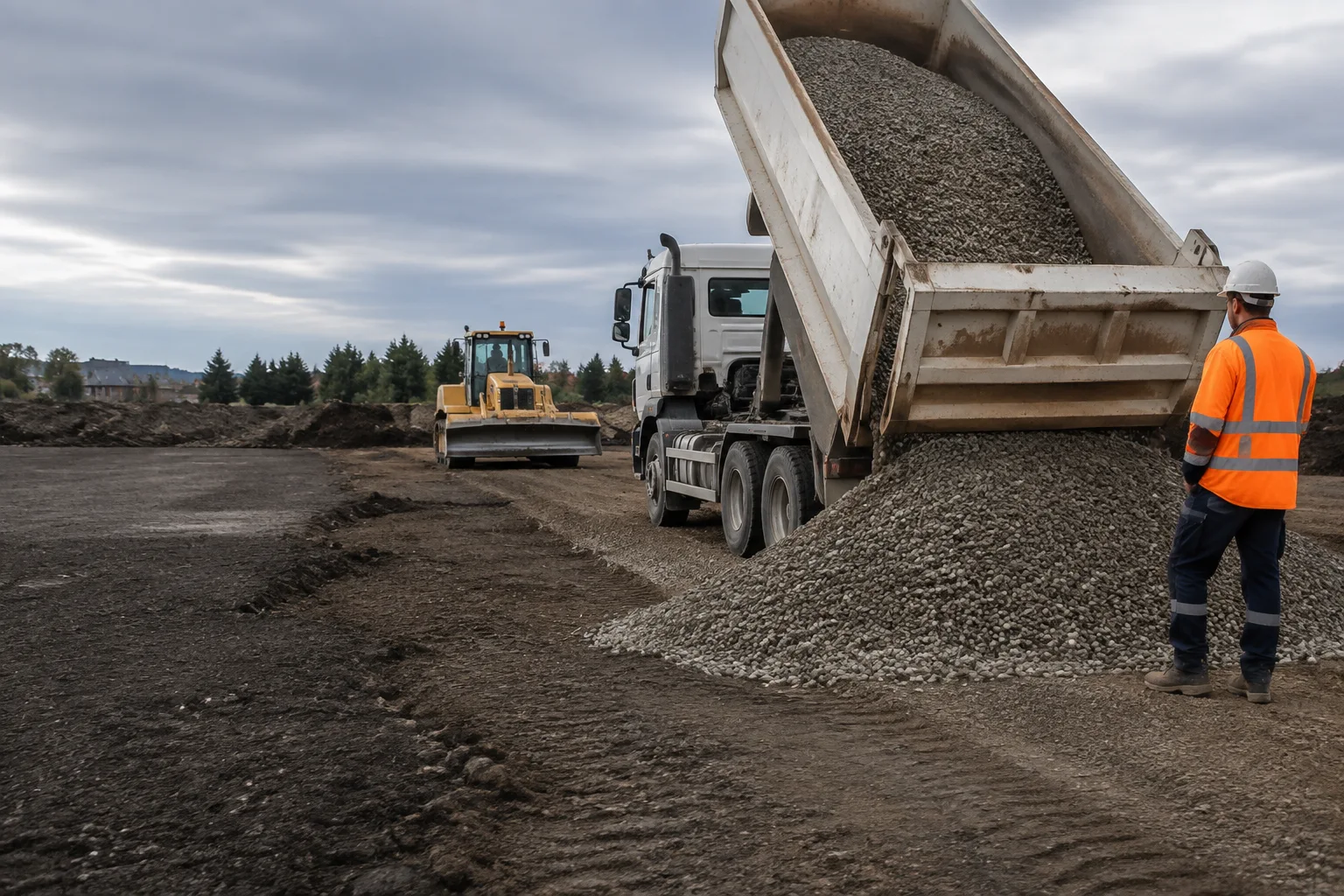
Shingle, aggregate and fill supplied and delivered for driveways, drainage and building work across Canterbury.
View serviceTell us about your project and we will come back with clear next steps — no pressure, no jargon.
YOUR SITE. THE NEXT CHAPTER.
Start with your suburb, a few site details and what you want to build.
Plan your project