
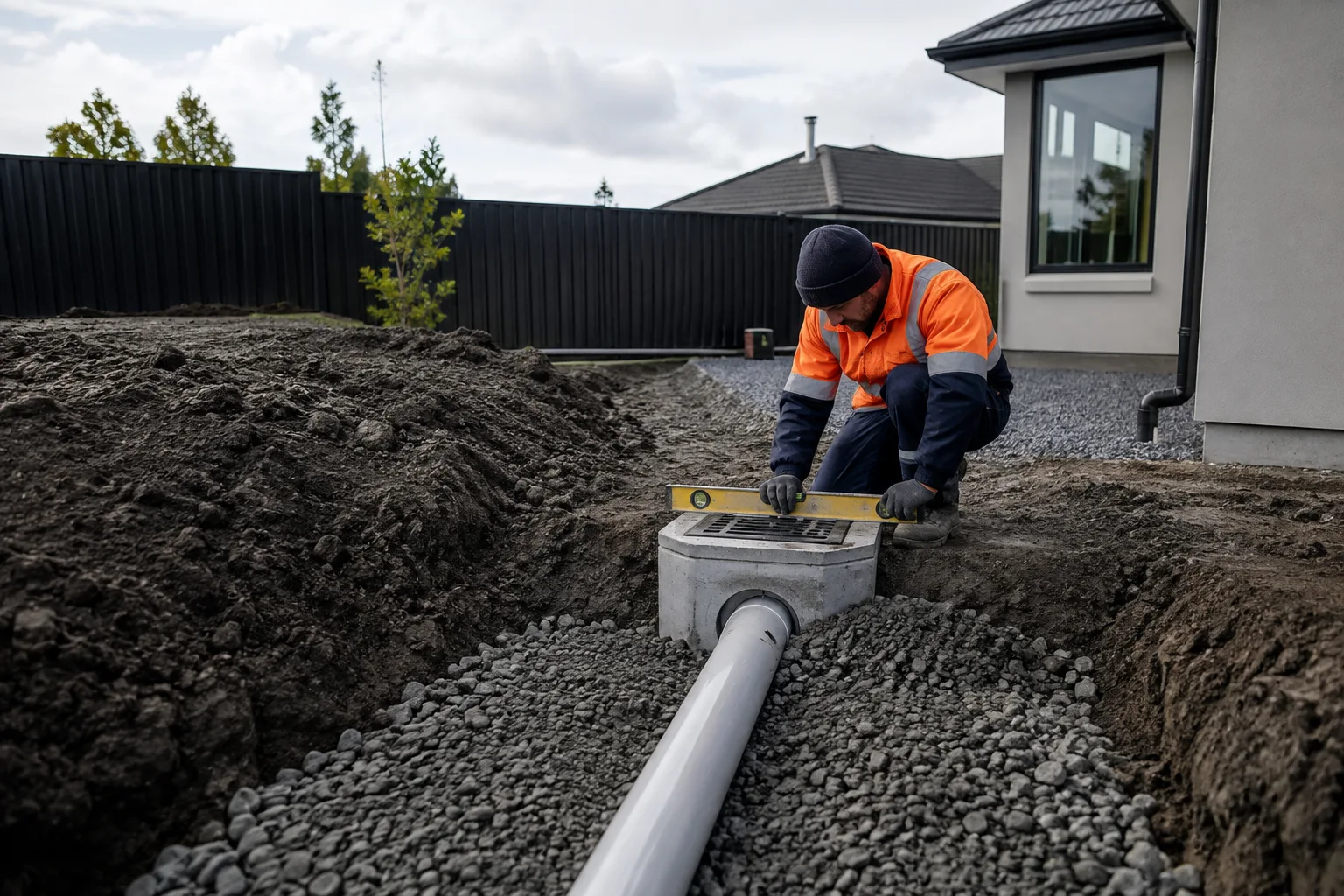
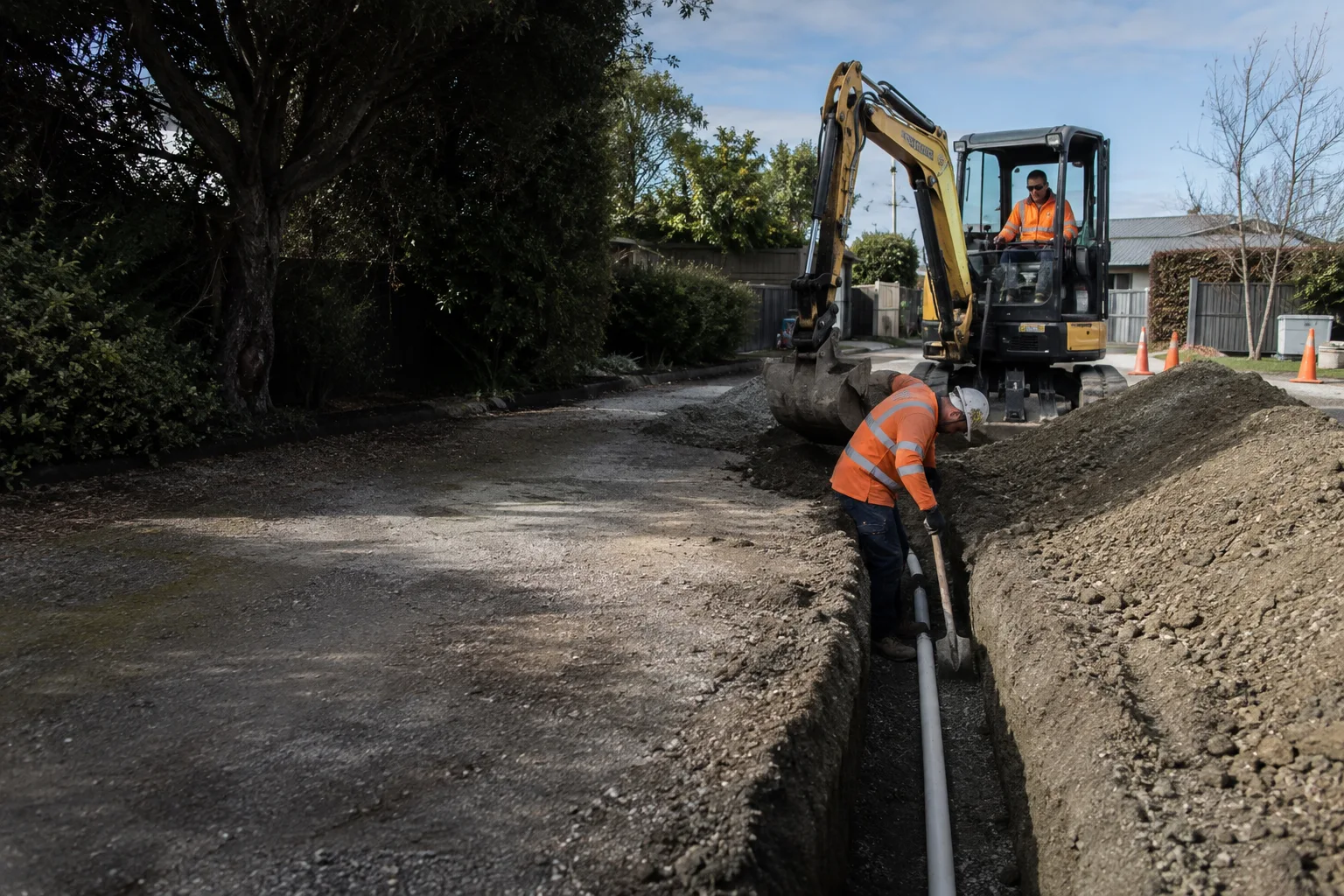
Trenching for Services (Power, Water, Gas, Telecoms)
Trenching dug to depth and clearance requirements for power, water, gas or telecommunications connections, coordinated with your network provider.
View serviceWater & site care
Understanding how stormwater is managed on a Canterbury property helps you plan the right groundworks before a drainlayer or designer finalises a system.
03 661 7200Your site. A clear next step.
Christchurch Stormwater and Soakage Basics for Canterbury Properties covers how stormwater is managed on a Canterbury property, helping you plan the right groundworks before a drainlayer or designer finalises a system.
Tell us what you want to achieve, where your site is and when you would like to start. Include any plans, access constraints or measurements that will help us understand the work.
Water & site care
Updated 2026-09-06
Stormwater from roofs, driveways and other hard surfaces generally goes one of two ways. It can be piped into a reticulated stormwater network, typically a council-managed system that carries water away to a public main, or it can be managed on site through soakage, where water is returned to the ground within the property boundary. Which option applies to a given section is usually decided by location and council requirements rather than personal preference.
Much of urban Christchurch City has reticulated stormwater available, while some newer subdivisions and rural or semi-rural allotments across Selwyn and Waimakariri districts rely partly or fully on soakage because a public main isn't within reach, or council rules direct that stormwater be managed on site. A licensed drainlayer or stormwater designer works out which approach fits a specific site and how any system should be sized.
Water & site care
Canterbury sits on a mix of old braided river deposits, which means ground conditions can change noticeably over a short distance. Parts of Christchurch City have finer silty or clay-heavy soils that hold water and drain slowly, while much of Selwyn District sits on free-draining gravels that often suit soakage well. Waimakariri District and Banks Peninsula both show more variable profiles again, with some areas having shallow groundwater or rock close to the surface.
Because performance can differ markedly even between neighbouring properties, it isn't safe to assume a soakage system will work simply because one nearby appears to. This is why soil testing and a proper percolation assessment by a suitably qualified professional matter before any soakage system is designed, rather than relying on general impressions of what an area is like.
A soak pit is an excavated chamber, often filled with clean aggregate or proprietary soakage crates, sometimes wrapped in geotextile fabric to keep fine soil out. A soakage trench works on the same principle but in a linear form, running along a suitable line of ground. Both are designed to hold stormwater temporarily so it can percolate steadily into the surrounding subsoil rather than being piped off site.
Correct sizing depends on the catchment area feeding the system, the measured percolation rate of the soil, and expected rainfall intensity, all of which are calculated by the designer rather than estimated on site. Excavation needs to reach suitable free-draining material at the specified depth, and the system needs to sit a safe distance from foundations, boundaries and any on-site wastewater disposal field.
Water & site care
Christchurch Earthworks excavates trenches, pits and pads to the dimensions, depths and specifications set out by a client's engineer, hydraulic designer or licensed drainlayer. We do not design, size or certify stormwater or soakage systems ourselves, and we're upfront about that with every client. Stormwater design is a specialised and regulated discipline, and the sensible sequence is to get a design or consented plan sorted first, then bring in excavation to prepare the ground accordingly.
A good working relationship between the excavation contractor and the drainlayer avoids common problems, such as ground being opened up before pipe runs and levels are confirmed, or a trench being backfilled before it's been inspected and signed off.
Water & site care
Stormwater and soakage work is frequently subject to building consent conditions and engineering requirements set by the relevant council, and Christchurch City Council, Selwyn District Council and Waimakariri District Council can each have their own guidance on acceptable soakage design, minimum separation distances and any easements affecting a property. Larger earthworks that disturb soil, particularly near waterways, may also carry erosion and sediment control obligations under Environment Canterbury's regional rules. It pays to check what applies to your specific property and proposed work before committing to a particular stormwater approach, since retrofitting a system to meet a requirement discovered later can be far more disruptive than planning for it up front.
Before any digging starts, existing underground services should be located using beforeUdig, since soakage areas often sit near other buried services on a section. It's worth confirming the final design and any consent conditions before excavation begins, rather than digging first and adjusting the plan afterwards. Timing matters too: excavating a soakage system during a wet Canterbury winter, when the ground is already saturated, can make percolation testing unreliable and trench sides less stable to work with.
Keeping any existing drainage plans for the property on hand is also useful, especially on older sections where pipe locations aren't always clearly documented, since this helps everyone involved avoid unwanted surprises during the dig.
Keep these points in mind
Stormwater is either piped to a council network or managed on site via soakage, depending on location and council rules.
Canterbury's soils vary greatly over short distances, so soakage performance should never be assumed from a nearby property.
A soak pit or trench needs correct sizing and siting based on a percolation assessment and specialist design, not guesswork.
Christchurch Earthworks excavates to a drainlayer's or designer's specification and does not design or certify stormwater or soakage systems.
Check consent and regional requirements with your council before finalising a stormwater or soakage approach.
Always confirm the location of underground services before excavation begins.
Put the guide into practice
Trenching dug to depth and clearance requirements for power, water, gas or telecommunications connections, coordinated with your network provider.
View service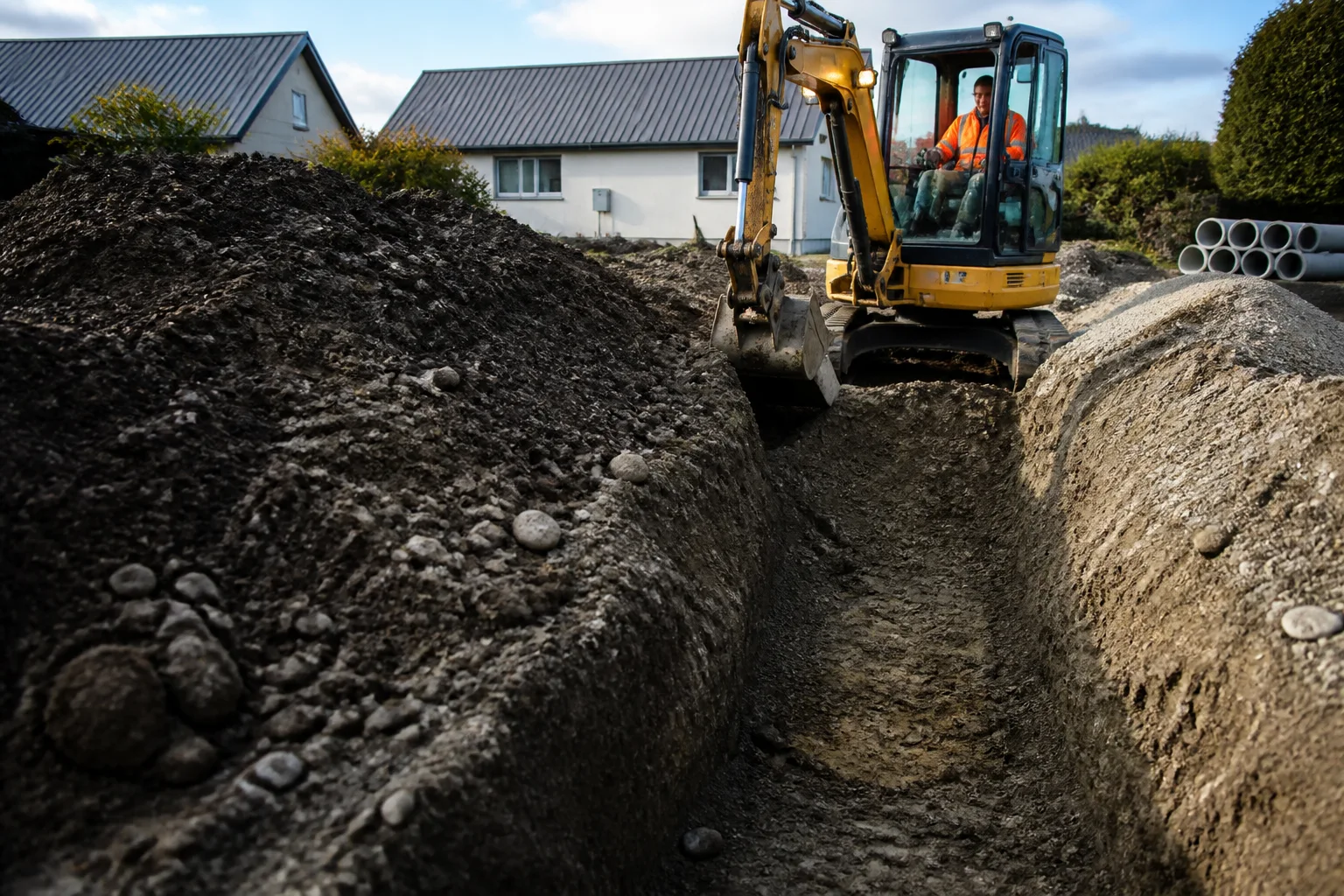
Excavation for wastewater and drainage runs, dug to the falls and depths your licensed drainlayer specifies before they lay and connect the pipework.
View service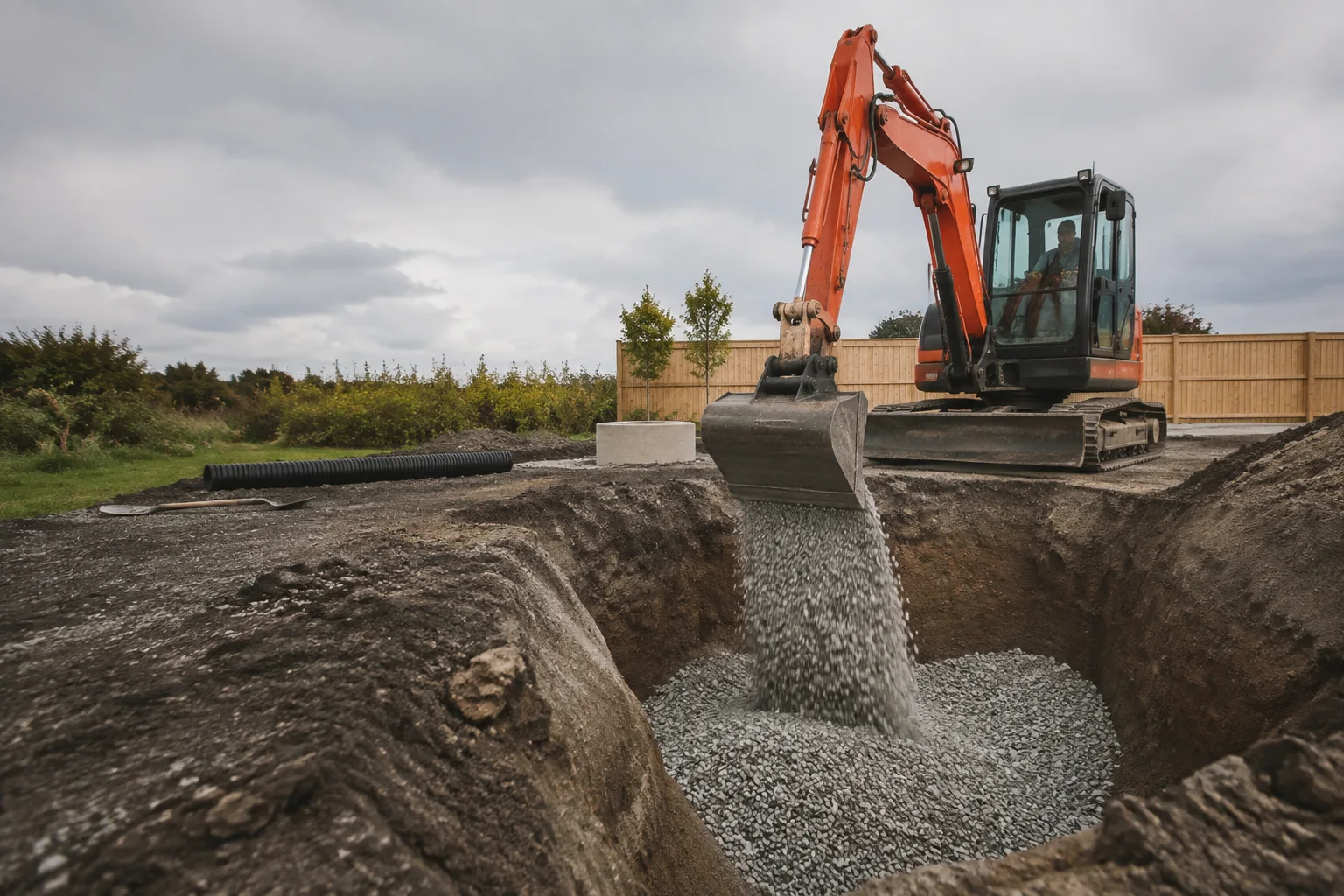
Excavation for soak pits, soakage trenches and stormwater disposal systems, dug to the dimensions your drainlayer or engineer specifies.
View service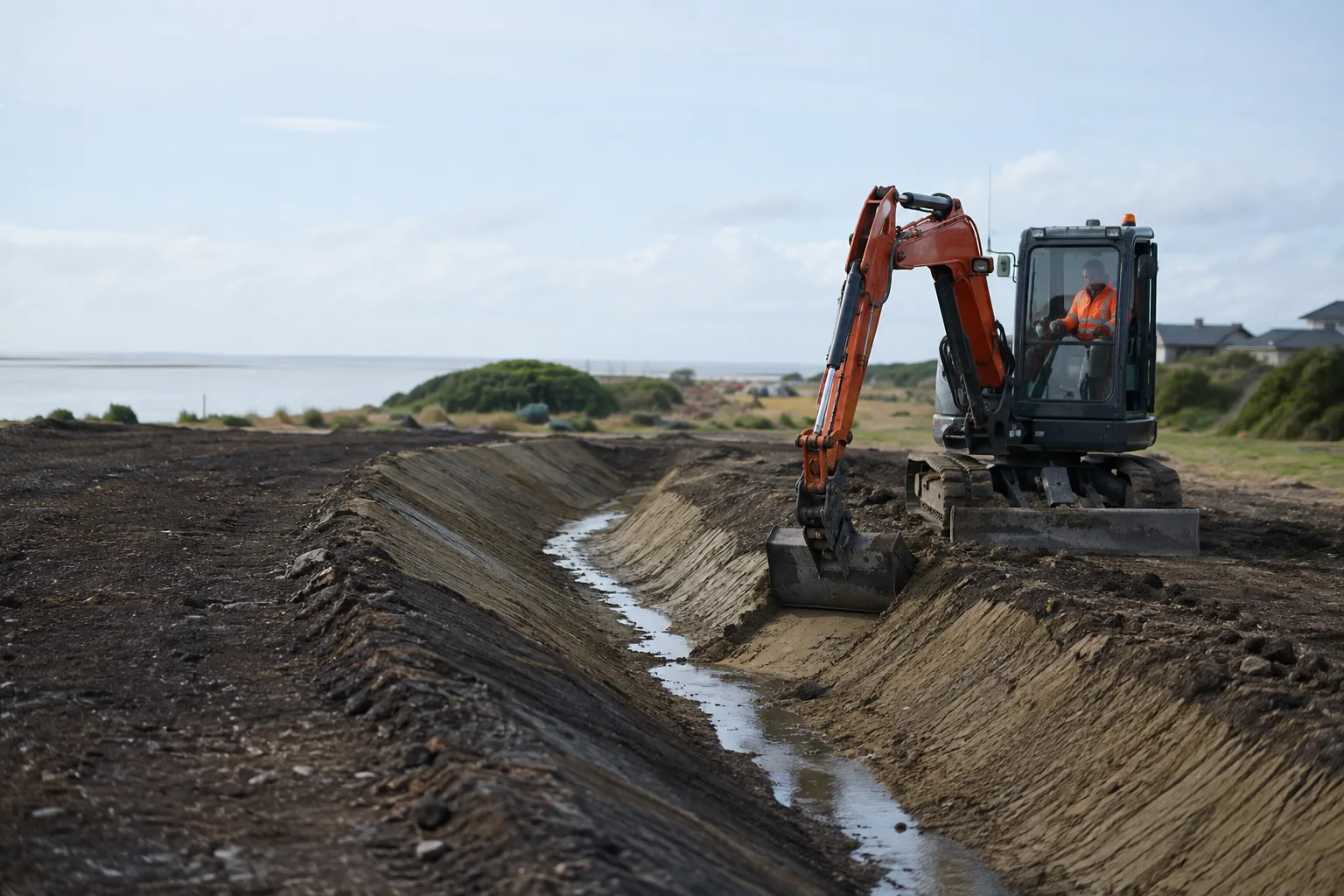
Grading and shaping work that supports erosion and sediment control on coastal and low-lying Christchurch sites, redirecting surface water and stabilising exposed ground.
View serviceTell us about your project and we will come back with clear next steps — no pressure, no jargon.
YOUR SITE. THE NEXT CHAPTER.
Start with your suburb, a few site details and what you want to build.
Plan your project