
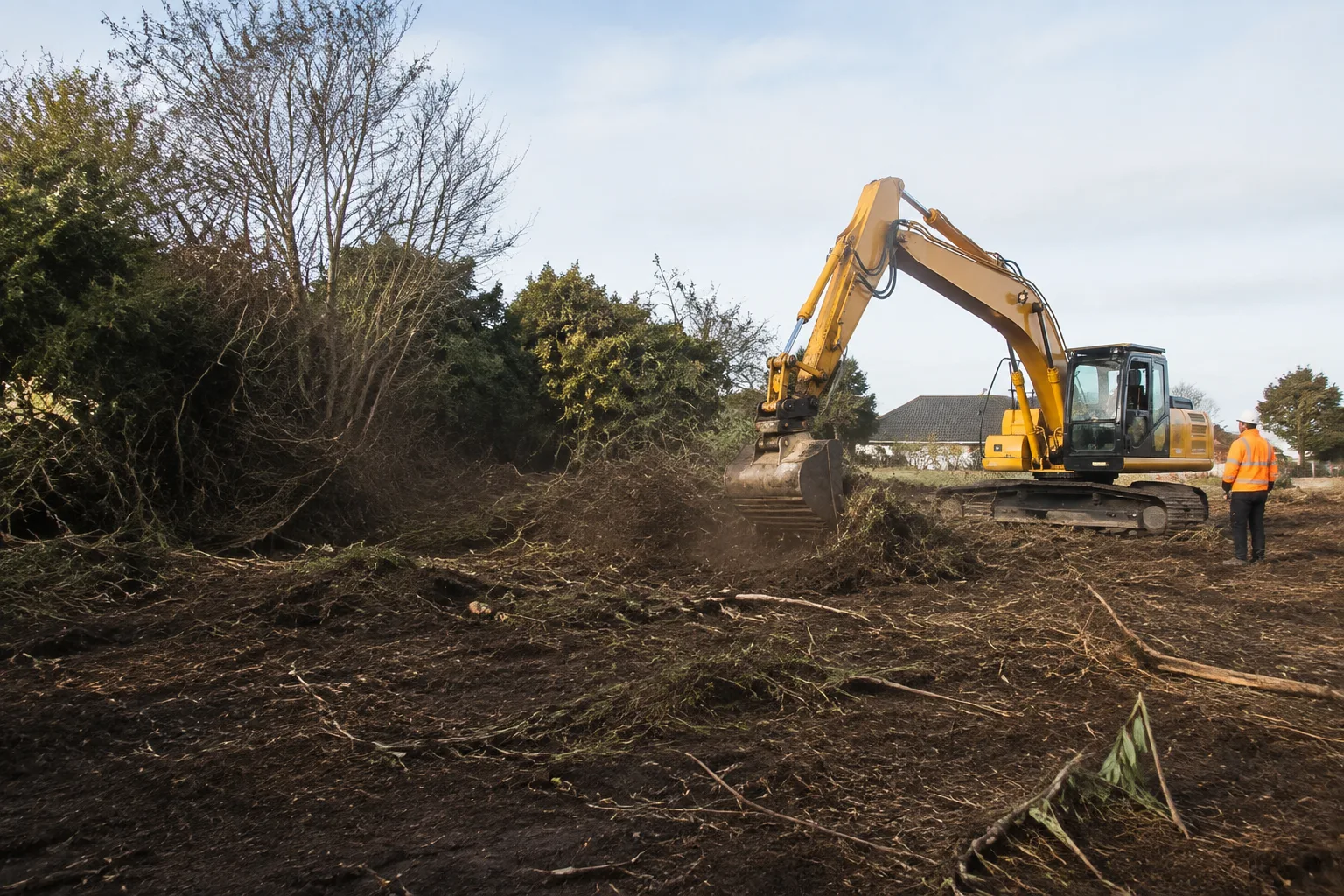
Section & Site Clearing
Clearing vegetation, scrub, topsoil and surface debris so a section is ready for design, survey or earthworks to begin.
View serviceSpecialist & Rural
Mechanical post-hole boring and augering for fencing, decking and pergolas, plus long-run rural fence-line augering across Canterbury properties.
03 661 7200Your site. A clear next step.
Christchurch Post-Hole Boring & Augering means mechanical post-hole boring and augering for fencing, decking and pergolas, plus long-run rural fence-line augering across Canterbury properties.
Tell us what you want to achieve, where your site is and when you would like to start. Include any plans, access constraints or measurements that will help us understand the work.
Recognise your project
Define the work
Mechanical auguring to the post size and depth you specify
Boring for timber, steel or concrete post fencing
Post holes for decking piles, pergolas and carports
Long-run rural and lifestyle block fence-line augering
Spacing set out to match your fencing or building plan
Removal of augered spoil from around each hole where required
Working around known underground services identified before the job
From site assessment to completion
We confirm post spacing, hole diameter and depth against your fencing or building plan, and check the line for any obstacles.
Known underground services are identified and marked before boring begins, using information you or your contractor can provide.
We bore holes along the marked line using an auger matched to the post size and ground conditions.
Augered material is cleared from around each hole so posts can be set without delay.
We check hole positions and depths against the set-out before leaving site, flagging any holes that hit rock or obstructions.
The bored line is handed over ready for your fencing contractor or builder to set posts.
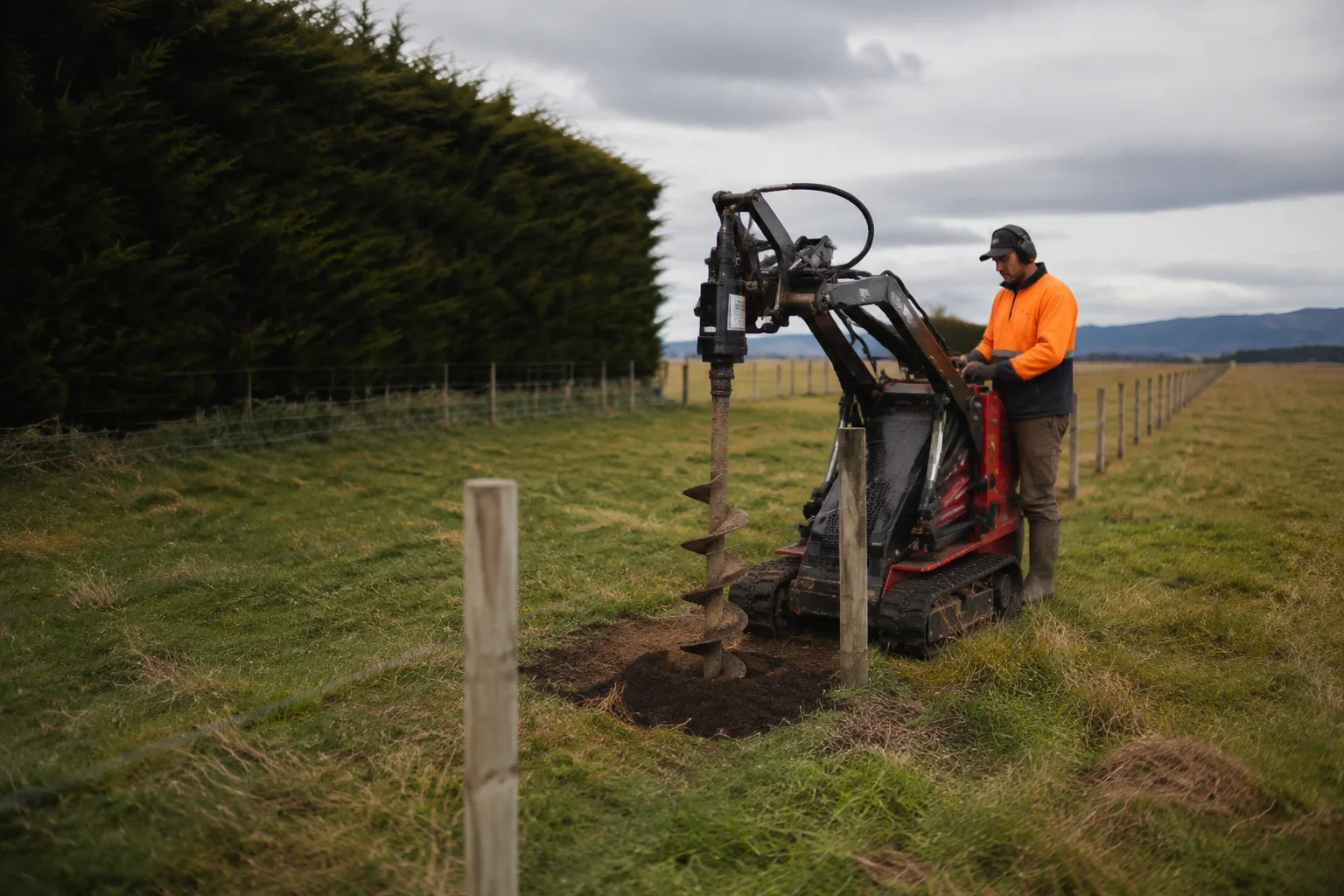
Working conditions
We match the auger bit and machine to your post size, ground type and access, using a machine-mounted auger for efficient long runs and a smaller unit where access is restricted. Ground with significant rock or shingle may need a heavier auger or an alternative approach, which we'll discuss with you if it comes up on site.
Auguring is generally quicker than hand digging, so machinery time on site is typically limited to the day's boring run. Access tracks, lawns or paddocks along the fence line may show some wheel marks from the machine, particularly in wetter conditions. We aim to leave the line tidy and ready for post-setting once boring is complete.
Get the detail right
Uneven hole depth or diameter along a fence line can leave posts sitting at different heights or loose in the ground, causing problems once rails or panels go on. An experienced operator reads the ground as they go, adjusting for rock, clay or old fill so the finished line stays consistent. This also reduces the chance of damaging underground services or losing hours to difficult ground with hand tools.
We match the auger bit to the post size you need, from standard fencing posts through to larger holes for deck piles or gate posts — let us know your fencing or building plan and we'll confirm the right size.
We'll assess ground conditions on site; light rock and shingle can often be managed with a heavier auger, though very rocky ground may need a different approach which we'll talk through with you.
Our work is the boring itself — post setting and concreting is usually carried out by your fencing contractor or builder, though we're happy to coordinate timing with them.
Yes, machine augering is well suited to long boundary or paddock fence lines, and we plan the visit around the total run length and site access.
We work from service information provided before the job and mark known lines; for sections with unclear service locations we recommend getting these identified before boring begins.
This depends on the machine size required for your post depth and ground type — we'll confirm access needs, including gate widths and ground firmness, during the initial assessment.
The next part of your project
Clearing vegetation, scrub, topsoil and surface debris so a section is ready for design, survey or earthworks to begin.
View service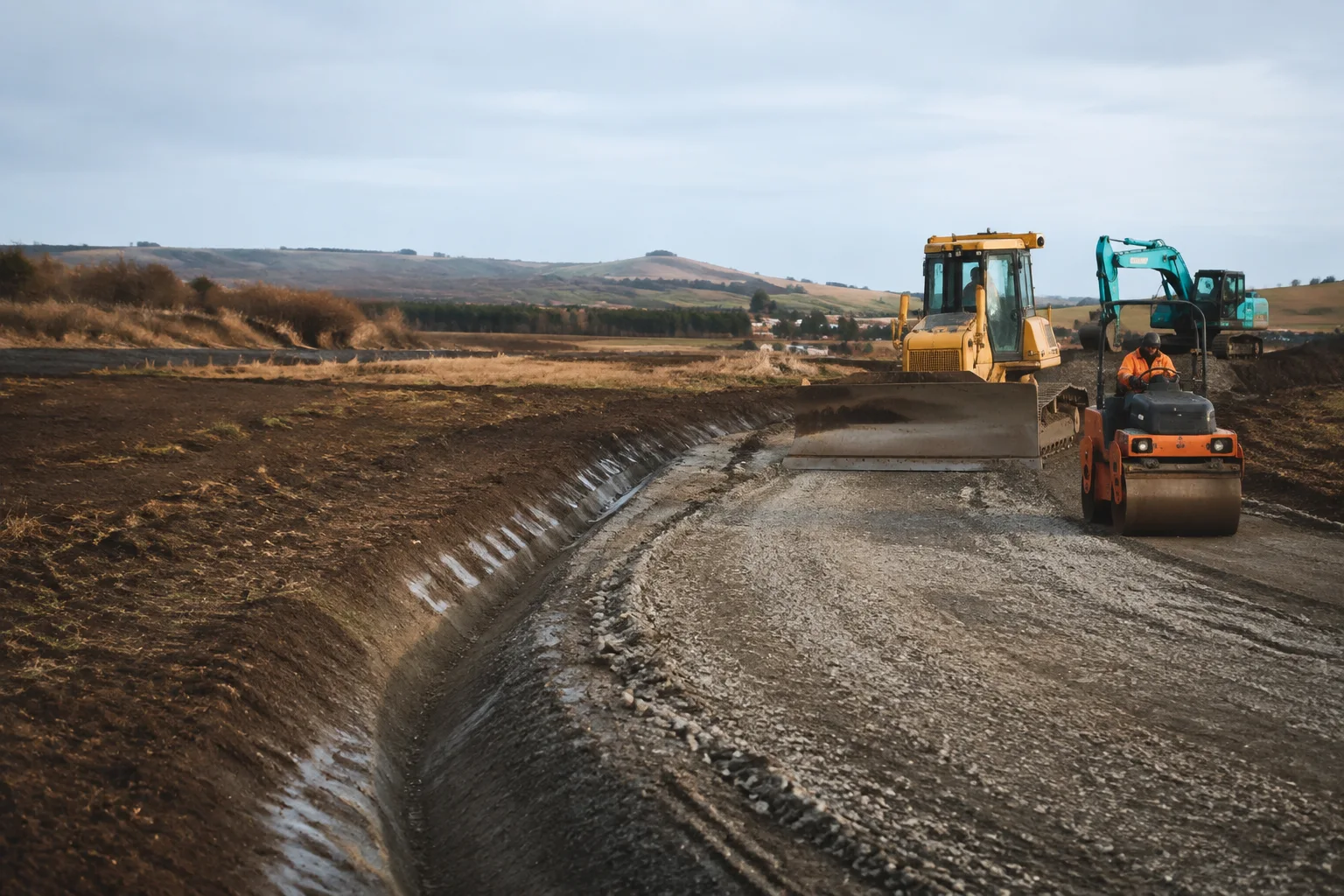
Formation, drainage and sub-base earthworks for private roads and access tracks on rural, lifestyle and small development sites.
View service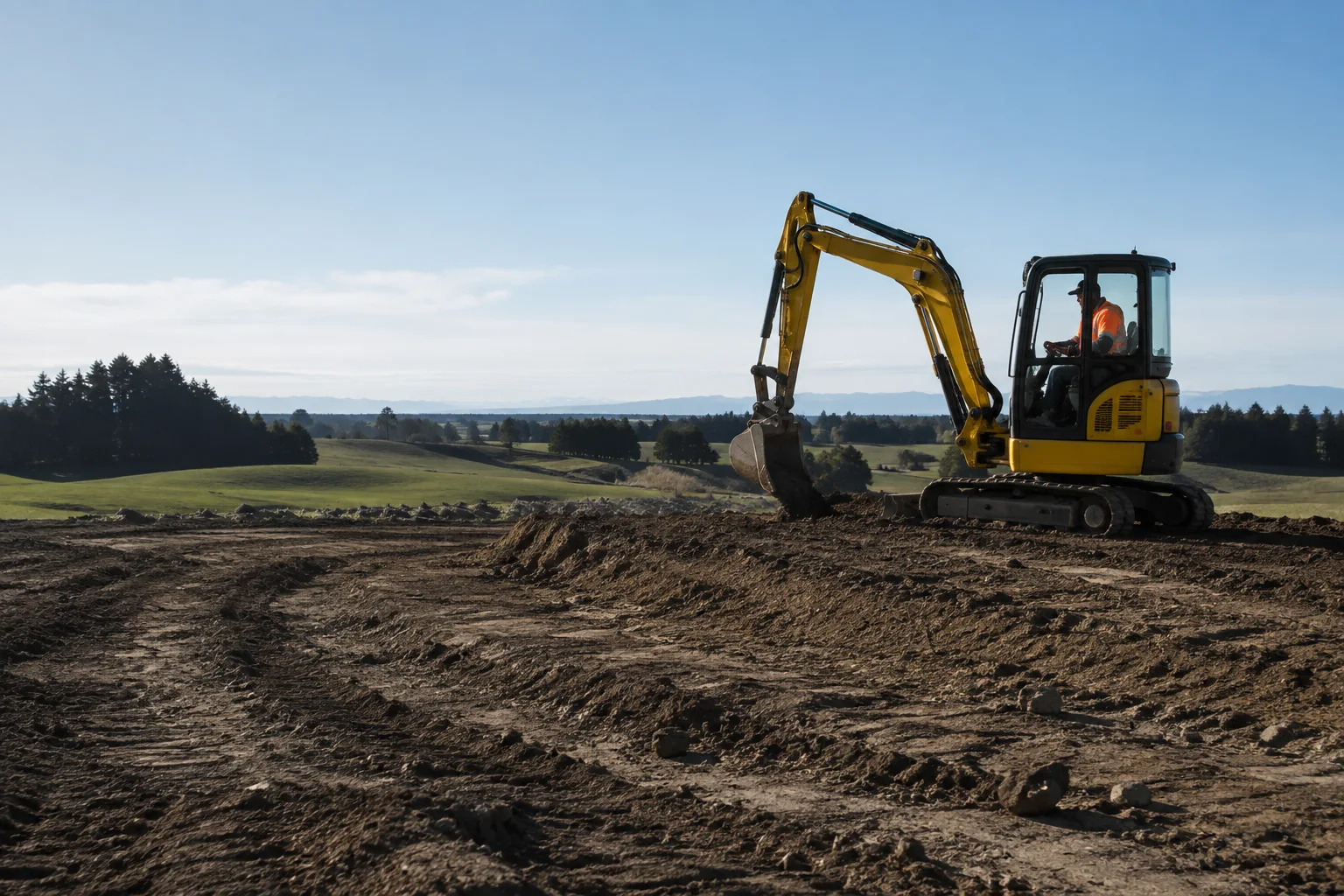
General earthworks for farms and lifestyle blocks, including access tracks, building pads, yard formation and paddock drainage shaping across rural Canterbury.
View serviceTell us about your project and we will come back with clear next steps — no pressure, no jargon.
YOUR SITE. THE NEXT CHAPTER.
Start with your suburb, a few site details and what you want to build.
Plan your project